
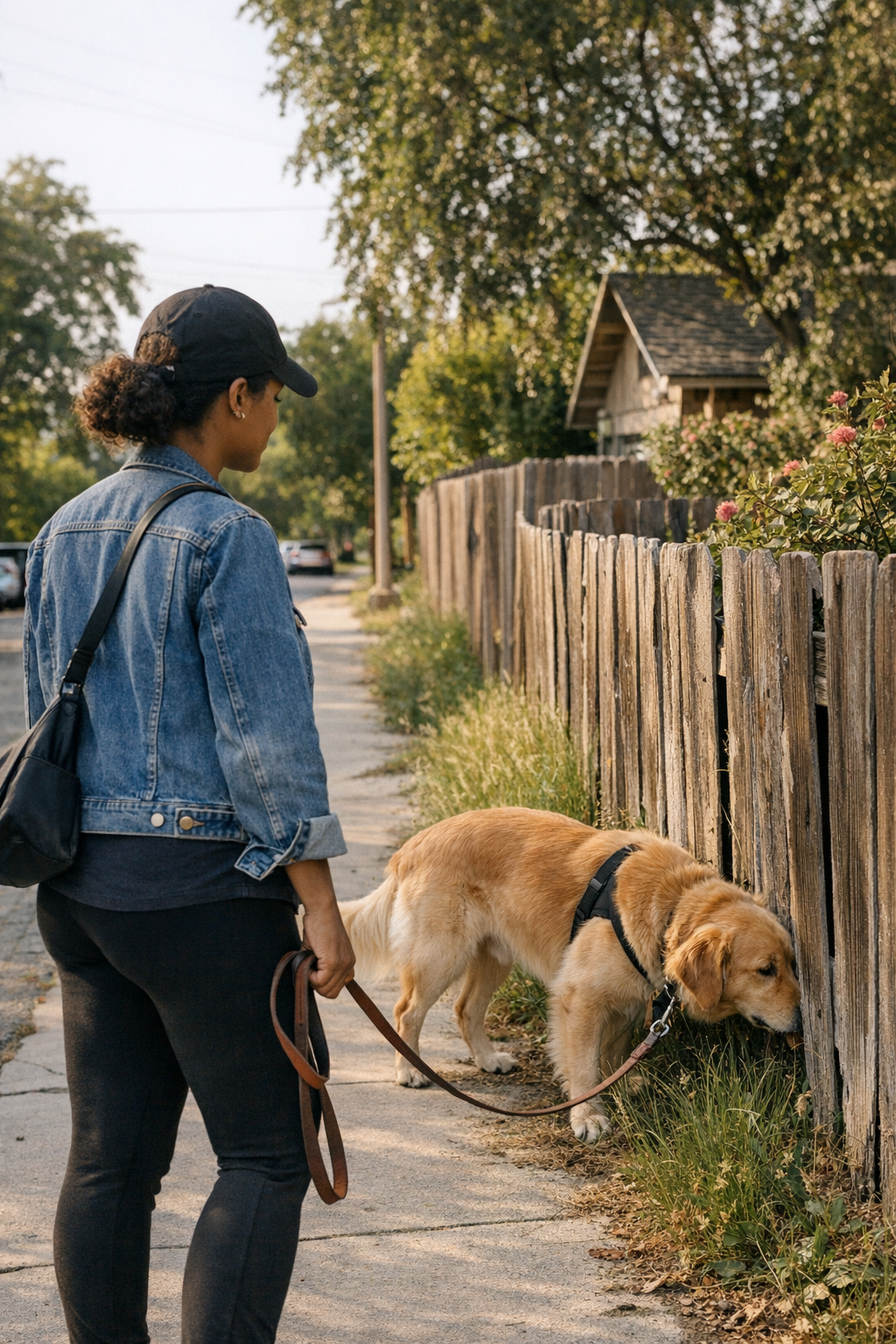
If you walk the same path every day, you can predict the exact moment your dog hits the brakes. It might be a familiar gate, a patch of grass, or the spot where the leash always tightens and your pace breaks. At first, you brush off these pauses as minor quirks—until one pause at the door turns into a pattern: the leash snags behind a chair, a towel’s out of reach when you really need it, and a supposedly organized setup starts to feel like a daily obstacle course. These aren’t isolated hiccups—they’re signs that the routine isn’t built for real, repeated use, and every small stumble squeezes more friction into your day with your dog. The surface might look tidy, but the system keeps interrupting itself, and you feel it not just during one walk, but every single time you try to move forward.
The Repeating Pause: Where Small Friction Starts
It rarely feels dramatic. One morning the leash chafes your hand as your dog stalls at the same threshold; by week’s end, your shoulder tenses before you even leave. The repeated effect sneaks up: your own routine gets slower, your dog’s bounce at the door fades, and walks stop feeling like a break—they become a sequence of micro-tugs and silent negotiations. The change is easy to miss in the noise of daily life, until reaching for the leash or towel becomes a braced reaction instead of an unconscious motion. Even when you think everything’s in its place, the pause returns, ready or not.
Most “routine” walks get worse by degrees. What starts as minor leash stalling turns the whole route into a staccato pattern of stops and slow restarts. You’re home before you realize you’re tense, and your dog paces around with leftover energy because the walk never gained a steady flow. No meltdown—just a lingering drag that outlasts your willingness to pretend the setup’s not part of the problem.
From Street to Home: How Friction Follows You Indoors
The hesitation you feel outside doesn’t magically reset at the front door. The lag trails you in: dogs that freeze at the threshold also drift before meals, tiptoe around water bowls, and resist entering rooms where items keep shifting into their path. The result isn’t explosive—it’s a chain of small slowdowns that sneak up during the basics: food scoops wedged under last night’s bowls; towels impossible to grab one-handed when mud’s already on the floor; water stations placed for looks rather than for real refill flow.
Picture your post-walk routine: paws need wiping, but the towel is crammed in the wrong drawer or nowhere in reach. You fumble as your dog hops impatiently, or worse, shakes mud everywhere before you even touch the fabric. The water bowl sits just out of line with the door, so rehydrating after a walk means more steps, more spillage—or a late-night refill that delays the reset you wanted. Toys and cleanup gear don’t just clutter the scene—they block actual movement, forcing you to do the same reshuffle day after day. What looks organized rarely acts organized when daily use adds pressure.
The Cost of Overriding Routine Pauses
When you get tired of the stall, it’s tempting to rush: you tug the leash, throw out a sharp “let’s go,” or hustle through the routine just to get it over with. But the friction finds its way back: walks fill with zig-zags and tension, your dog hangs behind with head low, and every step out the door starts feeling like a chore. The cumulative cost isn’t a single bad walk—it’s:
- Leash fights and awkward detours as you intervene mid-stall
- Uneven rhythms—never quite walking in sync, always one step behind or ahead
- A dog reluctant to start moving—ear signals off, tail dragging, feet braced at the doorway
- Feeding, cleaning, and rest routines that get harder to reset every time you try to smooth things over
The “pause” becomes a repeating weak point—one you face daily whether you notice it or not. Even with a neat setup, you sense it: the stall returns, routines jam up, and fixes don’t hold because the friction always finds the gap.
Real Scenes That Expose Routine Weak Points
This is how it actually plays out: You grab for the leash and hit a tangled loop of harness, last night’s toy, or a bottle of spray wedged just where your hand lands. The smooth start dissolves—your dog paces by the door, you shuffle gear just to reach what you need, and both of you are out of sync before you even leave the house.
Back from a muddy walk, you spot wipes in their “designated” spot, but reaching them means kneeling or unsnapping a lid at the wrong angle while mud spreads on the mat. Setup details start to matter: if a tool isn’t ready in a single reach, it’s a problem under real pressure.
Later, prepping food or drifting through the hallway, your dog slows at old trouble spots. Instead of a routine flowing on autopilot, each phase triggers a new “nudge”—not a crisis, just another moment where the setup interrupts instead of helping. The friction’s subtle, but it repeats, and every repeat steals more ease from your day.
Responding to the Signal: Small Adjustments Defuse Bigger Problems
Notice the pattern and you see what these moments have in common: the setup isn’t built for real flow. The advantage isn’t in a giant overhaul—it’s in small, specific changes that actually survive daily pressure.
Try the Intentional Pause
Stop dragging your dog through stubborn spots. Instead, insert a fixed, relaxed pause—two counts of slack leash at the usual sticking point. Hang back, let your dog sniff, wait out the hesitation with quiet body language. Watch for signs of genuine reset: a softened ear, a loose jaw, calmer stance. Then move forward—no rush, just a restoration of shared rhythm. The pause shrinks naturally when it’s met, not fought. Both sides start moving with less friction; the route resets itself day by day.
Translating Pause Into the Whole Routine
The principle isn’t just for the walk—it applies every time routine flow staggers. Stalled at the bowl? Look at the access, not just the placement. Struggling with a crate while holding back an excited dog? Examine whether the latch fights you under pressure. Is the grooming setup easy to deploy with one hand, or do you lose your grip in the rush? Don’t let comfort or visual neatness win over true repeated-use ease. If a tool blocks more than it helps when the pressure is on, it needs adjustment.
When details like bowl height, reachable wipes, or a one-motion hook for the leash change, hesitation across routines fades. The power isn’t in redesigning the whole system at once—it’s in clearing one persistent block at a time, so routine tasks actually reset themselves instead of accumulating daily annoyance.
Counters to the Most Common Routine Stalls
Some friction points show up in every dog household—here’s how to spot and disarm a few:
- The Leash Tangle: When your leash shares space with harnesses or toys, reaching for it becomes a multi-step effort. A wall hook or strong catch near the door breaks this particular stall—early flow matters most.
- The Snack or Water Station Shuffle: Bowls placed for looks, not for movement, lead to spillovers, awkward refill angles, or avoidance behaviors. Bowl height, distance from traffic, and direct path access all make a visible difference.
- Towel and Wipes Out of Reach: After a wet walk, if cleaning supplies aren’t instantly grabbable, the mud spreads and the dog’s patience shrinks. Fix means arm’s-length setups you can hit without bending, hunting, or multi-tasking with a leash wrist wrap.
- Toy Overflow Blocking Pathways: Toys in human lanes convert every entry into a shuffle. Open bins outside the main beat of movement, not hidden in back corners, keep both cleanup and play transitions quick.
Tidiness doesn’t guarantee usability. Reduce the stall, not just the mess, and routines actually move forward.
The Real Cost of Ignoring Small Signals
Ignore the small delays and the cost piles up—not as chaos, but as routines that cling to resistance. A single hesitant step at the walk mutates into slow room entry, half-hearted rest, feeding time tension, and a day that never fully resets. The space may look “handled,” but if it runs awkwardly, disorder keeps leaking in where the setup gives out under everyday pressure.
You notice: the entryway stays backed up, beds are hard to move when the dog’s restless, and cleaning supplies only seem efficient—right up until you need them instantly. A setup can check every visual box and still make you work double time just to keep pace with your dog’s real-life rhythms.
Recognizing the Recurring Weak Point