
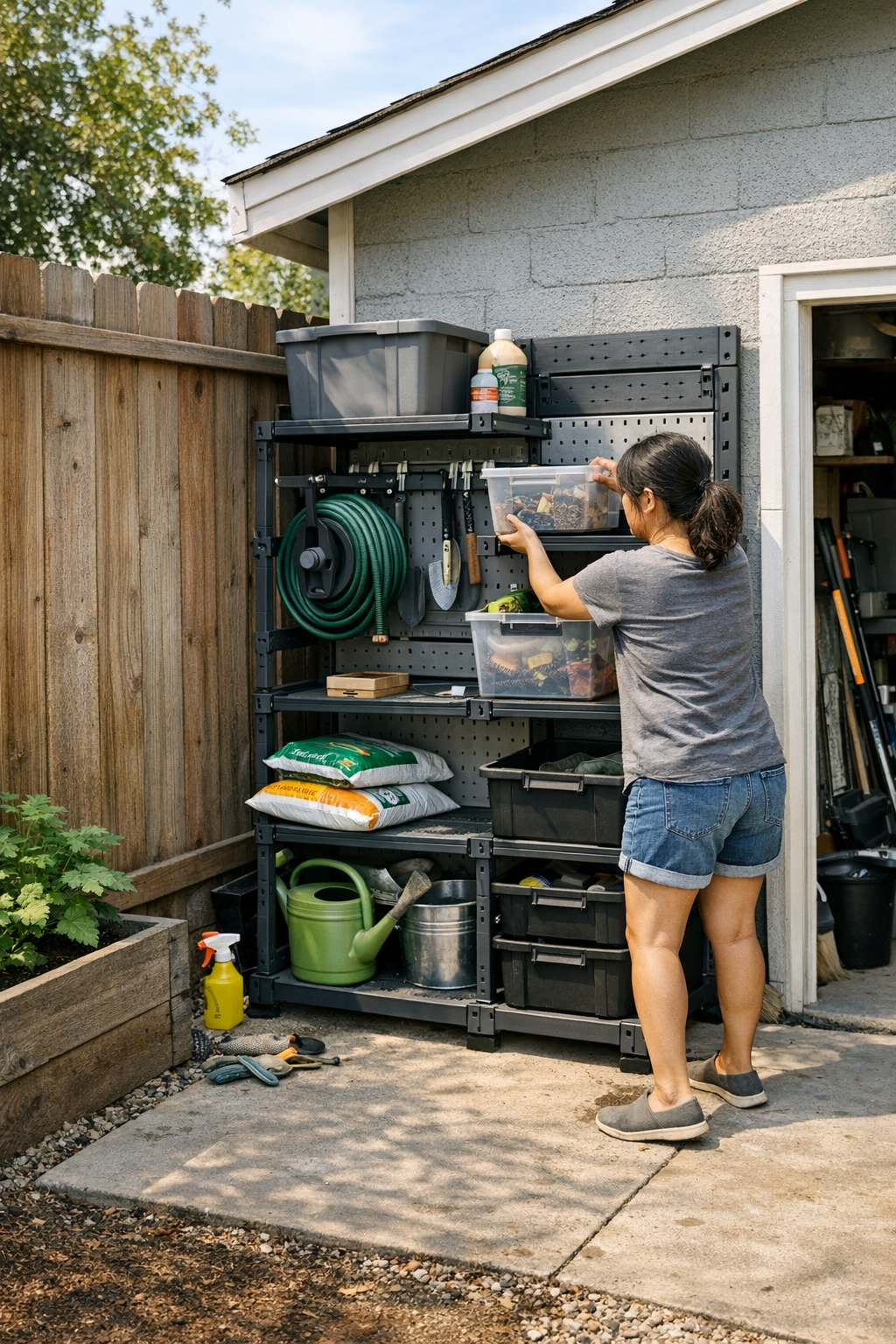
The real test of an outdoor setup never happens on day one. A space that looks perfectly organized—patio edged with tidy shelves, a side strip freshly cleared—carries an invisible timer. Come back two weeks later, after rain, projects, and new gear, and the routine reveals what the setup can’t handle: a hose snaking across the walkway, tools wedged together, bins already overflowing into the best shortcut from gate to door.
The Real-Life Test: When Storage Meets Real Use
It’s simple to feel satisfied with a weekend’s work—wall units leveled, garden tools lined up, floor space opened at last. But as routines kick back in and the seasons change, the cracks widen. The trowel that barely fits now blocks the watering can. Bike helmets multiply on the rack meant for boots. Movement slows, and suddenly, what started as better flow is now a string of small obstacles: clattering handles, the stepladder lounging in front of the only outlet, plastic bins stacked high enough to tip when you pull the bottom one free. The daily act of returning or retrieving even a single item becomes a negotiation with the arrangement itself.
Flexible Zones vs. Fixed Layouts: When “Looking Right” Isn’t Enough
Anyone with a multipurpose outdoor strip—the patio edge doubling as tool storage, that narrow side-yard, or the classic garage threshold—knows the seduction of clean, fixed layouts: a wall grid, permanent shelves, a designated rack for everything. On setup day, it echoes a magazine spread. But new needs arrive relentlessly: a leftover paving stone, an umbrella that won’t stand, another bag of soil, last month’s forgotten plant stakes. Inevitably, one zone starts swelling with the overflow. Suddenly you’re pulling out three bins to reach what’s behind them, or doing a lopsided dance to drag the mower past something that never should’ve been in the way.
Real scene: “The neat shed” in early spring is all intentions—a crisp path, tools on the wall, buckets nested. Fast forward six weekends: clutters start pooling. Garden hoses don’t fully rewind, soccer balls drift into the walkway, the wheelbarrow migration involves a brief tool-rescue operation every time. By summer, watering the border plants means weaving around a thicket of unsorted gear and side-stepping the permanent pile-up in that one awkward corner.
Flexible Zones in Practice
Unlike rigid built-ins, modular racks, mobile carts, and stackable bins absorb real-life shifts. One extra tool? Add another bin, not another headache. Seasonal overflow? Slide out a rack, shuffle zones, keep paths open. Instead of being boxed in by the layout, you move the pieces—so minor changes don’t trigger a full re-organization and the return path to each item doesn’t keep getting longer.
Why Clutter Creeps—And How Boundaries Snap Back
The snag with flexibility: when nothing has a border, everything bleeds together. The gloves join the pool toys “just this once.” The overflow bin turns into a universal drop spot. One fuzzy weekend, you’ve gone from sorted to sprawled, with every clear surface up for grabs. Rather than a setup you can reset in seconds, you get scattered piles and an endless round of shifting things from zone to zone.
Setting Boundaries That Actually Hold
The flexible setup only works if each zone stays recognizable—tools here, sports gear there, seasonal overflows apart. Visual dividers, color-coded bins, open labels, even bold tape to mark walking paths—all help keep truly movable systems from melting into a single catch-all. When bins have clear fronts, carts are labeled, and the wall is functionally split between “weekly use” and “someday overflow,” clean-up is snappy, not daunting. Walking through, you know what lives where and quickly spot what doesn’t belong.
Everyday Reset: Small Corrections, Not Total Overhauls
A month in, the magic is this: the urge for the dreaded “big reset” fades. No more sinking feeling when you see a pile up. Instead, it’s tiny adjustments—slide the overflow bin back where it belongs, reverse a stray shovel, re-stack instead of dump. These 60-second resets clear space for tomorrow instead of becoming a weekend project. Friction isn’t gone, but it doesn’t snowball. You don’t need to fight the setup to keep it functional—just nudge it back when needed.
Still, flexible zones have their own traps. The cart becomes a drop-off point you stop seeing, or an open bin swallows stray garden stakes until the season’s over. But now, correcting these is easy—move one thing, fix the flow, and the system works with you, not against you.
Where Conventional Setups Fail: Dead Corners and Blocked Movement
Weak setups announce themselves in quiet frustrations:
- You return the garden fork—then realize the hose reel is now blocked until something else moves.
- Every time you want the mower, you shuffle two bins out of a too-narrow path yet again.
- That one back corner? Still a magnet for mystery objects, because it’s never gotten a real job in the zone.
- The impressive wall rack turns boots and buckets into tripping hazards, because there’s no flow after a normal weekend cleanup.
Fixed layouts turn small resets into big detours. They promise order but force you into roundabout routes or constant reshuffling. A setup can look sharp while still interrupting every routine. Flexible systems, when clearly divided, keep movement open—quick fix, go on with your day. The difference is every micro-adjustment is built in, not a breakage of the setup.
Real-World Routines: Keep It Useable, Not Just Organized
- Take one minute after any busy afternoon to put the mobile bin back or re-mark walkways. Small resets fight creep the whole season.
- Give each flexible zone a visible identity—labels, color, or tape for “this is garden gear, this is toys, this is just overflow.” It matters more as the space gets tighter or more mixed-use.
- Let overflow roll, not sprawl. The bin or cart on wheels takes the blow, then gets reset—instead of the whole path turning into a tripping maze.
The Setup That Stays Useful—Not Just Tidy
A practical outdoor system isn’t about perfect order. It’s about setups that bend with the routines, block out permanent pile-ups, and let you keep moving through—even after a rush, a project, or a storm. The difference between “organized” and “useable” isn’t how things look after setup; it’s how well the system handles all the imperfect, repetitive ways things actually get used—and returned—every week.
The setups worth building don’t flatten every friction point, but make it easy to see what’s out of place, correct course with a quick move, and find a clear path after the next errand or chore. When the outdoor zone keeps working through the real-life mess, you spend less time shifting, less time searching, and more time just moving through. That’s how a backyard or utility strip stops being a silent frustration and starts making the rest of the home run smoother.