
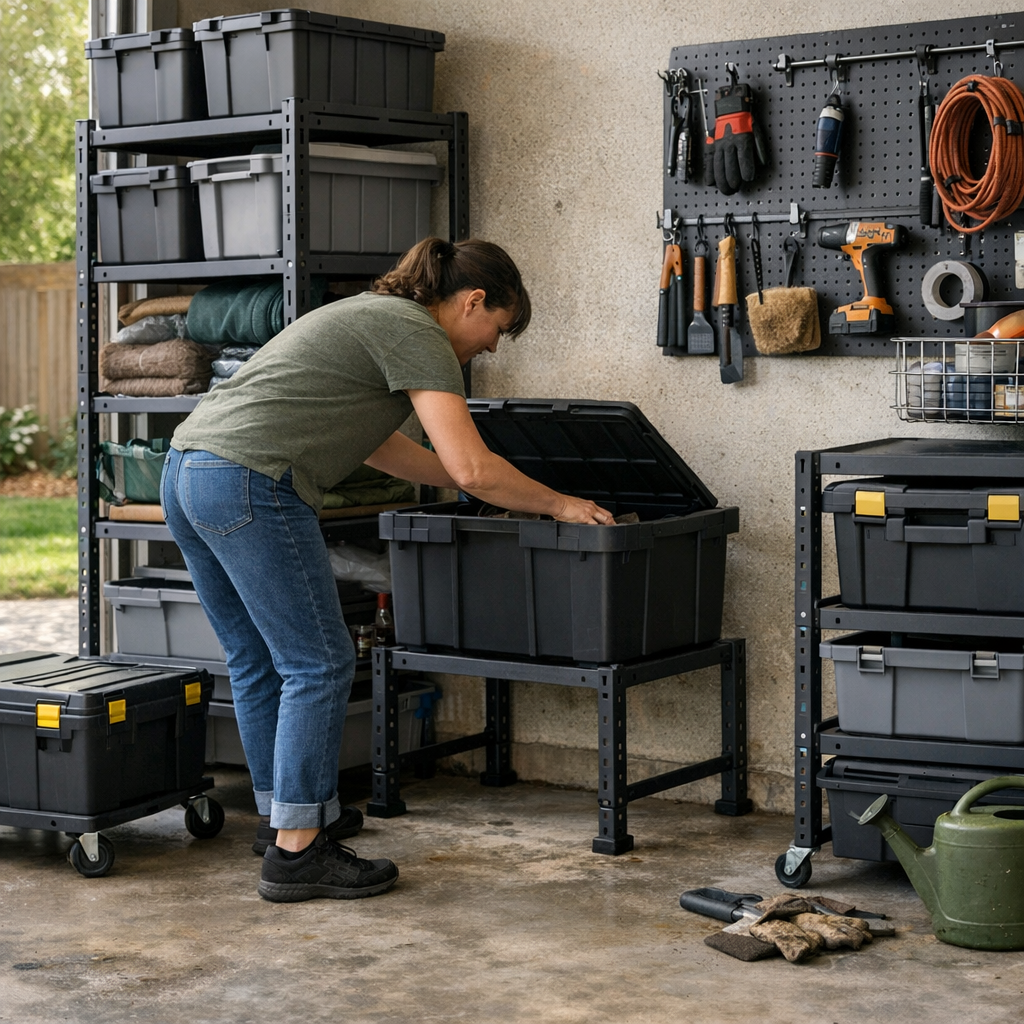
Nothing tempts optimism like a freshly organized garage or shed. Crisp columns of bins, spotless wall panels, every cart and unit just off the floor—it all feels finished, even resilient. But every returning user recognizes the illusion. A busy week, a string of soggy days, and what worked on day one starts working against you. The real test isn’t how slick the setup looks, but how it holds up, day after damp, messy day, to the real push-and-pull of weather and use.
Why “Off the Floor” Doesn’t Buy You Immunity
There’s an undeniable appeal to getting storage up and out of the puddles. Bins perched on shelves, racks wheeled just an inch clear of the slab, all suggest that a tidy fix is in place. Until rain or snowmelt inevitably finds a way in. The smallest gap invites a cold pool under those carefully raised bins. Condensation rides up slab floors and clings to shelving legs. With each wet cycle, what looked organized morphs into a humid puzzle—bins tack to floors, wheels grind instead of roll, and suddenly the direct path to your tools is blocked by last week’s emergency reshuffle.
The pattern is painfully familiar: That tight wall of bins starts dragging in corners. Mobile racks don’t budge when you need quick access. Overflow piles settle in just out of reach, building up with every chore until even the cleanest arrangement now slows your routine instead of streamlining it.
Where Weather Sneaks In, Function Slips Out
Every storage area carries its built-in weak spots. Maybe it’s the baskets stacked near the chilly outer wall. Maybe it’s the rolling trunk you regret every time you have to muscle it back into place. These friction points only multiply once water and humidity get involved:
- Pooled water slips in unseen. Even a minor seam under shelving or a low cart can become a reservoir, quietly wicking moisture up into your gear.
- Condensation lurks beneath and behind. Walls and bases that seem bone-dry turn out clammy on inspection, pushing rust along the frames and swelling the bottoms of particleboard.
- Overflow turns into obstacle. Every time storage units clog the main route—from door to bench, or out to the garden—the irritation quietly escalates. Resetting doesn’t happen seasonally; it becomes a weekly battle.
This isn’t just a yearly inconvenience. Left unchecked, each round of weather makes the system more sluggish. Access slows, paths choke up, and the difference between “looking organized” and being usefully organized grows wider. Bins that used to be easy grab-and-go zones become dead-end stacks. The once-promising setup becomes something you work around, not with.
Frustration Arrives Before Damage
The most telling signs a setup has gone sideways aren’t ruined tools or warped panels. It’s the little frictions that show up every time you try to use the space:
- You end up shuffling two or three bins just to keep the way clear for the door.
- A quick grab for shears means always squeezing around that same cabinet edge—again.
- Resetting after a job drags on, as swollen bins wedge together and wheels resist the turn.
- Overflow “catch-alls” swallow not just spares, but damp towels, dirt, and whatever you haven’t found time to sort—making layout and access worse with every pass.
Surface order hides these growing inefficiencies. Your system might look crisp in a photo, but live-use tells a different story: flow gets clumsy, resets stretch out, and frustration builds every time a once-bright idea ends in an awkward cart dance. Storage that fits but never truly clears a path, ends up stealing time and momentum with every visit.
Weather-Smart Setup: Real Tweaks That Hold Up
So what stands up to the ongoing mess and moisture? It comes down to setups that don’t just avoid the floor—they beat the weather where it attacks most:
- Lift everything—properly. Raise bins, racks, and mobile units a solid two inches or more. Sturdy blocks or feet, not just thin casters, break the path for sneaky seep and mean nothing welds itself to the slab after a wet weekend.
- Give your storage room to breathe. An inch or two gap along every wall isn’t wasted space—it keeps condensation from creeping up and prevents mold from taking root.
- Skip the dead corners and risky seams. That awkward spot behind the chest invites soggy buildup. Leave it open or limit use to gear that shrugs off damp.
- Go non-absorbent when you can. Plastic bins, powder-coated metals, anything that sheds rather than soaks up moisture. One damp blast shouldn’t mean a season of stuck lids or warped bottoms.
Spot-test your fixes: After heavy rain, wedge a wood strip or paver under the lowest bins and see which ones actually dry out. The ones that still sweat or cling need a better lift or a new home—no matter how “waterproof” the container says it is.
Real Life: When “Safe” Storage Trips You Up
Picture gearing up for spring yard work. A week of rain, and now those bins—raised just an inch, stacked along the far wall—are sticky, lids won’t budge, and the aisle to your spade twists around half-boxed supplies. Each small design compromise from day one now piles up, literally, in blocked corners and awkward footprints.
The turning point comes with a rethink: Lifting every bin higher than before and refusing to let storage block the main lanes. Suddenly, carts and bins come free without a wrenching pull. Cleanup after every job takes minutes, not a half-hour shove. You spend less time rescuing supplies, more actually using the space—rain or shine.
Routine Patrol: The Non-Negotiable Upgrade
No system is ever fully set-and-forget. A weather-hardened setup still needs an occasional walk-through: move a bin, slide out a shelf, open up dead corners. These seasonal patrols keep airflow moving, outsmart slow leaks, and catch issues like early mold before they turn decks and bins into rescue projects. It’s a habit that pays off every time the next big reset never comes, because small adjustments keep the space on track.
The Setup That Survives Return Trips
The setups that truly work aren’t the ones that look perfect when freshly installed. They’re the ones where every return trip—rainy, rushed, or routine—feels easier than the last. Where raised bins and clear zones mean fewer reshuffles, and every main path stays open for actual movement, not just display. By treating weather as a regular opponent and leaving room for quick fixes, you’re building a storage system that quietly stands the test of time and the messes you throw at it season after season.