
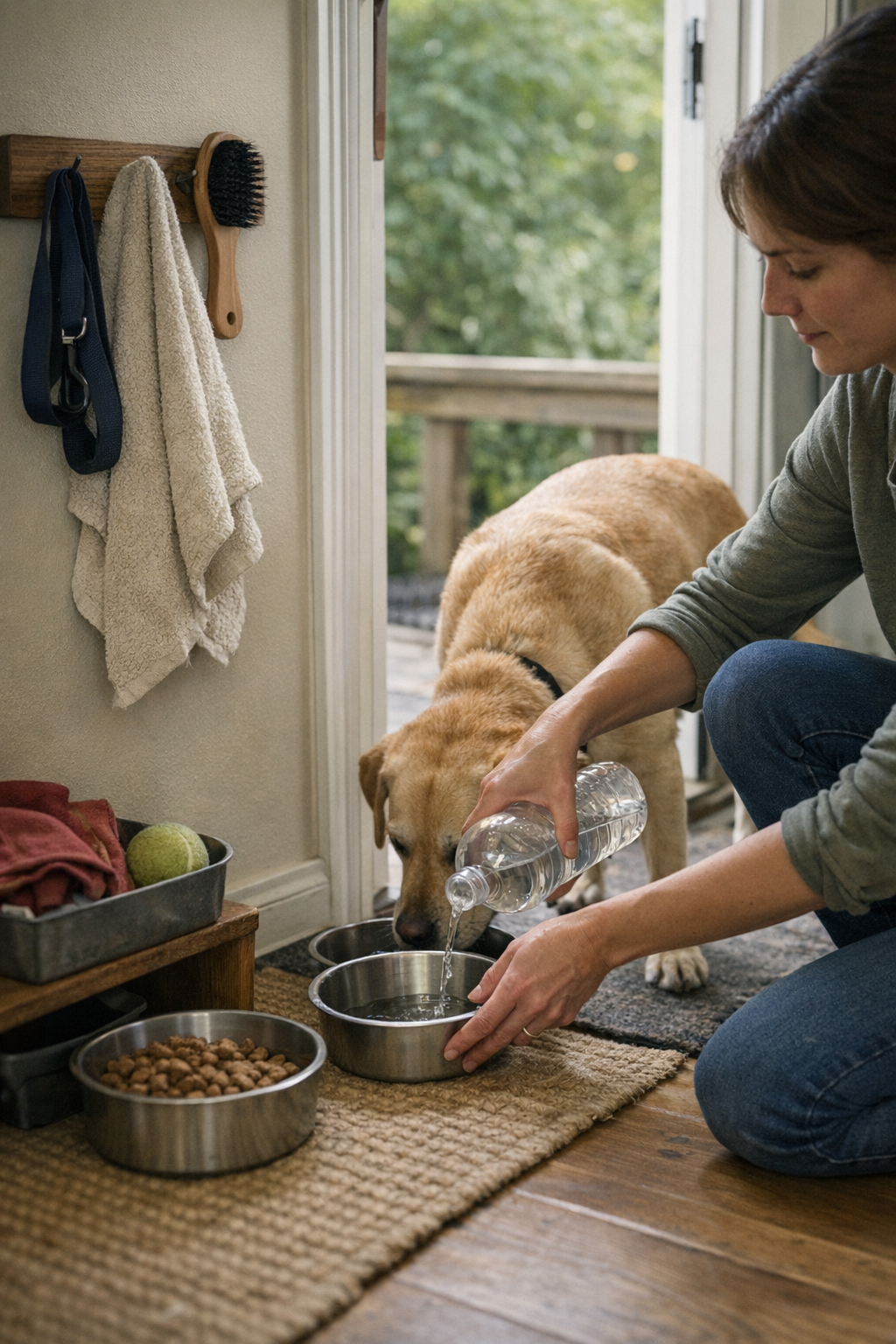
Everyday dog care isn’t defined by how calm your greeting looks—it’s shaped by what you can actually reach, reset, or refill in the seconds before a visitor, a late walk, or a fast cleanup. The entryway might look organized, but your routine reveals the truth when you reach for a dog towel that’s buried under shoes, or find the water bowl’s still in the sink with yesterday’s dishes. Calm at the door isn’t just a product of good behavior; it usually falls apart when even one everyday item—leash, bowl, towel—is out of place, damp, cluttered, or not ready when you need it. This is the unglamorous repetition behind “calm” in CalmPetSupply’s world: does the care setup actually keep up, or does it stall you, right when each routine resets?
The Real Reason Your Dog’s Greeting Feels Chaotic
Surface order doesn’t guarantee functional calm. The leash is always supposed to hang by the door, but too often it’s on a crowded hook, buried under coats, or looped over a chair after the last walk. The water bowl—meant to be freshly filled—ends up forgotten under a pile in the sink, or only half-refilled after the morning chase to the door. “Tidy” can conceal repeated friction: the quick-brush for shedding is in a drawer across the room, the dog towel is clean but tucked next to still-damp laundry, the mat for muddy paws is hidden to keep the floor “clear.” So when a visitor arrives, you go from “ready” to scrambling—stalling, apologizing, buying time while your dog’s excitement builds and the actual moment feels anything but smooth.
Every repeated routine tests the system. The dog towel is clean but missing from its spot, the brush helps but is never at reach, the essentials you need drift away from where they’d actually make each repeated transition easier. What looked orderly the day it was set up exposes its weak points by the third reset. “Out of sight” too often means “hard to grab,” and your calm moment turns into a repeat delay.
Interruptions Stack Up in Unnoticed Ways
It’s never just one snag—small breakdowns stack up. End-of-day: you return from a walk, hands full, reach for the towel you left “close”—but it’s disappeared, or still wet. Your dog leaves prints from paws you can’t wipe quickly. The entryway might look fine at a glance, but each pause, backtrack, and late wipe adds up; the space works against you, not with you. After play, you grab the water bowl for a refill, only to discover it missed a rinse and still has old kibble floating. Another missed step, another small frustration. If the same mistakes appear every few days, the calm routine starts to require extra labor and more apologies—drag that never quite shows in the neat version.
Cleanup only gets harder when every key piece is stored out of reach. A brush in a distant drawer adds steps after each walk. If bowls, towels, and leashes aren’t put back to a true “ready” state right after use, you’re stuck repeating minor recovery jobs—wiping after the spill, running an extra refill, scrubbing stuck-on food. Those seconds lost reshuffling what’s basic become the difference between a calm entrance and yet another behind-the-scenes scramble.
Repeated Use Uncovers What Needs Fixing
The first week with a new setup feels fine: bowls stacked neatly, leash on a hook, towel folded. But by midweek, weak points appear. One person takes the water bottle to the car for errands and forgets to return it. The towel—needed for an emergency cleanup—ends up in the laundry pile, never replaced at the door. The brush migrates upstairs. Supplies drift into common spaces, stretching the routine and putting each small job just out of reach. The setup isn’t broken, but it no longer matches the way care really happens. The more you repeat daily routines, the more one missing or misplaced item expands the workload and slows you down.
Chasing after supplies isn’t just inconvenient: it drains attention and patience. The seconds spent looking for a leash or bowl feel small, but put together they keep every routine less smooth than it should be. Suddenly a calm arrival turns into hunting for what you thought you’d already prepped—another “wait, let me just grab the towel,” another walk paused mid-step to refill a bowl you wish was ready.
What Actually Changes Routine
Routine friction doesn’t disappear with better storage or stricter checklists—what works is cutting the number of steps between use and reset. CalmPetSupply scenarios start to feel manageable when the reset flows naturally: towel back on the door hook as you enter, absorbent mat waiting for muddy paws in the same spot every walk, leash looped above clean bowls—not dropped on the nearest surface. Refills and wipe-downs are done before you leave the area, not put off for “later.” The next care moment—guest, walk, cleanup—needs fewer moves and less memory to work.
For example, water bottles stay on a dedicated open shelf and are never borrowed for anything else; wet paws always meet a dry towel right at the door. The leash, brush, and bowls return to their spots before you move on, and the setup always assumes the next routine is minutes away, not hours. That’s what shifts the effort from a repeating hassle to a steady routine—one that stays predictable and reduces stress even when things get busy or unpredictable.
Maintaining Function vs. Maintaining View
Looking decluttered means little when it slows you down. Supplies hidden in bins or baskets often result in extra trips, while a “neat” hook overloaded with jackets just buries the leash again. The test isn’t whether your space looks photo-ready, but whether you can get to every daily need—the bowl, towel, brush, leash—without stepping over or beneath something else. The best CalmPetSupply routines hold up even on tired days and during surprise transitions, not just under perfect conditions.
The moment you stop relying on memory, stress drops: bowls are wiped, refilled, and stacked right at hand; towels are hung within reach and dry; leashes return to their assigned spot every single time. Each handoff—late-night walks, sudden visitors, wet weather—stays routine, not a series of small firefights. Calm isn’t hidden behind order; it’s built by the physical setup keeping pace when basic care repeats and pressure points return.
Everyday Calm Is a Physical Setup, Not Just a Goal
Storing each basic where you use it—bowl by the feeding area, water within reach, towel hanging just inside the door, leash always above the ready bowls—and resetting every item immediately after use, is how interruptions shrink instead of pile up. Over time, you’ll have fewer rushed resets, fewer missed cleanups, and less daily drag. The calm you want for your routine isn’t abstract or a trick of better tidying—it’s the physical arrangement that handles real, repeating mess and movement every single day. Routine resets done right, right after each use, are what keep your setup working with you, instead of falling behind and forcing you into one more mini-scramble.