
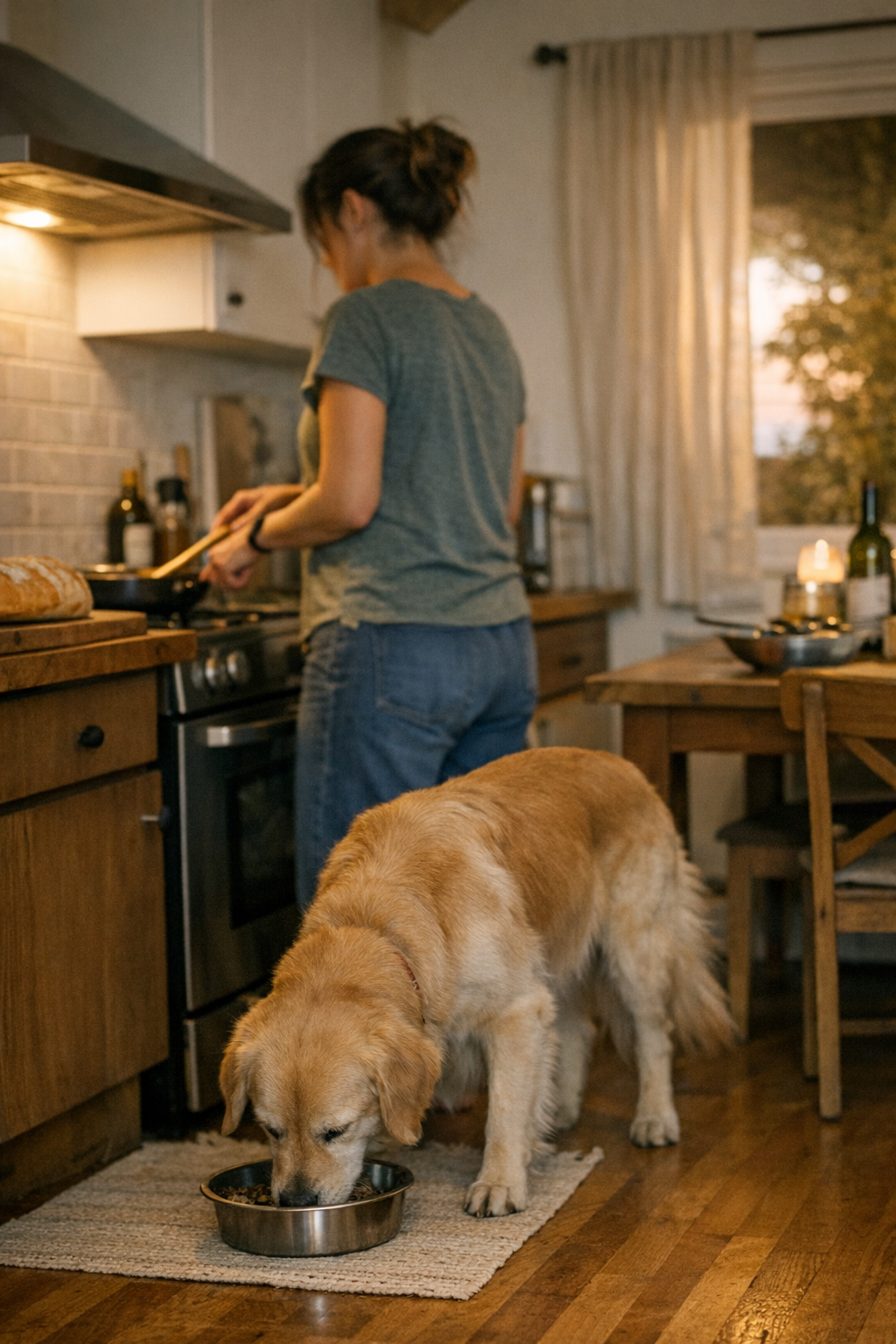
Evening meal routines with a dog rarely stay as tidy as they look at first glance. You turn to fill your dog’s bowl, but she’s already pacing near your feet or blocking the walkway by the kitchen. If you prep dinner before feeding her, she’s hovering underfoot—sideways glances, bowl nudges, sometimes parking herself on the only spot you need. Every small mismatch in timing or order turns a supposedly organized setup into a chain of low-level interruptions: stepping around her, hunting for a towel just as paws smear the floor, reaching for the leash and finding a bowl creeping into your path. It’s the gap between a routine that functions on paper—and one that actually works when every movement matters.
What Actually Happens When Meal Order Changes Night to Night
Meal time isn’t a fixed sequence for most households. One night, the dog eats first and settles into her bed without comment; the next, your own dinner takes priority, so she paces, parks in the main corridor, or stakes out the kitchen mat. The unpredictability seeps in as restlessness: repeated circling, sidelong glances, extra hover-time where you need clean footing, silent but persistent negotiation. When a dog never knows if she’s next in the queue, neither owner nor space gets true relief—cooking turns into a game of sidesteps and soft reminders instead of a simple flow.
The friction isn’t just occasional. When meal order jumps around, it erodes the calm that should settle into the evening. Dogs check in—again and again—for answers you haven’t decided, breaking your concentration just as timers go off or pans reach their hottest. A kitchen meant to be orderly ends up scattered by repeated bowl crossings, mop fetches, and improvised resets that are never quite as brisk as you planned. Calm fades, and the whole reset takes longer than it looks.
How Inconsistent Meal Order Wears Down the Evening Flow
Slipping into a reactive pattern is easier than noticing it. Feed the dog whenever she gets loud, or whenever you notice the clock—there’s no set signal for either of you. On quick nights, you remember as the leash comes off; on busy ones, you only react once the pacing breaks your focus for the third time. At first, the cost is invisible—just more background hassle. But over a week, it grows: after the walk, instead of resetting smoothly, your dog circles the same zone, you tiptoe between bowl and path, and the counter pattern for both of you is a constant re-negotiation.
What looked like small details start stacking up. Where paws settle is less predictable; paw wipes and towels seem to hide the moment you need them. The feeding corner deals with more sprawl, and bowls drift into human paths. You clean up both meals, but it’s slower: more rerouted steps, more backtracking for supplies, more cleanup time added to the end of a supposedly “finished” dinner. Most dogs aren’t misbehaving—they’re simply following your scattered signals.
The Setup That Looks Organized But Still Interrupts
That picture-perfect feeding corner—bowls in a row, towel in reach, mat aligned—falls apart as soon as the sequence breaks. Cleanup gear parked by the wall but out of grasp means you have to leave the stove or cross the room at exactly the wrong time. Bowls end up nudged halfway into your traffic lane. Your dog shadows your every crossing, turning quick prep steps into zigzags, or blocking fast access to the wipes just as muddy paws appear. Even “organized” zones keep extracting one more step, one more detour, one more not-quite-complete reset. The space looks ready at a glance, but the reality is constant movement friction and the feeling of being one tool short at every turn.
You finally clean up, but the deck keeps shifting underfoot—a bowl left in a new spot, a mat just off-square, a towel staged where you never need it most. Instead of smoothing out, the evening routine fractures into restarts, half-fixes, and the silent calculation of how fast you can reclaim space for yourself.
The Power of a Fixed Meal Sequence in the Real World
Swapping out the freestyle feeding order for one consistent cue isn’t about inventing new rules—it’s about stripping out repeated, low-grade interruptions that drag down both dog calm and your ability to move through the evening without sidesteps. You won’t see an instant transformation, but the contrast is real: pick a fixed trigger (say, feeding immediately after the evening walk). Your dog recognizes what’s coming next—the pacing stops, her eyes drift away from your hands, and she settles in as the bowl lands.
With her routine set, you aren’t pushing her off the kitchen rug to stir the soup, or balancing plates around a dog camped exactly in your path. Your own meal prep happens after her rhythm is reset. What used to be a vague “background management” task is now a pivot point: when her bowl comes down, she relaxes, and you get a shot at an actual dinner flow.
A Practical Example: The Dinner-After-Walk Routine
Picture this: you unclip the leash after a walk, hang it up, and walk directly to the feeding area. Your dog pads behind you but doesn’t wedge herself into corners—she knows her turn comes next. Bowl down, meal served, and while she eats, you reclaim the kitchen. No bowl blocking your next step. No sidestepping nose-prods mid-chop. Within a week or two, pacing drops, you catch fewer shuffles between feet and fur, and the post-meal reset gains some real momentum instead of circling the same problems.
Spotting Small Signals That Your Routine Isn’t Working
The slip into a messy, friction-filled routine is usually quiet—unless you know what to watch for. Does your dog:
- Pace or hover as soon as dinner prep begins?
- Camp out in entryways or high-traffic spots while you move between stove and table?
- Loop through the kitchen again and again as you work?
- Park by the door even when it’s obvious you’re in cooking mode?
If any of these sound familiar, it’s a signal your meal order is too unpredictable. But as soon as you settle on a steady, repeated sequence—regardless of whether the dog is fed before or after—those behaviors start to drop. Fewer kitchen crossings, more rest-time napping, and an actual sense that dinner cleanup is moving forward, instead of endlessly re-treading the same ground.
Choosing a Meal Order That Works and Holding to It
It isn’t about which order—dog first, human first—it’s about sticking to the same one repeatedly. For many, feeding after the evening walk fits naturally: leash off, bowl down, then human dinner. For others, the reverse feels smoother. The details don’t matter as much as your reliability. Dogs relax when the steps don’t keep moving. The upside builds: not a flawless evening, but less lingering stress, less underfoot negotiation, and a clearer evening path for both sides. The usual cycle—nudge, pace, wait, repeat—slides out of the picture. Your evening time becomes usable again, the house feels less tense, and your dog learns when to settle instead of keeping one ear trained for the next mixed signal.
When a Small Change Resets More Than You’d Expect
Even with a freshly “organized” corner, real pressure points reveal themselves only once the routine repeats enough times: bowls sneak into walking space, cleanup towels still drift out of reach, mats refuse to stay put. But fixing the friction that repeats most—the persistent, low-key drag—creates a visible difference. Make the switch: for one week, set one sequence (after walk, dog eats; you prep dinner right after, or vice versa). Notice which small tensions fade and which stick around. If the dog is less tangled in kitchen drama and your reset finally picks up speed, you’re on firmer ground.
This isn’t about routines that look neat for visitors—it’s about setups that hold up under real, repeat-use conditions: hands full, distractions on, tools never quite where you want. Every small improvement that endures more than a weekend is a setup that has earned its place in your routine.
For more practical home-and-routine tools designed for real dog-life, visit DogPile.