
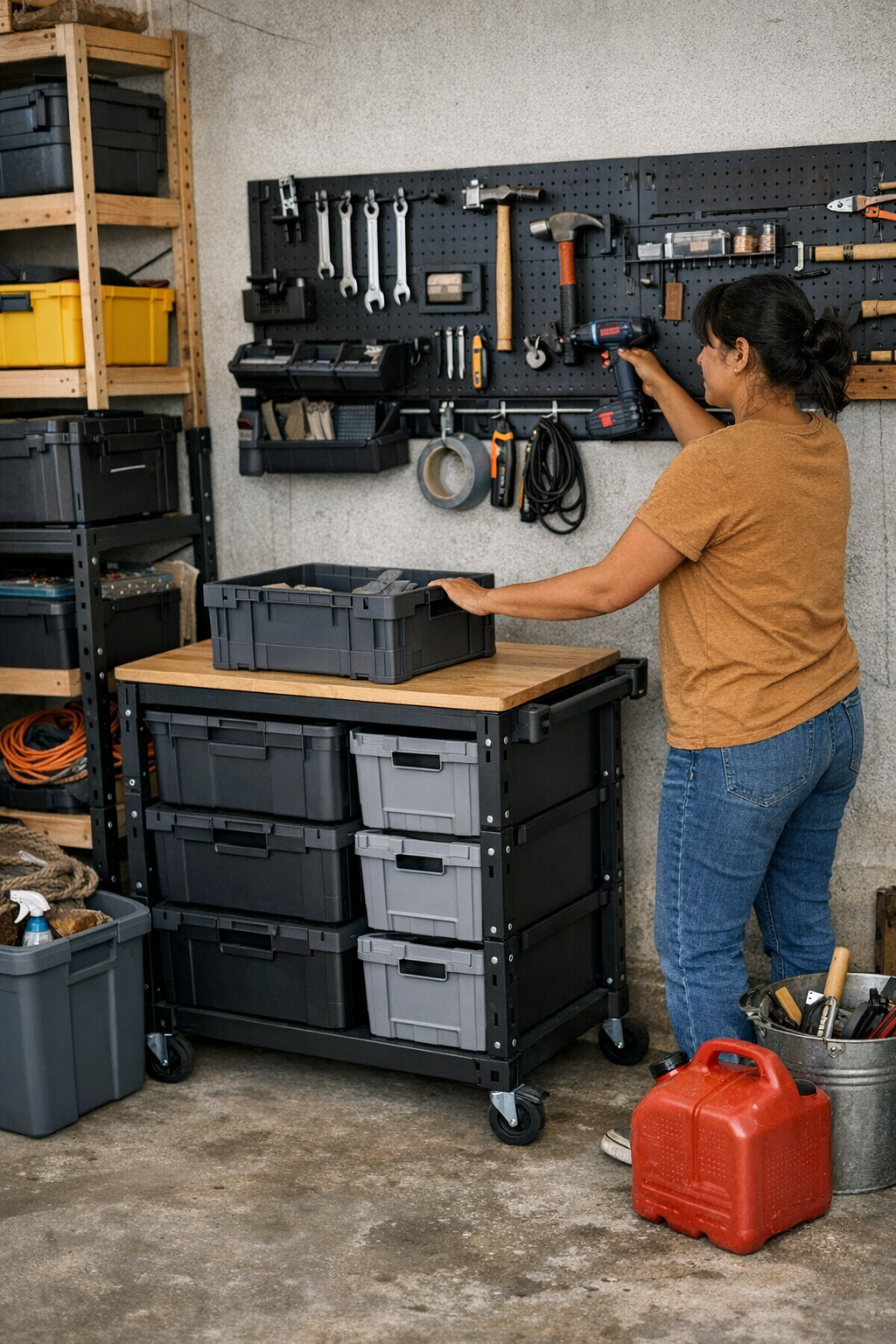
Overflow corners—everyone’s got one. In any working garage or workshop, there’s that spot where the system starts to break down. What begins as a carefully organized zone—tools lined on hooks, supplies boxed on shelves—inevitably hits a wall. A new cart, a tall shelving unit, or “just one more” storage bin feels like the fix. For a day, maybe two, the area looks crisp. But by the third rushed project or busy Saturday, you notice the cost: you’re shifting carts to get through, edging around sharp corners, stretching for bins that seemed accessible on paper but hide behind layers in practice. The overflow corner, once meant to help, gradually becomes the main source of friction—forcing workarounds that sap your energy and slow your routine.
Why “One More Storage Piece” Rarely Solves It
It’s easy to rationalize another rack or shelf when open floor feels like missed opportunity. But every addition comes with hidden consequences. What felt like efficiency—an extra cart tucked between workbenches or a new shelf filling the wall—rarely lasts through actual use. As soon as you’re carrying tools in both hands or moving fast between tasks, you run up against it: that rolling cart you have to angle just to open a cabinet, the shelf that crowds out your step as you prep at the bench. It looks sleek until you’re forced into a shuffling, sidestepping routine that eats up time and focus.
The Realities of Shift-and-Squeeze
Imagine sprinting into a project, arms full—cordless drill in one hand, box of screws in the other. The path you cleared yesterday is now blocked by the “fix” you added last week. You’re nudging the shelf a few inches, dodging the new cabinet edge, and somehow always reaching behind something to get the tool you actually need. These aren’t just minor annoyances—they turn quick resets into drawn-out puzzles. Each work session ends with you piecing the area back together, hoping next time you won’t be trapped by your own setup.
When Maximizing Space Backfires
At first glance, stacked bins, tall rails, and multilevel carts promise an end to chaos—they make unused air space work and clear the benchtop, right? That’s the theory. But the “everything visible, everything accessible” dream doesn’t hold when you’re in a rush. Hooks positioned too high, bins layered behind others, and shelves packed so tightly you have to move two things just to grab one—they kill the flow. Instead of clear work zones, you build a layered obstacle course that demands constant shuffling and re-sorting just to stay on track.
Vertical Overload: Wall “Optimization” Gone Wrong
Wall systems seem ideal until you’re reaching for a wrench that’s tucked behind three other hanging tools. In a hurry? Good luck. Every “optimized” peg becomes a mini-bottleneck. Instead of a single, smooth motion, you’re lifting, sliding, and re-hooking items—a process that drags, especially over weeks of repeated use. A wall full of gear might look orderly for a photo, but if you can never return something in a single step, you’re losing the battle for real efficiency.
In Practice: The Setup That Got in Its Own Way
I once crammed a slender mobile shelf into my narrow garage, convinced it would eliminate the random heap of clamps and fasteners. At first, it worked: chaos was contained and every piece had a home. But almost immediately, the downsides appeared. To unload gear, I’d have to wheel the shelf—never quite straight—just to get to the main storage. Every time I tried to close the cabinet, I’d remember I needed to rotate the shelf out of the arc. Putting things away became a sideways zigzag through the zone, bouncing off units like a pinball. What solved scattered piles in theory slowed every project in reality—resetting at the end of the day felt like rerouting through a mini-maze, every single time.
A Small Edit That Changed Everything
Eventually, I ditched the shelf and went radical: a single adjustable rail, one basket, one row lower. Suddenly, the whole rhythm changed. I could reach, return, and move without a single sidestep. Floor space opened up and nothing crowded the doorway. Resetting—wiping down the bench, sweeping, stowing tools—shrank to minutes. For the first time, putting the space back together didn’t feel like solving a sliding-tile puzzle.
How to Spot Real Storage Friction
If you’re always managing workarounds, your storage isn’t working. Pause and take note—are you stepping over bins, sliding carts just to open a drawer, or negotiating sharp angles because there’s simply too much in the way? The more you find yourself rearranging the solution instead of using your gear, the less usefulness you get out of the setup. “Organized” doesn’t matter if it’s blocking your everyday movement. When obstacles outnumber clear steps, the system risks becoming another layer of clutter itself.
The Problem of Clutter Magnet Zones
Some corners just refuse to play nice—no matter how neatly you arrange things, they end up as accidental dumping grounds when traffic slows or access is tight. Piling in another cabinet or bin never really fixes the problem. Tightly packed dead corners limit what you actually use, turning valuable floor or wall area into a stalled, unusable pocket that only collects more overflow with time.
How Less Storage Builds More Movement
The real win isn’t squeezing more units into the floor plan—it’s about letting your routine dictate what stays, where. A reliable layout is one where every tool has a direct, no-obstacle path back home, and you instinctively flow from task to reset. This isn’t about Pinterest-level neatness; it’s about open walkways, fast cleanup, and spaces that stay functional during the busiest Saturday rush. On days when projects multiply, you notice: fewer bottlenecks, no reshuffling, no more wrestling overflow carts just to sweep up.
Micro-Adjustments, Outsized Results
The biggest performance leap sometimes comes from the smallest changes. Dropping a basket one hook lower, shifting a cart to the room’s true edge (not its path), or even removing a shelf entirely can transform awkward navigation into easy, repeated flow. The difference appears not just visually, but in how smoothly you glide through work, how little you have to think about returning tools, and how much less effort it takes to keep things in check.
Measure Efficiency by Movement, Not Just Capacity
Real workshop efficiency isn’t about maximum storage. It’s about minimum interference: how few steps it takes to grab, use, and put away the essentials. No unnecessary backtracking, no detours around crowded corners, no long pauses to reshuffle bins just to put things back. If cleanup feels quick and returning tools takes almost no thought, you’ve found the sweet spot. Sometimes the best addition is removing what gets in your way.
Find more practical modular storage ideas for real workshops and garages at StackNest.