
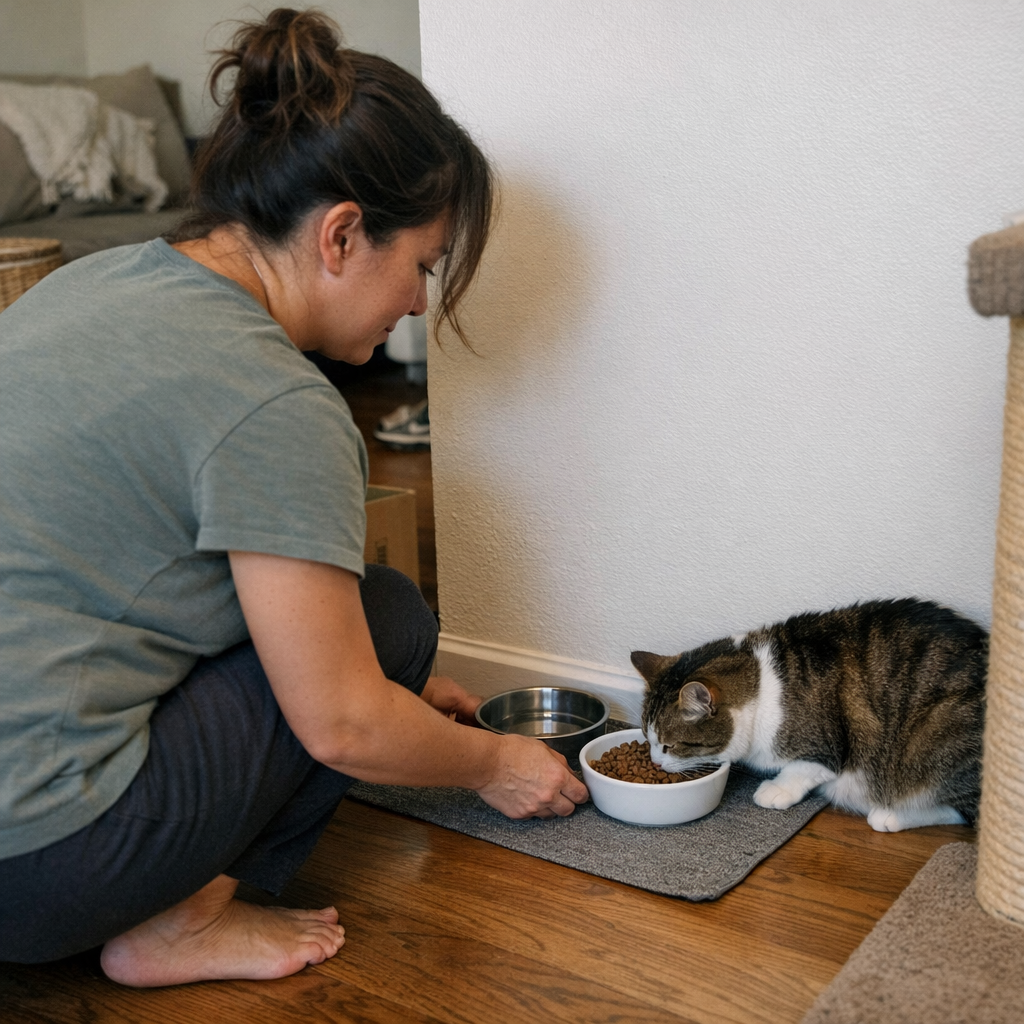
The problem shows up fast, even in the neatest setups: You line up the cat’s bowls in a tidy kitchen nook, angle her bed by the window, tuck the litter box behind the door. It feels organized—everything in its zone, nothing obviously in the way. But predictably, half the food is left untouched, kibble starts gathering under the oven, tracked litter appears in the hallway, and toys sneak back into the living room each night. The setup doesn’t fall apart all at once. Instead, it goes soft at the edges—meals missed, messes growing, routines slowing down—until the “organized” fix starts creating new friction every single day. This is the real tension inside every indoor-cat household: a setup that looks right but breaks down under repeated, real use. The StillWhisker world is built to notice and fix exactly that.
When “Organized” Isn’t Enough: The Hidden Impact of Home Noise
On the surface, an indoor-cat setup can seem optimal—bowls tucked away from feet, litter in a corner, rest beds just so. Yet, what makes or breaks a zone is often noise: the hum of a fridge, the clank of a dishwasher mid-cycle, the unpredictable slam of a door. What’s invisible at first becomes obvious when daily life repeats: cats start skipping meals, retreating mid-bite, or circling litter trays but leaving them untouched. The food or litter location chosen for easy access actually sits in the crossfire of these background interruptions, and over a week the signs accumulate.
You notice it as you reach for the bowl, only to pause—blocked by the edge of a clattering appliance or staring at ground-in kibble caught behind a kitchen leg. Wipe-downs that were supposed to be quick become late, scraping at patches that hardened while you weren’t looking. Even after a full reset—fresh food, wiped mat, cleaned bowl—the cycle restarts as soon as the ambient churn resumes. The home looks organized but operates with friction built-in.
Why Cats Avoid “Well-Planned” Spaces
The problem isn’t usually a dirty mat or a poorly chosen bowl—it’s the repeated surprise from noise or vibration right where the routine should be smooth. That’s why you see your cat hesitate: hovering next to the bowl, checking for a hum before eating, or wandering away entirely after a fridge kick-starts. Water bowls near pipes go ignored. Litter trays close to slamming doors get bypassed for corners you’d rather never have to scrub. Meals get left unfinished; the mat collects more stuck-on bits, not less; litter traces drift further from the box each time the daily cycle ramps up.
The avoidance is subtle, but the signs persist: food meant to disappear sits untouched, tiny messes spread beyond containment, wipe-downs become less about maintenance and more about undoing yesterday’s fallout.
Real-World Example: The Relocation Experiment
A practical test: shift the bowls or litter tray just one stride away from the worst offenders—noise, vibration, door movement. Pause and reset the food mat outside the direct range of the fridge or dishwasher thrum. Result: most cats adapt within days. The bowl ends up a foot off the wall, not in foot-traffic’s path. Suddenly—less wasted food, faster cleanups, and messes that stop ballooning into whole-room annoyances. Instead of blocking yourself with a week’s worth of frustration, you spend less time and effort—often noticing the tension drop before your cat even finishes the meal.
The Daily Cycle: Friction and Fallout
A tidy corner turns into a spreading mess if the root isn’t noise- or traffic-proofed. Today’s neat bowl line leaks kibble by tomorrow. Dried food sticks outside the mat. In just a week, your routine changes: mornings spent prying up crust, stray litter brushed from the door track, or going back for a toy dragged away after a loud clatter. Toys reappear in odd spots, mats skate across the floor, wipe-downs slip ever later into the day. This isn’t just about “looking messy”—it’s ten extra minutes chasing a trail that never quite returns to zero. Organized layouts that look quiet at rest end up needing more interruption and more repeated effort than you ever planned for.
Repeated Use: Where the Friction Really Shows
Resetting a zone helps—once. But reality is reset speed versus the next new mess. If you need to work around a humming appliance, squeeze past obstacles to refill, or dodge foot traffic to wipe up, your routine stalls out: seconds stretch to minutes, and minor tasks pile up. The friction is clear in moments like:
- Bowls blocked by kitchen gadgets: You lean, reach awkwardly, and end up spilling water or scattering kibble—fighting your own setup just to refill.
- Cleanup wipes out of reach: You know where they are, but can’t grab them mid-mess, so spills linger and dry on.
- Pawprint and kibble spillover: New messes invade human walking space before you’ve finished the last sweep.
- Litter drag into the next room: No matter how often you scoop or contain, granules keep pushing out into soft carpet or across tile seams.
Each repeat disrupts what looked like a settled solution. The zone only “works” until it’s actually used—on-the-fly, with nothing else in the way. When fast access is blocked, ordinary cleanups start feeling like chores you have to brace for, not routine resets.
Looking Tidy Versus Working Smoothly
Photos and first-day impressions flatter any zone. The reality sets in after a dozen cycles—does the setup get smoother, or does each use add another snag?
- A mat by the fridge that stayed spotless for photos is a crust-ringed, ground-in patchwork by evening—requiring a scraper, not just a wipe.
- The clever litter nook becomes a launching pad, leaving a path of dust through the house even after you sweep.
- A bed by the entry devolves into a collection zone for stray toys and wrappers when your cat starts avoiding the noisy hallway.
Visible order is easy; lived-in calm is earned. The gap shows itself at 7 a.m. when your arms are full and you discover, again, that yesterday’s “fix” didn’t prevent today’s interruption. Real indoor-cat zones succeed not when they look finished, but when they don’t trip you up or slow you down after the tenth cleaning, the twentieth feeding, the fortieth lap around the house.
Small Changes, Big Routine Wins
Massive rethinks aren’t required—often, moving things a foot or two makes all the difference. Pull bowls away from appliance hum. Shift beds out of pass-through spots. Nudge the litter tray further from slamming doors and the torment of the laundry cycle. What you get:
- Meals finished with less mess—because nothing spooks or distracts mid-bite.
- Quick, one-pass cleanups—no more doubling back for what dried on or what your cat scattered away from the center.
- Toys and accessories stay put, not migrating overnight into shared spaces.
- Litter and water mess remain local—no more surprise crunch underfoot in the next room.
None of these changes create perfection. But over the course of a week, friction drops. Interruptions decrease. Ordinary routines get tighter, do not demand extra steps, and you actually reclaim time from your cat setup, not lose it to frustration or cleanup drift.
Signs Your Setup Needs a Shift
Here’s how you’ll know a change is overdue:
- Partial meals keep appearing, and a bowl is rarely emptied—no matter what brand you use.
- Food and litter scatter reappear each day, matching or exceeding yesterday’s mess, even after full resets.
- Your cat waits out the appliance cycle or clears the hallway before using her bowl or box—consistent hesitation tied to daily noise or traffic.
- Cleanup tools exist, but the time between noticing mess and acting grows longer; access is just inconvenient enough to delay.
- Each tidy-up feels like a bigger restart, rather than small, manageable maintenance.
If this matches your routine, shifting the setup further from noise and disruption usually outperforms buying the next clever mat or container. What matters most isn’t the gear—it’s structure that earns its keep by asking for less repeated work.
Making the Change Last
Indoor cat zones don’t stay static. What works today might start failing after a new appliance appears, the seasons shift, or the furniture gets nudged. The goal isn’t a frozen “perfect” spot—it’s a setup that resists getting harder, and recovers quickly from the new wave of friction. Watch for early clues: a bowl that gets skipped after a new vibration, litter tracking into unexpected places, or cleanup supplies that never seem in reach at the right moment. Strong arrangements don’t erase mess—all cat life leaves