
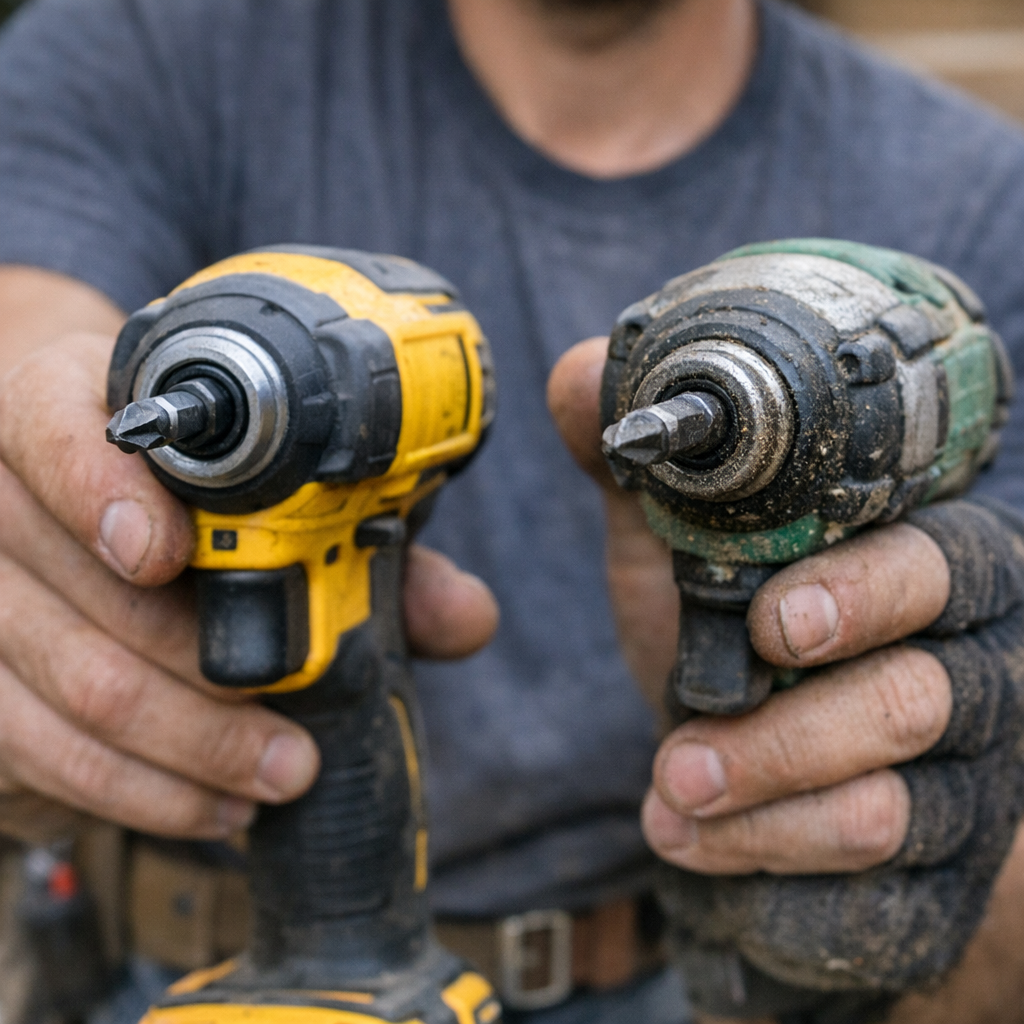
The moment you snap a bit into your impact driver, you’re making a bet: when things get uncomfortable, will this setup actually hold? In the morning, everything clicks into place—fresh bit, clean collet, jobs flying by. But as the day digs in and you’re running screws overhead, wrestling engineered studs, or buzzing through old subfloor, bit retention stops being a background detail. One slip, one chewed screw head, and you’re reminded—tool performance isn’t just about torque numbers, it’s about what happens when wear, dust, and repetition add up.
Bit Retention: The Hidden Weak Link
Work a job—real wood, tight space, arms above your head—and each micro-move matters. The first screws go in like clockwork. By mid-shift, a bit of play in the collet creeps in, blurring how much control you actually have. That tiny looseness starts a cascade: bits back out, cam-out scars pile up, and screw heads look melted or torn by the end of the run. It’s not a dramatic “pop”—just a creeping slop that sabotages your finish and your speed. Neglected retention doesn’t shout; it erodes your rhythm, drive after drive.
How Problems Creep Up (and Why You Don’t Notice Right Away)
Set two drivers on the bench—one’s cared for, one’s barely wiped down. Both feel fine on the first plywood sheet, but push into denser, rougher stock and the gap shows. Sawdust, resin, or just Monday’s grime keeps the bit from seating flush. It acts “close enough” until you hit a stubborn fastener and suddenly the bit skips, rattles, or sticks partway out of the drive head.
This isn’t just theory—it’s routine shop trouble: One week, no cleaning, and suddenly you’re extracting bits jammed in a resin-soaked collet, or replacing screws that look shredded before they’re even tight. Swap bits too often without wiping down, and you’ll see fine metal flakes and growing side-wobble build up fast. The “click” you trusted at the start? If you’re not vigilant, it’s acting as cover for accumulating slop.
What Maintenance Actually Feels Like Under Real Pressure
Bring two tools to a stubborn corner cut—both loaded with fresh bits. The cared-for driver channels energy cleanly, every squeeze feeling tight and expected through the handle. Grab a carelessly maintained driver and you’ll start picking up extra wiggle, unexpected vibration, and fasteners driven at a crooked angle. It’s not just damaged screws—it’s energy lost, bumps transferred straight to your wrist, and time burned fixing avoidable scars.
Try keeping your arms overhead after a full bag of screws: On the second ladder move, muscle memory wants the tool to just work. But that slop in the collet or sleeve leads to the bit catching, bucking, or even sliding just enough to jam a screw too deep. Small lapses in retention turn into fatigue fast, and the job starts feeling heavier than it should.
Five Minutes That Change a Week of Fastening
One crew member, cutting corners on cleanup, starts noticing bit wobble and chewed heads halfway through a door install. He finally stops, wipes down the collet, brushes out debris, drops a hint of oil in. The result: instant drop in side-play. Suddenly, every screw sets flush, metal shards disappear, and finish work picks up speed. No new driver, just a five-minute reset that saves twenty minutes of headaches by the end of the day.
Real-world ritual: Keep a small rag and oil in your tool roll. Quick wipe, drop of oil between material swaps—especially when moving from gritty treated lumber to interior ply—means fewer mid-run interruptions and tighter fits every time.
Spotting When Your Driver’s Slipping
Know the signs before mistakes build up:
- Bits start spinning or wobbling after the third or fourth screw
- Screw heads finish with sharp, torn edges—even on “easy” material
- You feel a surprise jolt down the handle, or an odd chattering sound mid-drive
- Bright scuffs or chatter rings form around fastener heads instead of clean seats
If any of these start showing up, stop and check your retention—especially after dusty jobs or swapping between different fastener types and materials. Ignoring the creeping play all but guarantees lost efficiency and rougher finishes as the day drags on.
Small Habits, Big Results—Why Most Runs Stand or Fall on Maintenance
Smoother work isn’t about the newest driver on the truck—it usually comes from the most consistent habits. Daily care—dusting the collet, feeling for wiggle, the smallest hint of oil—keeps your workflow tight and your tool honest. By the hundredth fastener, that five-minute check will be the reason your work looks clean, feels lighter, and doesn’t stall out hunting for a backup bit or sanding over avoidable damage.
If you want more practical tool solutions built for real work, visit Gumboll.