
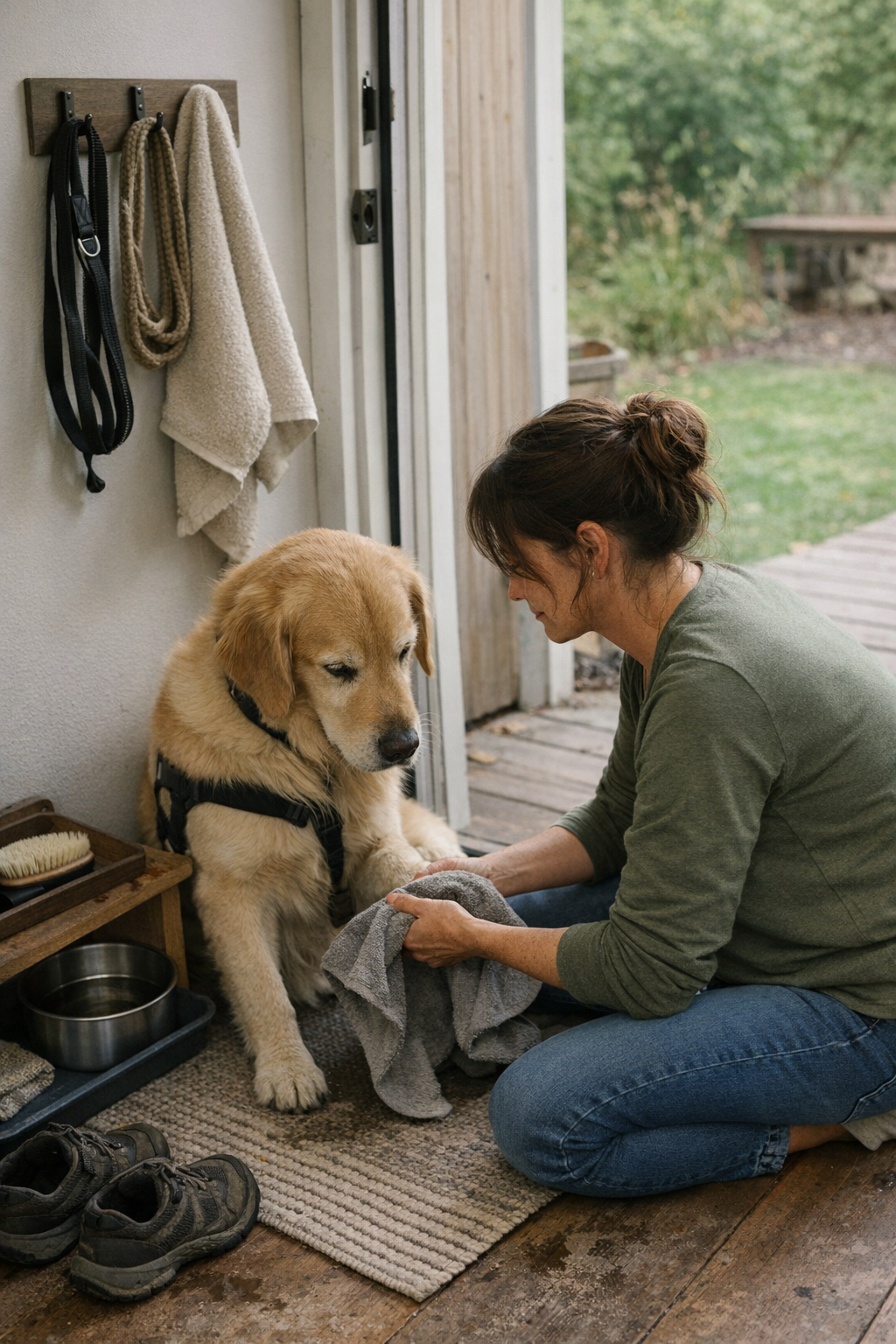
Why Pet Care Routines Break Down
Most daily dog or cat care doesn’t break under training, but under basic friction. You walk in to refill a water dish—yesterday’s food bowl is still blocking the spot. You reach for the leash and realize it migrated somewhere else after last night’s walk. The towel for muddy paws isn’t hanging by the door but is missing again, so dirty paw prints scatter across the entry. These constant, low-level breakdowns aren’t dramatic, but they stack up: greetings get more scrambled, simple resets drag out, and a routine that should run smoothly grinds into repeated delays. CalmPetSupply exists because these points—feeding, refilling, grabbing, wiping, resetting—collapse more often than they should in ordinary homes.
Minor Friction, Major Impact: How Little Issues Grow
A pet-care setup might look fine for a day or two. Then, shoe piles block the water bowl. The towel slides out of the entry zone and into a laundry heap. The cleaning cloth is hidden under a stack in the wrong room, right when a spill hits. Brushes end up wherever someone last dropped them—kitchen, hallway, never in arms’ reach. Each small disruption adds seconds, then minutes, and soon routines stretch longer and feel heavier. What was supposed to smooth the day starts eroding it.
Daily Scenes: When “Almost Works” Isn’t Enough
Picture an actual evening: Groceries in one hand, leash in the other, sidestepping toys wedged by the door. You pause, scanning for the towel to stop muddy paws—no sign. The spray bottle is awkwardly jammed behind junk mail. Forced to choose, you rush, skip a step, or forget one task entirely. You find wet spots or hair trails later, after you’re already sitting down. It’s never one big disaster, but a pattern: each missing basic leaves you circling back, breaking the flow of any homecoming or reset.
Water tracks appear because the towel didn’t make it to the hook. You’re hunting for supplies when you should just greet your dog. Disruption in pet care hides in these repeated, manageable but draining mini-messes—never big enough to overhaul, always annoying enough to interrupt.
The Real Test: Repeated Use, Not Initial Setup
Most so-called “systems” work great the first day. By the third, leashes slide to other hooks. Toys invade the walkway. That one towel cycles into the wash and doesn’t come back. Fixing one side—putting brushes in a bin—just lets another weak point reappear: water bowls tucked behind pantry clutter, spray bottles shuffled out of the way for groceries. Visual order means little if daily actions keep failing. The real test isn’t how tidy things look, but whether repeated care still feels smooth after a week.
How Organization Can Still Derail Routines
Even a space that looks organized on a good day can trip you up when you actually need to move fast. Most trouble sets in when “put away” means “out of reach”—leashes mixed with coats, towels in hall closets, food packed somewhere less obvious. The goal was less visible mess, but the real-life effect is more blocking—hesitation at the door, extra steps, rushed backtracking. In the time-crunch moments every dog or cat owner faces, these small barriers multiply stress instead of lowering it.
Reducing Daily Drag: Anchors, Not Add-Ons
Calmer care isn’t about piling on more baskets or organizers. It’s about shrinking the gap between use and storage. A towel hung on the back of the door, not the bathroom. A brush dropped in a tray by the entry, not another room. Leash, towels, bowls—anchored in one repeated-use zone—strip out mid-routine searching and surprise tripping. Even a simple fix, like tying the towel to its hook, stops it from wandering when you’re not paying attention.
The payoff is obvious after a few days: fewer extra steps, resets that happen as you come and go, and less mental drag when the day is hectic or the deadline is tight.
Maintaining Flow: Specific, Repeatable, Visible
A setup that works makes resets automatic—not just cleaner but instantly usable. Keep core items—leash, towel, one tray for essentials—right at the entry and put lesser-used gear out of the main zone. When each item truly lands in its marked spot every time, “almost works” moments drop off and the habit of adding more “just in case” stuff fades. The fewer items to check or relocate, the steadier the flow—no last-second dash for a missing basic.
Your pet notices too: steady routines signal calm, not rush. Having everything always at reach at the point you step in or out not only trims the mess but slowly makes daily transitions predictable—for you and for your dog.
Everyday Reality: The Cost of “Almost” Working
Routines that just “sort of” work cost you more focus and effort than you think. When leashes, bowls, towels, or wipes are a room away—or under something else—hectic transitions become the norm and each interaction gets slightly less smooth. Every bit of distance or delay turns into repeated tension: too many corrections, too few calm starts.
The fix lives in one habit—anchoring each daily-use item exactly at the place you’ll need it, every single time. Backups stay in cabinets or closets, but the active zone stays lean so you’re not left scrambling. A “tidy” entry isn’t the real goal—it’s an entry you can actually feed, clean up, and reset through, even when the day goes sideways.
Making Calm Possible—Even on Busy Days
Real calm isn’t about having good intentions—it’s about a setup that stops breaking down the moment care gets inconvenient. When the towel, brush, bowl, and leash all sit within arm’s reach, with anchor points that resist wandering, those little breakdowns shrink. Instead of losing time to repeated hunting, you can handle after-walk resets, feeding, or late-night tidying without extra movement or re-do. Over time, these margins stack up—less energy wasted, more routines that actually last, even when the day doesn’t go as planned.
Visit CalmPetSupply for practical solutions that fit real daily routines.