
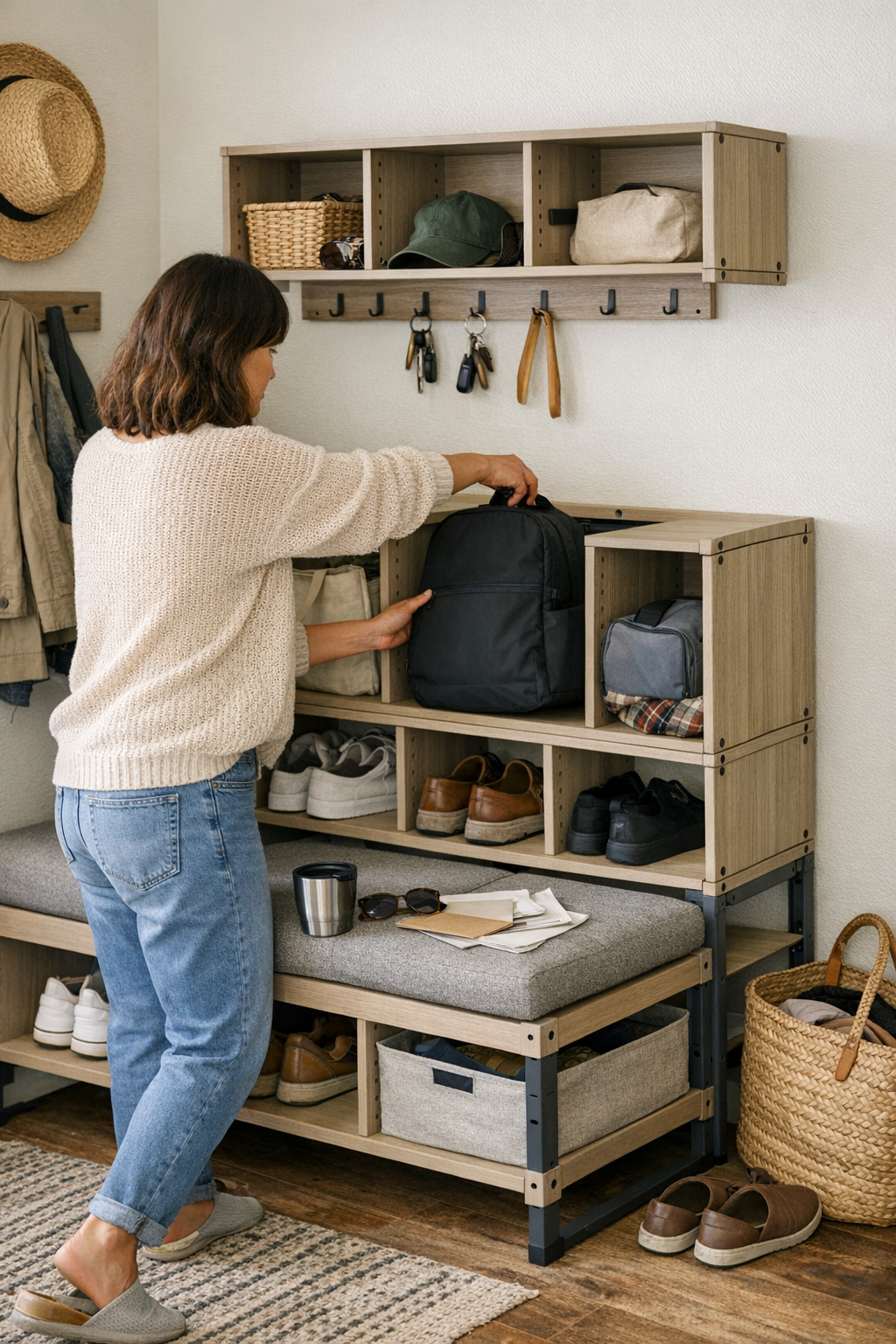
When your entryway countertop is buried under bags, keys, and shoes, it isn’t just chaos—it’s evidence your storage setup is losing the daily battle against real routines. If you’re endlessly cycling bags from the counter to the floor, shoving shoes aside to claim six inches of bench, or lifting piles just to find today’s mail, your system isn’t broken by clutter—it’s defeated by habit friction. Most entryways don’t start with a stuff problem; they develop a bottleneck because storage is built for one controlled reset, not for the relentless, scattershot returns of ordinary life. If an open surface is the fastest place to drop something, it wins. Every evening, every weekday, that’s where overflow stacks up first, turning “temporary” into a new normal with no friction to interfere.
Why Entryway Surfaces Turn Into Catchalls
Flat, open surfaces next to the door are magnets for anything in your hands as you cross the threshold. Say you’re juggling groceries, kids, or wet umbrellas—if there’s even a one-second delay to open a door or lift a lid, the countertop takes the hit. One bag landed “just for now” attracts the rest: shoes, mail, hats, stray gloves. The result isn’t immediate disaster—just a slow drift, with once-neat paths shrinking as items settle further from their homes. The real cost? What was meant as a pass-through becomes a blockade, and resetting feels like re-sorting a pile that never quite empties. Even determined organizers find themselves repeating the same cycle, losing the surface to new overflow midweek.
Access Friction: The Real Source of “Random” Clutter
The wrong storage looks tidy only when nobody’s in a hurry. Add late arrivals, arms full of sports gear, or a toddler’s scattered shoes, and small access issues snowball. Closed cabinet doors and bins with tight lids turn a simple drop into a multi-step frustration, so bags and shoes circle around to land wherever’s easiest—most often, right on display. That “temporary” shortcut doesn’t reset itself; it builds up. Soon, the entry is less a passage than a holding zone, stacked with every day’s backlog. A system that makes you reach or pause ends up never being used when it matters most.
The Bench-Top Domino Effect
Picture a narrow entry with just enough room for a slim bench and a wall cubby overhead. The week starts with shoes lined up and backpacks perched in order. But as the days blur, one bag left in a rush becomes two, keys multiply in the tray, and shoes spread out to the far edge. The cabinet might only be a step away, but if its door is shut on Tuesday morning, dropping mail on the bench is inevitable. By Wednesday, not only is the surface gone, but shifting anything means risking an avalanche. The storage that looked neat in a photo now interrupts your path every time you squeeze through.
Closed Storage vs. Open Access: What Actually Works?
It’s tempting to reach for closed cabinets, deep bins, or drawers to “make clutter invisible.” But for high-traffic thresholds, every handle or lid adds a speed bump. The best setups strip away barriers for what actually lands multiple times a day: shoes, bags, mail, keys, jackets. Open racks, cubbies, and wall hooks invite instant drop-and-go—no balancing act, no shifting stacks, no two-handed lid wrestling. Instead of overflow migrating, these units become the first-choice landing, not the fallback. Open storage can’t hide everything, but it channels the daily mess to a defined zone, instead of spreading piles to every available edge.
Testing the Alternatives in Real Life
Swap lidded bins for open cubbies and the rhythm of entry changes. Pre-switch, storing gear meant pausing, opening a lid, moving other things, and—more often than not—abandoning the process halfway. Shoes and bags hovered on the closest surface, bench tops jammed up, and reset was a major event. After switching in open-front racks, “drop and move on” finally worked: shoes landed in their zone, bags got real parking spots, and the need to clear and restart dropped sharply. By midweek, the signal was obvious—the overflow edge stopped creeping outward, bench surfaces remained open, and rushed mornings no longer triggered a full entryway reset. Not perfect, not perfectly hidden, but the critical friction point was gone.
Real-World Entryway Friction: Recognizing the Patterns
Repeated inconvenience always finds a new surface to claim. Classic signs your setup is introducing friction:
- One bag dropped breaks the no-clutter streak for days. That first item is always a magnet for the pile-up that follows.
- Neatly lined shoes stretch farther each day. If it’s work to return them, they migrate—often ending mid-hallway by Friday.
- The bench transforms into overflow parking. What’s meant for sitting becomes the backup zone for anything without a fast home.
- Returning one item partially blocks the path. Awkward placement or oversized bins can jam up entry for everyone.
- Wall-mounted storage does part of the job—but only if it’s in the flow path. Bad placement leads to items drifting back to counters or floors instead.
Fine-Tuning for High-Frequency Use
No two homes share the same entry layout, but friction shows up the same way: routine items resist reset unless it’s easier than leaving them out. Lasting setups are built for repeat motions: priority items land in open, reach-first spots—no lid, handle, or deep bend required. Spaces that only look organized after a full sweep break down by Tuesday. Instead, open cubbies and racks let you toss, grab, and go. Wall units clear the floor, shrinking pinch points in tight halls. Floor units with open faces tackle bags and heavy gear that need ground-level access, without turning every morning into puzzle time.
Quick Tips for Fewer Clutter Rebounds
- Organize “by reach,” not by storage size. What you touch most should never require an extra step—items that do will migrate to the nearest open spot.
- Time your resets to busy stretches—after work, post-activities, or weekends—so your setup supports traffic, not just empty-house order.
The Difference Between Looking Tidy and Functioning Smoothly
An entryway that looks organized at noon and collapses by Wednesday isn’t short on storage; it’s missing the match between habits and setup. When shoes click into place fast and bags find open bays—without shifting a stack—surfaces stay clear for the unexpected and returns lose their drag. The payoff is in the threshold: easier passage, fewer blockages, and a zone that stays as open on a Friday as it felt on Sunday. Real order survives the week because the setup fits how you actually move—not just how you want things to look at reset.
For carefully designed storage built for busy entryways, drop zones, and real-world routines, visit Betweenry.