
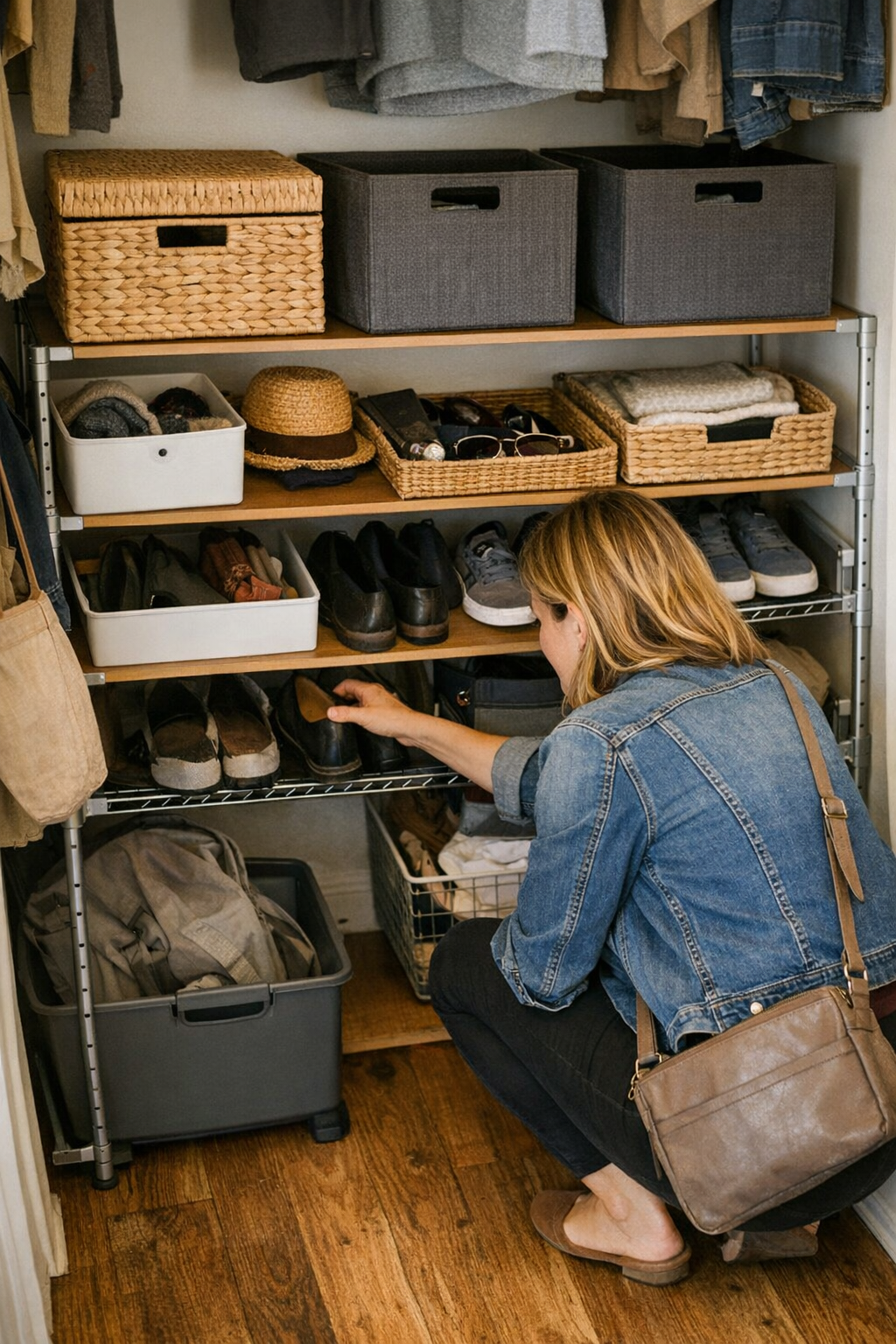
The perfectly arranged closet always looks great—right up until real life moves back in. All those matching bins and color-coordinated baskets promise easy order, but within days, the cracks appear. Shoes spill into the middle, gloves vanish into the wrong bin, and the morning rush leaves folded stacks crumpled and corners crowded. The show-home setup quickly gives way to the reality of daily routines: quick changes, tired evenings, unpredictable schedules. Suddenly the gap between “looks organized” and “actually works” is impossible to miss.
When Style Adds Steps—and Friction
At first, identical containers and perfect symmetry trick you into feeling in control. The neatness feels self-sustaining. But those matching lids and deep baskets rarely hold up to repeated use. Tall bins block your view, labels are forgotten, and opaque baskets mean mystery contents. Every time you reach for a charger or scarf, you’re shuffling containers—lifting, sliding, guessing. The system’s style becomes the source of its drag.
The extra steps pile up quietly. By midweek, you’re reaching behind stacks to grab one thing, moving three baskets to find another, and reshuffling each time you put something back. Gloves land in the shoe bin. Chargers spill out over hats. Lids go missing—then never return. That “maintainable” closet now demands your attention every night, fighting your routines instead of supporting them.
Where Appearance Beats Access: The Real Tradeoffs
Picture a shared hallway closet lined up with matching lidded cubes. The initial effect is serene—everything straight, surfaces clear. But life in a busy home wears that system down fast. The moment you’re running late, bins get tugged out but not returned. Lids disappear. The most-used things migrate to the only open basket in front, while the rest become a jumble of tangled hats, tangled cords, and mystery items buried in the stacks.
The daily rhythm exposes the system’s blind spot: categories blend, stacks topple, and shelf edges become drop zones “just for now.” Finding earbuds means upturning three bins. Grabbing gloves means reshuffling the row. Instead of curbing clutter, the closet hides it in plain sight—or worse, scatters it across the house as everyone leaves things where they land.
The Real Weight of Over-Styled Storage
Why does a closet that once looked effortless suddenly feel like work? Because you’re managing the setup, not using it. Each action—lifting a bin to see what’s behind, stacking baskets to reach something below, fishing through an unlabeled container—adds friction. Over time, what was supposed to simplify your life turns into a puzzle you solve on repeat.
And as routines overlap—packages coming in, sports gear coming out, seasons changing—the categories lose shape. Winter gear slides into summer bins, everyday items get shuffled. The once-tidy arrangement becomes a daily game of stacking and re-sorting, just to get to the next morning without a pile-up.
Spotting Storage Fatigue
The warning signs are always the same: bins left out, piles forming at the edges, stuff “temporarily” stashed anywhere it fits. If opening the closet means shuffling three things just to grab one, or if you start leaving things out because putting them away is a hassle, your storage isn’t working for you—it’s working against you.
What Happens When Storage Fits Your Routine
Real solutions don’t come from adding more containers. The fix is aligning your setup with the way you actually use your space. In my own hallway closet, the breakthrough came from swapping a row of deep matching baskets for a mix of small open bins and a waist-high open shelf. Suddenly, there were no more hidden piles or balancing acts—shoes landed fast, grab-and-go items like hats and gloves had a simple drop zone, and all the high-use things were visible and within arm’s reach. The open shelf’s front edge, once a landing zone for clutter, finally stayed clear all week—because putting things away stopped feeling like extra effort.
Smart storage setups reinforce routines instead of resisting them: when you can see what’s missing at a glance, you’re less likely to let clutter build. When putting something back takes one step, resets are faster by default. The system becomes self-sustaining because it’s built for how you live, not just how you want it to look.
Designing Storage That Holds Up
No closet or mudroom stays perfectly neat forever. But effective storage serves daily rhythms and fights back against clutter creep. Instead of fixating on matching bins and symmetry, use containers and shelves that mirror real-life categories—and keep your most-used items between knee and shoulder height. Break up deep shelves with open bins for things you reach for daily, and keep sealed baskets for out-of-season or rarely-used items. At least one open edge lets you spot missing or misplaced things before chaos takes over.
Practical Tweaks That Make a Difference
- Rethink shelf heights: Everyday grab-and-go items should land at “easy reach” level. If you’re crouching or reaching overhead for basics, swap the layout.
- Watch for “bin overload”: If containers are multiplying—or migrating across shelves—ask if you really need a bin for everything. Sometimes an open shelf beats another box.
- Audit your reset speed: If clearing clutter takes more than a minute, track down the storage step that slows you down. Strip out anything that creates extra work just to put things back.
A Storage Setup Built for Real Life
You don’t need a full overhaul—just honest tweaks where your routines meet resistance. The most effective changes rarely look drastic, but they pay off every day: less reshuffling, fewer mystery piles, and a closet that keeps its categories clear. Over time, your space feels lighter—not just because the surface looks right, but because it quietly supports the way you actually live. Everyone finds what they need, putting things away takes seconds, and sudden pileups become a distant memory.
Find practical closet systems, shelves, and everyday storage options at ClosetWorks.