
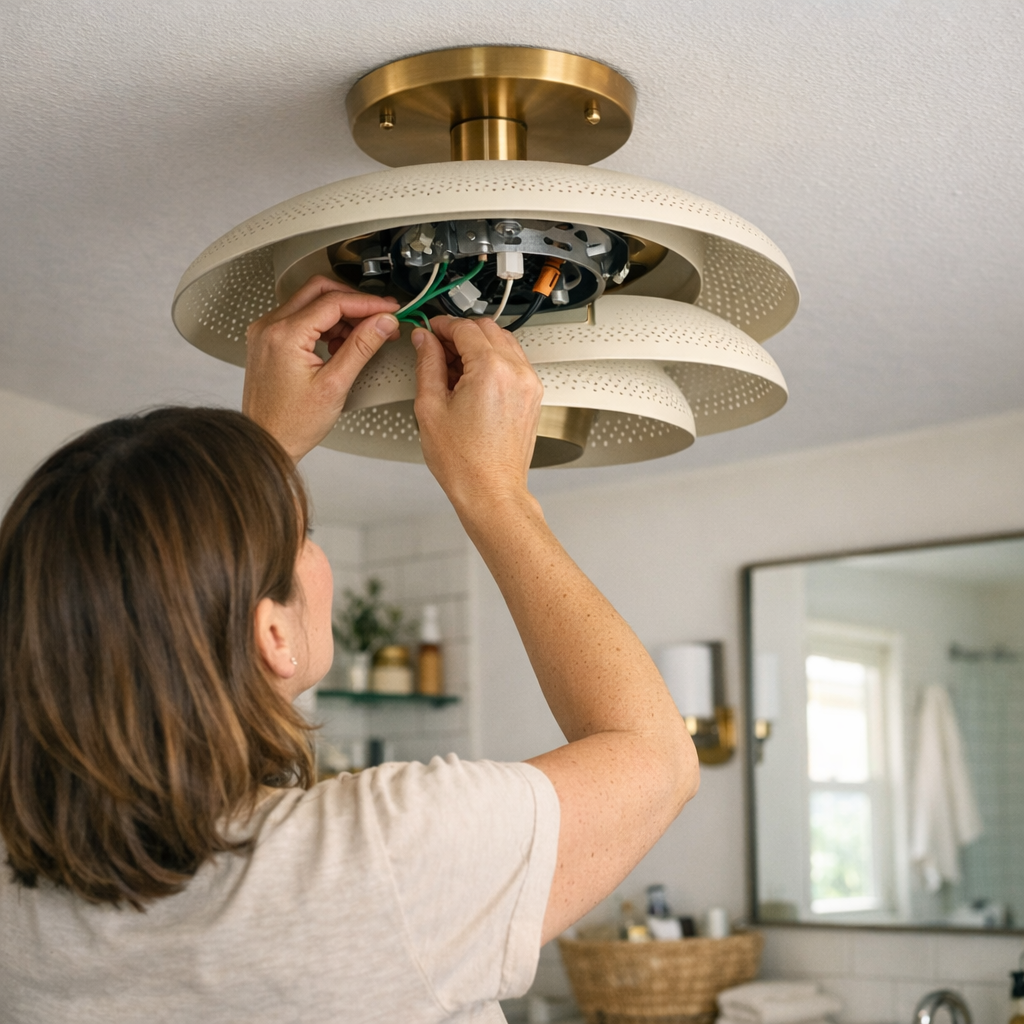
The real difference between a lighting fixture that works and one that fails isn’t the way it looks on installation day—it’s what happens the first time you have to touch it again. In the actual rhythm of a house—busy mornings, rushed repairs, cleaning routines—a flush-mount ceiling light over the laundry, a hardwired wall sconce by the steps, or a vanity bar above the mirror can turn from “done” to demanding far faster than most people expect. One detail almost nobody notices at first—the ground wire, buried tight with no slack—can make every simple job risky or impossible: pulling at stuck screws in dark stairwells, straining to change a bulb by the mirror, struggling to reach across a damp laundry shelf. If the ground wire hides behind a powder-coated plate or jams stiff inside a wall box with zero give, what started as a “clean” install gets complicated overnight.
The Hidden Friction Behind Everyday Fixtures
This problem hides until it doesn’t. A ceiling light sits flush and even over a laundry counter. A pair of wall sconces bookend a mirror—lines sharp, everything anchored neatly out of sight. Only when you try to open the fixture do you discover the catch: ground wire clipped short, stiff, or stuffed behind heavy plates. It’s in the hurried moments—late morning, running to swap a bulb—that you find yourself half-blind, one hand losing grip as the fixture tugs down on its wiring. Cutting corners “just for now” or leaving the ground disconnected isn’t rare; it’s the desperate fix when access stalls. And this chronic strain creeps in fastest in places with regular interruptions: steamy mirrors, low hallway ceilings, vibrating stair turns, utility rooms where every screw seems to rust by month three.
Real Use Reveals What Installers Don’t See
Catalog-perfect lighting doesn’t show its limits until regular use exposes the weak points. The day-to-day tells the real story:
- Mirror sconce, midnight: You lean close and half your face still falls in shadow. You go to adjust, only to find the wiring barely long enough to hold the fixture—your hand trapped, juggling the shade and searching for a connection you can’t even see. If the ground is free and visible, that fix takes one calm minute.
- Stairway pause, weak light: A flicker draws your eye, and you reach up to check the mounting. When ground access is straightforward, you can detach, inspect, and re-secure without risking a short. Pinned wiring? Most just close it back up or risk a workaround that leaves things worse.
- Hallway fade: Rows of semi-flush lights seem fine until months of door slams and vibration make coverage uneven. To open a fixture with buried wires, you either call for backup or risk stripping hardware—one misstep, and the next repair just got even harder.
The cost: every time you jury-rig a solution or put off “fixing it right,” you leave behind a tougher problem for next time—sometimes a safety oversight, sometimes an invisible bottleneck that only gets worse with age and use.
Moisture, Movement, and the Real Cost of Inaccessible Ground Wires
High-traffic and damp rooms double the trouble. In a bathroom or utility corner, moisture seeps behind trim and fasteners, accelerating wear. The difference: when a quick moisture check means wrestling with a cramped, short ground, every cleaning, code update, or loose bracket becomes a low-stakes hazard. A shortcut—leaving the ground temporarily disconnected to fit things back—quietly builds a safety risk, especially in rooms with steam, vibration, or sudden fixture movement. As regulations or building codes evolve and hardware ages, what started as a “hidden” flaw increasingly blocks safe repairs and simple maintenance.
Movement is its own pressure test. Step onto the landing, open a stairwell sconce, or try maintenance on an entry flush mount after a year: vibration and repeated access make all the difference between easy upkeep and another half-finished job. Fixtures with bad ground access turn even a bulb change into a stress point; every shortcut, every postponed tweak, and every forced maneuver adds silent friction to daily life.
Why Visible, Accessible Grounds Make Every Fix Easier
If you want your lighting to stay fixable, visible ground wire slack is the most important hidden upgrade. Four inches of reachable ground, positioned above the mounting or accessible near the wall box, means you can revisit, replace, or clean the fixture without turning your next morning upside down. The changes are immediate and cumulative:
- Five-minute bulb swaps at a fogged bathroom mirror—no risky stretching, no wires yanked from inside the wall.
- Shade adjustments or moisture checks in tight areas—handled solo, without fingers wedged behind metal or makeshift tools propping a fixture in midair.
- Simple code updates or fixture replacements over time—done without rewiring short grounds or scheduling a return visit for what should be routine.
Once you experience zero-fuss access, you notice every spot that’s missing it. It becomes the filter for what kind of lights and mounts you trust—not just for yourself, but for anyone who’ll face that ceiling or wall later.
Tips and Lived-In Fixes from Repeated Use
This fix isn’t exclusive to professionals. Whether upgrading a hallway sconce, stringing under-cabinet task lights, or swapping out a ceiling flush mount in a laundry, these habits spare you the usual headaches:
- Coil ground, never cut flush: Leaving an accessible loop pays dividends with every fast bulb change, cleaning, or bracket inspection across the years.
- Test final reach before tightening: Gently tug the wire at install—if removal still means disassembling the bracket or scraping hands on sharp edges, add slack before you call it finished.
Neither step is visible after install, but both mean you avoid balancing fixtures midair or improvising unsafe repairs down the road.
Lighting That Remains Useable, Not Just Bright
A room can look fully lit and still let you down: glare on bathroom glass, a shadow line across the prep counter, lost edges along hallways, or a work surface that’s bright but half-obscured in use. So it is with maintenance—polished finishes and high output mean nothing if every fix is an ordeal, or if an unseen flaw guarantees stress next time. Ground wire access isn’t decoration—it’s the line between lighting you live with and lighting that actually supports living.
Over time, what makes a ceiling light, wall sconce, or vanity fixture feel genuinely useable isn’t “how it looked when new”—it’s whether each return, adjustment, and regular check happens with confidence, not dread. Leave grounds accessible from the start; the small effort up front is what keeps every future change quick, safe, and clean instead of slow, risky, or left undone.
Visit LightHelper for practical indoor-lighting solutions that stay reliable after installation.