
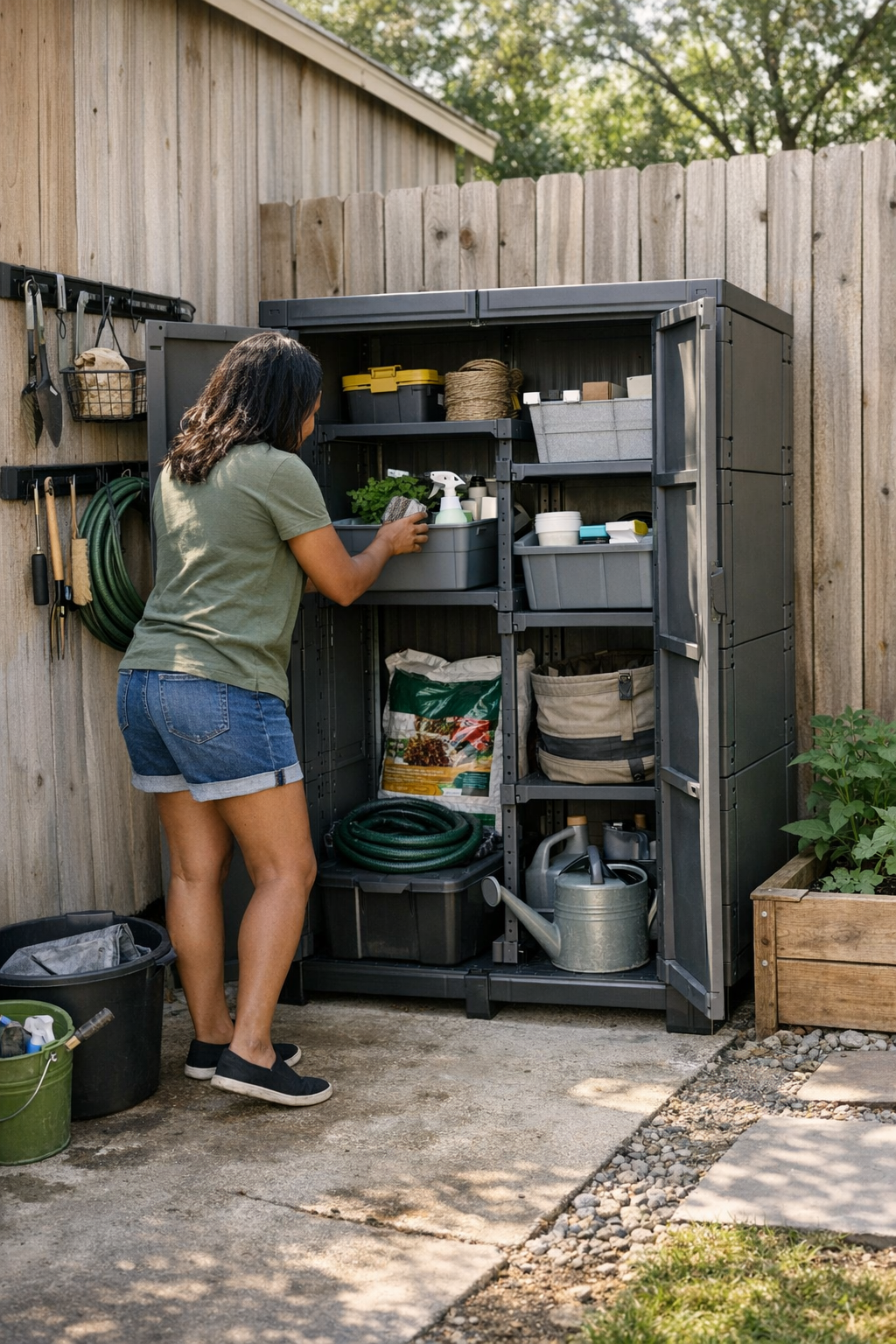
Outdoor storage doesn’t judge you on moving day—your real verdict comes weeks later, when the shed’s clean lines unravel into soccer balls wedged by the door, hoses creeping across every path, and tools claiming whatever edge you’ll tolerate after a long day. The showdown between a freestanding storage unit and a wall-mounted system isn’t really about aesthetics or capacity. It’s about whether your setup quietly clogs your routine—shuffling bins, nudging doors, retracing steps—or actually makes your yard less of an obstacle course after each storm, each Saturday, each ordinary weeknight. Good intentions meet mud, rush, and gravity. Setup choices make every difference—especially in corners where room disappears fast.
Where Storage Becomes the Roadblock
The first afternoon, your new storage looks tidy—a shed lining the fence, or a wall rail loaded just-so beside the garage. But normal use doesn’t wait. Each trip for the rake brushes against the packed lineup of patio chairs; bins you swore would stay sorted get stacked and re-stacked, blocking the walkway on every pass. In no time, movement gets pinched: sometimes a sideways slip, sometimes backing up and moving a wagon just to reach the pruners. Overflow stops being a surprise and becomes built-in friction.
If you work with a side yard barely wide enough to wheel a mower, or a patio edge serving both storage and kids’ traffic, setup footprint matters more than shelf count. A floor unit filled once becomes dead weight. It’s supposed to solve chaos, but more often, it becomes the pivot point where everything bunches up: Park the scooter and now nobody’s getting to the rakes; want the gardening gloves, but you’re balancing bins just to pull the right door open.
Wall-Mounted Systems vs. Standing Units: How Use Patterns Actually Shift
Wall systems promise freedom underfoot and open lines of movement—until vertical clutter stacks up. Hooks go up neatly, items are easy to see. But in practice, “out of the way” means cramming old hoses above eye level, stashing out-of-season tools on the far ends, and letting this month’s gear pile right in front of last month’s. What started as a clean wall morphs into a shifting wall of stuff.
It sneaks up: grabbing a shovel now requires shifting past coolers and moving the folding chairs—one hang-up triggers two more fixes, and suddenly you’re halfway to another weekend reset. Hooks meant to organize now collect overflow, blocking what you use most.
Freestanding Units: Shelter That Can Box You In
Freestanding and modular units offer the shelter your gear demands—but they claim their territory and don’t give it back. Dropped into a fence line or anchoring the patio’s end, their swing radius interrupts the routine: the shed door opens and now the footpath is gone, so tools dragged out for one job just get dumped outside for “later”—clutter in a new location.
Soon, the inside becomes an “anything goes” zone for bulky, awkward gear—cushions, sports nets, bags of soil—often just piled to clear the patio, not truly put away. The evidence: every time you pencil in a “Saturday shed rescue,” frustrated by how quickly that reset is needed.
The Return Problem: Can You Actually Put Things Back?
The best outdoor storage proves itself on the return trip, not on day one. If putting a trowel away means working past children’s boots, buckets, and a half-lost hose, it’s easier to drop it “just for now”—a momentary decision that, repeated, piles up into chaos.
Wall-mounted options work if returning gear is simple—grab, hang, step away. But few systems stay that simple under daily use. If the trimmer only fits behind a stack of bins, or a wall hook now supports three tangled extension cords, nobody’s putting things away the right way after a late-night chore.
Big sheds repeat the cycle with bulk. You unload outdoor cushions after a cookout and leave them inside the threshold, telling yourself you’ll “fix it up properly next time.” That next time creeps further out, as each drop-off blocks the last one. The rhythm breaks down, and the storage eats its own path.
Overflow Piles & Dead Corners: How Clutter Wins in the Edges
Every system promises a place for everything—until overflow creates its own zone. Stray gear finds the same awkward corner by the gate, or a once-clear path shrinks as piles drift slowly outward. That wall grid that felt perfect after spring cleaning? By July, it’s a choke-point for everything too awkward to store somewhere else, and the overflow stays until the next full reset.
Modular units don’t always flex. One cubby stays empty for months, the next is packed and spilling out. Meanwhile, rigid storage boxes can’t dodge wheelbarrows or redirect foot traffic. The result? You’re always working around storage when it should be working around you.
The Real Measure: Does Your Setup Keep Up With Daily Life?
The difference isn’t drawer count or shelf height. It’s whether your flow—grab, use, put back—survives a real week of change. Areas that do double-duty for play and projects have to adapt on the fly, not just look contained when nobody’s moving. Wall racks can flex for midsummer swaps or quick rearrangements. A mobile cart or bin might save the day when garden tasks explode or guests bring more gear. It’s the ability to tweak, not commit, that keeps things from bogging down.
Beware any setup that traps your habits. A shed that severs play space is an obstacle, no matter how nice the doors swing. A wall system overloaded with sports gear and boots becomes a messy barricade by the end of a rainy week.
Practical Tweaks That Cut Down Clutter Creep
- Designate an overflow landing pad—and set it where clutter wants to gather, not where you wish it would. A crate near the wall racks can keep soccer balls and jump ropes from flooding walk space.
- Rotate out dead corners by swapping seldom-used stuff for what needs to stay within reach. Don’t expect one layout to last a year—refresh with the seasons, or after a month of noticing what keeps getting blocked.
- Prioritize the return trip. If any system demands reshuffling for the smallest item, it’s time for micro-changes—not just another “deep clean.” Small adjustments beat giant resets, every time.
Why Real Fit Eats Features for Breakfast
The right setup won’t win awards for looks but will quietly make your yard less irritating, reset after reset. Go for what matches your yard’s awkward paths and return habits, not what seems impressive by the numbers or the catalog photo.
Wall systems keep floors in play—but rustle up chaos if overloaded. Storage units keep your gear dry, but can carve zones that block everything else. What feels “easy” on install day can quickly become the thing you avoid, if it’s not built for the reality of your space and your routine.
When “organizing” becomes your new default activity, your storage is failing. Build for easy returns, fast tweaks, and the messes you know actually happen. That’s when outdoor storage genuinely helps, not hinders.
For a full look at outdoor storage and real-world fit, shop TidyYard storage solutions.