
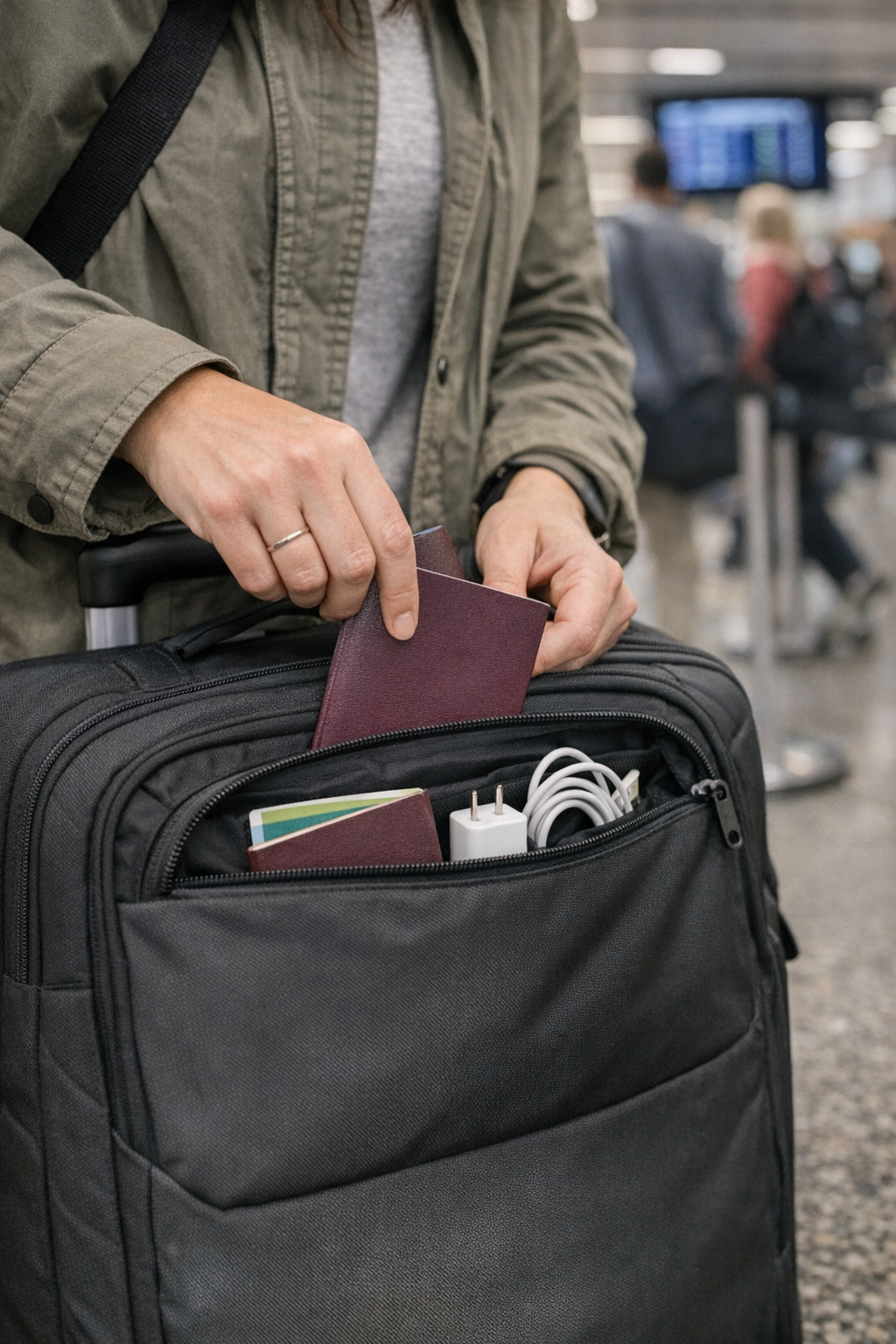
Plenty of carry-ons look organized when you first pack them. But the real test hits after landing—when you’re moving fast, squeezed in the jet bridge, and every second matters. The zipped-layer order that seemed like an upgrade quickly morphs into fumbling and blocked reach the moment you need your passport or transit card on short notice. In those minutes between seat and city, structure overtakes style: the bag that looked efficient now shows its blind spots when you have to dig, pause, or grip three pouches just to produce an ID. If you travel more than occasionally, you know the discomfort—slowed lines, missed beats, and a setup that seemed “neat” but now holds you back. This is where most carry-ons reveal what really works—and what repeatedly fails.
When Organized Isn’t Effortless: Where Carry-On Setups Fall Short
Mesh dividers and sleek little pouches only go so far. While your bag might “present well” on the hotel bed or in the overhead, travel exposes any system that trades quick access for visual order. Land, walk, and try to grab just one thing—too often your passport is trapped under headphones you wore halfway, or your charger’s behind a snack pouch you never even needed. Every time you unzip an extra layer or reach through the wrong pocket, you’re not just losing seconds, you’re losing your place in the flow of arrivals. This kind of slowdown rarely happens once—it repeats itself, checkpoint after checkpoint.
What really grates is how these small missteps multiply. Watch a business traveler forced to dump out overlapping pouches just to reach a laptop cable, or a family stuck shuffling bags while the crowd flows on. Your “order” never really moves with you—it waits for a flat surface, slows at every squeeze point, and demands a reset every few stops. The friction isn’t messiness; it’s the gap between design and actual use in motion.
The Real Retrieval Test: Fast Access vs. Packed Neatness
First reach after landing is where neat setups unravel. Airports amplify this. In Amsterdam or Chicago, you’ll see some travelers glide right through with a pass or card in hand. Others stall, stepping aside to fumble through inner pouches, double-unzipping, and blocking lines. The perfect roll of cables, or a nest of snacks in a side sleeve, all get in the way when your rhythm depends on quick, reliable grabs.
- A passport slotted in a middle sleeve—just deep enough to miss your first reach.
- Tech pouch buried behind toiletries, forcing an awkward juggle at the edge of a crowded corridor.
- Loose SIM cards, receipts, or emergency cash wedged so tight with snacks or chargers you have to dump two pouches to get at anything small.
Every extra motion—wrong zipper, dragged-out sleeve, repacking on foot—builds unnecessary tension. Miss it once and it’s a pain. Repeat it every trip and your “system” becomes the thing slowing you down, not supporting you.
From Boarding to Baggage Claim: Where Flow Breaks Down
Boarding and deplaning push neatness to its limits. While a perfectly packed bag inspires confidence, the real check comes in the aisle or at your seat. You’re in motion—people behind you, elbow room tight, and half your essentials still need to be re-sorted. Wrong pouch, misaligned Zip, or that single-compartment “solution” you once praised—each now slows your exit as you hunt for passes or repack headphones with one hand.
Getting your carry-on down from overhead is just a small win. The problem sets in when, balancing bag and jacket, you only have a few moments to reach key documents or a transit card. Too many compartments or a single deep pouch means you’ll open the wrong section and scramble. Watch this pattern repeat trip after trip: that neat overhead-ready setup repeatedly trips you up at precisely the moments when pace matters most.
The Arrival Reset: Repacking in Real Time
Past customs, after the baggage carousel, or outside the terminal, most travelers wind up wedged somewhere, clumsily repacking or searching for a cable or card that’s nowhere near the outer layer. The clever “pouch within pouch” thinking that seemed so clean at home betrays you in the field. Reach in, tangle with small electronics or paperwork, and discover that to reset your setup requires opening half the bag—all while taxis line up and others shift past you.
This isn’t just about time lost. Miss a document, drop a pass, or forget a charger after a reset, and suddenly “order” becomes a source of mistakes. What fixes one kind of mess introduces a new hassle under actual travel pressure. Real improvement is measured not by the fresh look of your bag each morning, but by fewer repacks, faster retrieval, and less standing still at critical handoff points.
The Shift to Immediate-Access: Small Change, Big Relief
Travel long enough and you stop tolerating these slowdowns. Essentials—passport, transit card, cable, keys—get a fixed spot, outboard and reachable with a single zip. No more nested sleeves or layered pouches for anything you’ll need more than once per arrival. That change alone, trimming one or two barriers to access, radically reduces the odds of getting blocked at the worst moment.
- No more flipping through two inner bags just to show a pass.
- No more unpacking half your main compartment just for a phone cable.
- No more rushed stuffing, then reshuffling everything minutes later as you transit again.
The win isn’t hypothetical: the setup works every time pressure rises. Open, grab, done. That’s real stress removed—no matter how rough the travel day, your system scales to the rush, not just to the tidy photo before leaving home.
Routines that Survive the Travel Cycle
Repeatable access is what holds up—trip after trip. Fixing your keys, ID cards, and key cables to a dedicated, never-moved pocket cuts out the shuffle. Constantly moving these essentials, or hiding them deep to “look neat,” only creates new search routines on every leg. Minimize shifting zones—what works on the kitchen counter gets torn apart the minute you’re moving with a crowd, forced to produce documents or cables quickly.
Save dividers and pouches for items you truly only access once or twice: toiletries, backup batteries, extra snacks—fine for internal organization. But for any item showing up at multiple pressure points—documents, phones, or passes—outer, direct access wins every time. Small repeatable moves beat big organizational resets, easing not just comfort but overall command as airport pressure builds.
Layered vs. Direct: The Practical Difference Across the Trip
If your carry-on is easy to close but slow to reach into, it’s only half-useful. When retrieval means repacking everything else just to get a single item, all the aesthetic points vanish. Trip after trip, the most effective setups always feature:
- One predictable grab for high-frequency essentials
- Zero overlap—no hunting between three pockets for the same card
- Pouches as separation, not as an obstacle course you run each time the rhythm shifts
Neatness at packing is not the same as flow in transit. The difference shows immediately: does each movement—boarding, clearing security, exiting to curb—add friction or remove it? Setups that look sleek but require regular unpacking for basics become an anchor, not a tool, repeating the same minor failures every leg of the trip.
Carry-On Structure that Moves with You
Carry-ons get judged not when they’re fresh, but when used in real pressure loops: overhead to aisle, gate to curb, lounge to train. The carry-on that gives a direct, reliable reach for repeated-use items rarely lets you down even on the messiest trips. Minimizing the same handful of slowdowns—awkward pouch repack, blocked outer pocket, repeated digging—is what genuinely keeps the journey moving. The goal isn’t a bag with zero problems, but a structure that absorbs the annoyance for you, rather than handing it back every time speed matters.
Find practical tools for better carry-on setups at CarryOnSupply.