
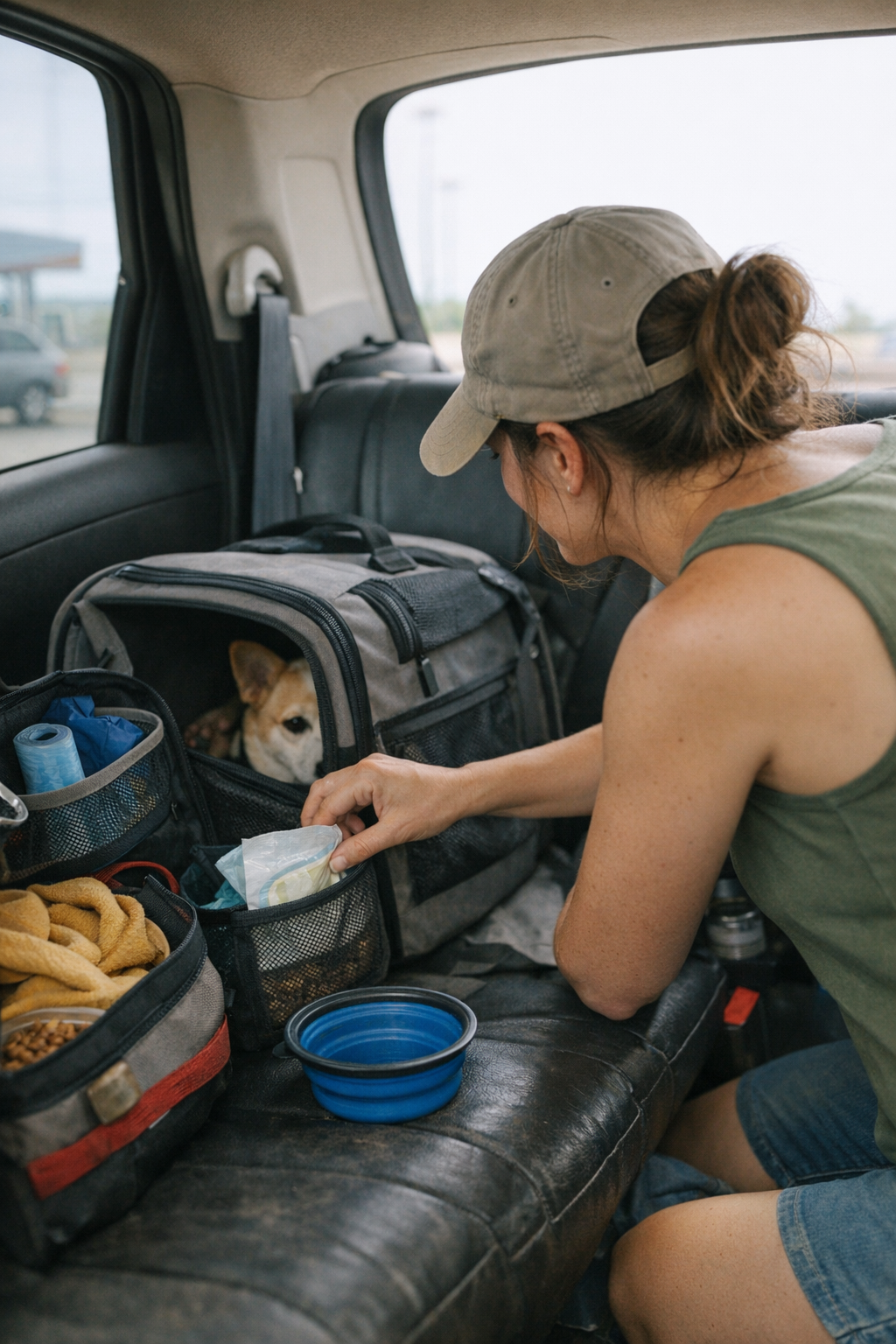
Your pet hears the “ready to go?” signal and bounces up, but you reach for that travel bag—the one that looked perfect on the hook—and the friction starts faster than you’d admit. The zipper tugs, your keys snag on a side handle, or the wipes are packed just deep enough to slow you down when you stop. It’s the curse of a travel setup that looks ready and polished at home—but unravels the moment real movement interrupts the plan. By the first pit stop, what passed for “organized” keeps stealing seconds, blocking that quick leash grab, or turning a cleanup into a clumsy search. Pet calm fades while your hands sort, shuffle, and quietly lose the flow. This is where most so-called “organized” setups get exposed—and where the difference between neat looks and actual travel function really shows up.
When “Packed and Ready” Turns Into a Slow-Down
Most travel carriers and organizers look efficient when zipped and packed, every pocket filled for the road. But tidy exteriors don’t mean friction-free movement. You notice it at the first unscheduled stop: your hand goes to a side compartment only to find the leash stuck under bulkier gear. Or you open a pouch for treats and everything else threatens to spill. Each new stop adds another layer of reshuffling—digging for wipes under chew toys, hunting down a harness clip while your pet tugs in the other direction. On paper it’s all there, but in practice, the access you need is buried two pockets too deep.
What held tight in your entryway gives way to reality on the road. Small slowdowns compound: a leashed tangle around a comfort blanket, food containers angled out of reach, a water bowl sliding into a dark corner of the bag. The “meticulously ordered” setup starts feeling like a puzzle that only resets harder with each pause. These aren’t showstopping failures—just an ongoing sequence of minor obstacles that grind away at the promise of easy travel.
Moving Exposes the Friction Your Setup Hides
Every time your trip gets broken up by stops, hidden design flaws multiply. Standing next to the car, cracking open the back seat, then awkwardly rooting through your bag for wipes or a leash—these are the moments that reveal what your gear really does (or doesn’t) solve.
The more you repeat the routine, the clearer the weaknesses. You want a wipe after a quick walk, but it’s trapped below pet snacks you keep moving aside. The leash you reached for on autopilot is suddenly knotted around a toy or owner-side items. Every “grab-and-go” becomes a little search party in a bag that was supposed to keep things simple. Every pause means another mini-repack, another moment your pet is left waiting. What worked in your living room order falls short under backseat pressure.
A Few Seconds Lost at Every Stop—And That Adds Up
Every delay compounds: searching for your keys among pet supplies, steering bowls back to the edge, or wrangling an overstuffed closure while your pet pulls for the next adventure. What looked like a convenience turns, slowly, into an annoyance. These fragments of lost time collect—prolonging every break, sharpening your pet’s impatience, and stacking stress with every fetch for “just one more item.” If the setup slows your access just enough to break your stride, you’ll feel the drag after just a few ordinary stretches between stops.
What Makes Pet Travel Actually Easier—Not Just Neater?
The setups that make a difference aren’t the ones with the most sections—they’re the ones where the essentials actually fall into your hand in the middle of real movement. Spotting your own friction points matters more than features: where do you slow down? Why do you keep reaching for the same sleeve, muttering over the same pouch, or losing speed at the same type of stop?
Cleanup tells the story: if wipes and sanitizers are tucked below layers you never use, every roadside reset becomes a two-handed, two-minute hassle. Shift those to a seat-side mesh slot or outer sleeve, and the whole cycle breaks: one reach, one wipe, done—no digging, no double-check, no repack. Leashes and treats, if positioned right, come out on the fly rather than after another dive past comfort items. Fewer hand-offs. Shorter pauses. Your attention back on the trip, not on sorting out your own gear halfway through.
The Tipping Point: When Setup Structure Fails (And How You Know)
Most pet-travel frustration isn’t dramatic—it’s the repeat infractions. If you keep searching for that one leash clip or get forced into awkward, two-handed unzipping just to find wipes, your structure is working against you. Watch for these pattern failures:
- Pockets that routinely bury quick-grab items under gear you only use at home.
- Compartments deep enough that everything shifts and stacks by stop two.
- Clumsy closures that block you when one hand has to keep your pet safe.
- Personal must-haves (keys, phone) mingled with pet emergencies, forcing you to dig for both and risk drops or tangles every trip.
Small Adjustments—Big Payoff: How Structure Makes the Difference
Sometimes a single move changes your whole travel rhythm. Swapping a hidden interior pocket for a mesh, seat-edge slot for wipes can turn a fumble into muscle memory—a quick grab that doesn’t interrupt either you or your pet. One small fix means fewer mid-trip resets, less cluttered time at every stop, and a pet who waits less and settles faster when you’re back on the move.
No bag is ever perfect, and repeated travel exposes weak points that looked fine in your hallway. Real improvement comes from noticing those sticking points—the spots you keep grumbling about—and making structure changes so your kit flows at stop five just as smoothly as at stop one. If your organizer lets you find, grab, and stow without thinking, it’s doing its job. Anything less just slows down the whole journey, one small hassle at a time.
Does Your Setup Really Help You Move—Or Just Look Organized?
If grabbing wipes always means digging through toys, or you keep dragging comfort items just to reach the leash, your setup is quietly sabotaging your flow. “Looking neat” isn’t the same as moving smoothly: the real cost is every restart you slow down, every access you have to rethink, every time your pet’s patience thins as you hesitate beside the car. How your setup actually performs is lived out in those quick, repeat stops—not in a perfect snapshot when you leave your door.
Notice what you keep reshuffling, which access points force you to pause, and which items always seem to block the hand-off back into travel. Setup structure isn’t about just being neat; it’s about giving you the right grab at the right second—no buried wipes, no blocked leash, no owner gear tangled with dog gear. That’s the difference between a trip that just looks calm and one that actually runs calm, right through the next stop.
Visit PawGoTravel for truly practical pet-travel setups made for real movement.