
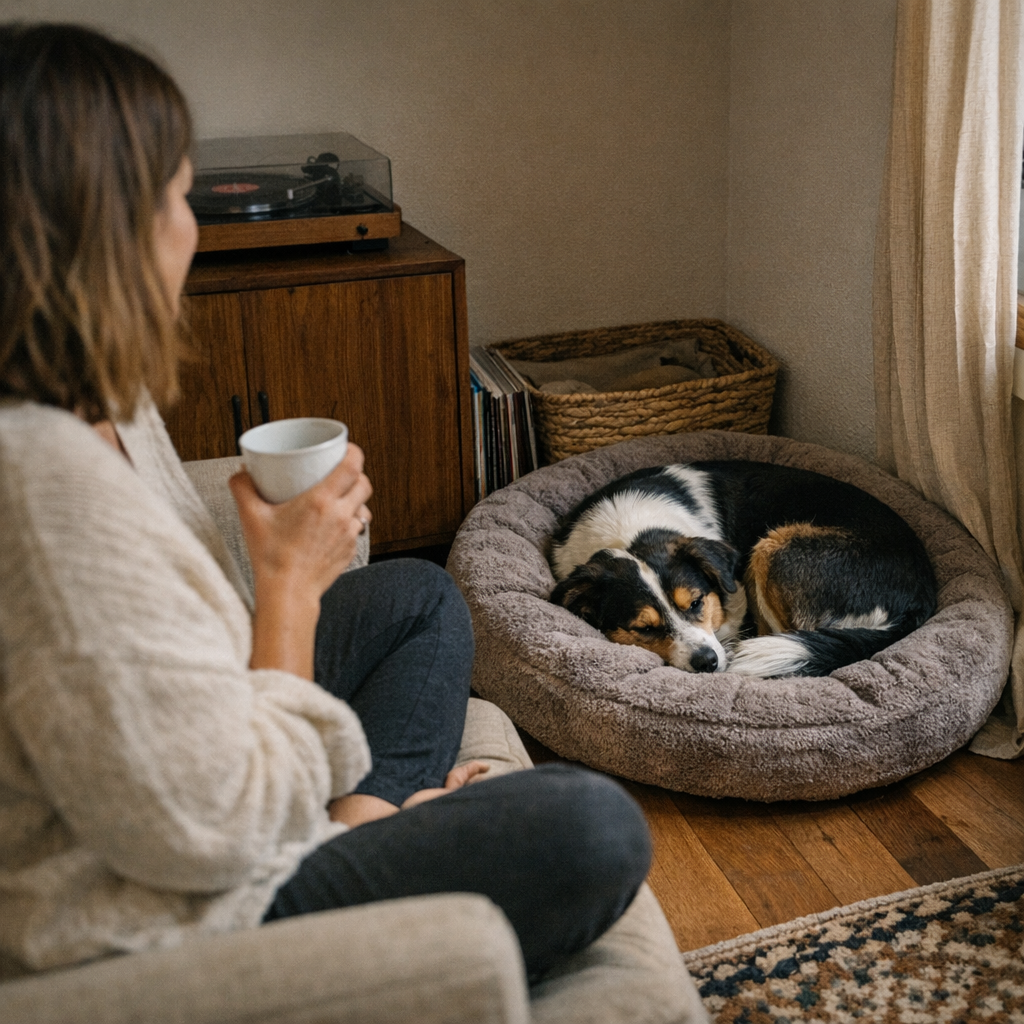
You clean the floors, vacuum behind the sofa, and push the dog bed out of the way—just for a minute. Later, when it’s time for bed, the evening slows to a crawl. Your dog stands in the wrong spot, searching for the missing bed, circling, confused—even though the room looks spotless. A single change—moving the bed away from its anchored place—creates a snag in what should be your easiest routine. The living room feels tidy, but now every step to settle your dog feels slower. This is the kind of ordinary, repeated hitch that DogPile setups are built to expose and solve—where the tiniest disruption in placement keeps turning comfort into a nightly stumbling block.
Shifting Sleep: When a “Simple Move” Breaks the Flow
It’s tempting to treat the dog bed as just another cushion you tuck away to make cleaning or rearranging simpler. That flexibility seems smart—until the rhythm of your evening drags with every new spot. At first, it costs you a few seconds: your dog looks around, sniffs the air, perhaps circles once. By the third night, settling turns into minutes of pacing, backtracking, or freezing by yesterday’s corner. The process never explodes into chaos, but the whole wind-down grows rough-edged. The “before bed” routine becomes a puzzle you didn’t sign up for.
How Repeated Bed Moves Undermine the Routine
When you reset the bed’s location too often, the toll builds up in small, visible frictions:
- Bedtime drag: A quick settle turns into a drawn-out hunt; what should take thirty seconds stretches out, with your dog stuck waiting for direction.
- Ghost returns: Every dog has a favorite spot. When the bed’s missing, your dog walks to the empty place, pauses, and you can see the doubt: “Wasn’t rest supposed to be here?”
- Owner-side stumble: You’re standing with the leash or prepping a towel, but your pace slows too—you’re dodging a restless dog, retracing your own steps, or refilling water behind schedule while the settling process hangs in limbo.
Individually, these moments seem minor. Pile them up over a week, and your “tidy” setup keeps making the final routine feel misaligned—each evening a little less smooth.
Everyday Examples: When Setup Friction Sneaks In
This is the kind of trouble you notice only in motion. You walk back in after a winter walk, dog ready to flop, only to find the bed still propped on a chair or lost in a hallway from earlier cleaning. Now your dog tracks mud or circles on bare floor, waiting while you hunt down the cushion. You reach for a towel or wipes, but they’re across the room—belonging near the bed, but now disconnected from the routine. All your planning for fast resets, but the missing anchor turns a comfort ritual into another problem to patch.
Or consider the after-dinner calm: you expect your dog to drift to their spot, but the bed is halfway to the kitchen. Instead of gliding from leash-drop to rest, you’re both thrown off. Your dog waits by yesterday’s footprint, and the whole bedtime shuffle has to be improvised again.
Why Location Is Stronger Than Cushion
It’s not just softness or warmth that drives your dog to rest—it’s knowing exactly where to go. Predictable placement means your dog moves right into relaxing, no searching or second-guessing. The real comfort comes from certainty: when the bed (and whatever towel, mat, or toy belongs with it) is anchored after every disruption, the “end of day” signal is automatic. Rest happens more easily, and you spend less time managing a process that should just work.
This isn’t abstract. It’s a practical difference: A stable setup means fewer circles, less hesitation, easier cleanup, and a faster shift from activity to downtime—for the dog, and for you.
Repeating the Mistake: The Hidden Cost of Floating Beds
Keeping the bed out of sight or shifting it repeatedly may look organized, but each reset piles on small snags:
- Your dog double-checks two or three spots every night, wandering through familiar zones only to find them empty.
- After a walk, there’s nowhere obvious to catch muddy paws; you race to drop something absorbent in the right spot, but not before paw prints cross the clean floor.
- Blankets and toys keep getting separated from where they’re needed. Every reset means extra steps—either for you, or for a restless dog.
- The bed itself becomes a trip hazard mid-move, blocking easy paths or snagging feet until it finally lands—somewhere new again.
None of these are “failures” by themselves. But your home’s flow gets chopped up, and bedtime shrinks into a cracked process—less calm, more correction, no matter how orderly the rest of the space appears.
Reset Drag: How Looking Tidy Can Slow Everything Down
It’s easy to assume a clear floor or tucked-away bed makes things run better. But every time you delay returning the bed to its real spot, the routine loses speed:
- Your dog freezes at a room’s edge, scanning for an anchor that isn’t there—settling takes longer every night.
- Cleanup gets skipped (“I’ll get it tomorrow”) because it’s not obvious where the dog will land tonight—and the dirt moves with them.
- Treats, towels, and toys drift out of arm’s reach, so you’re forced to cross the room and start over, mid-transition.
The room may look uncluttered, but the routine feels stuck in low gear. What saves seconds on cleaning costs minutes in hesitation and extra movement the rest of the week.
Make the Bed a Constant: Rebuilding the Routine Anchor
The most practical fix: set a permanent bed spot and stick to it. Choose a corner out of the traffic path—maybe near your regular chair, or somewhere the whole household passes in the evening. No matter how often you vacuum, rearrange, or host visitors, return the bed to that exact spot after every shift.
When the anchor is reliable, the pattern repairs itself. Dogs transition from outside to inside, drop straight to their cushion, and settle with a single turn—no guessing, no excess pacing. Reset after a walk is automatic: wet paws go where the towel waits, not across your path. Bedtime becomes a real routine again, instead of a slow-motion quest for comfort.
Real Flexibility: Temporary Moves, Not Nightly Shuffling
Flexibility isn’t banned—but the core of your setup should reset to baseline after the outlier tasks. Move the bed for deep cleaning, for sunbeams, or guests when needed. As soon as you’re done, bring it back to its home. Skip improvising every night. A familiar object—one toy, a mat—left in place can reinforce the anchor, even if the rest of the room changes around it.
“Tidy” Isn’t Always “Usable”: What Makes an Area Actually Work
A space that looks organized isn’t always easier to use. A setup can be clutter-free but block quick movement—forcing you to bend, reroute, or handle dog items in the wrong order. Over ten rounds of walks, wipes, and bedtime resets, these small frictions add up. For beds, the cost hides in slow restarts and the mood of the room: does it invite effortless access, or does every task feel like an extra step?
Consistency isn’t about control—it’s about reclaiming flow. The real value is making the routine run quietly, so you spend less time herding the process and more time letting it unfold the way you want.
Patterns That Signal a Friction Point
If you notice your dog keeps circling or standing by yesterday’s resting place, it’s not just a mild quirk. It’s the structural setup asking for correction. When the same slow or hesitant settling repeats—regardless of how organized your home looks—it’s a clear sign the “flexible” arrangement is subtly disrupting everyone’s night.
Make a Reliable Bed Location Part of the Routine
Certainty, not endless adjustment, creates practical rest. Pick a corner and make it unchanging. Return the bed there after every disturbance—walk, cleaning, guest, or furniture move. The result isn’t just less confusion for your dog. It’s a routine you can rely on—even when the rest of your day still feels busy or unpredictable.
Explore better setups and more practical routines at DogPile.