
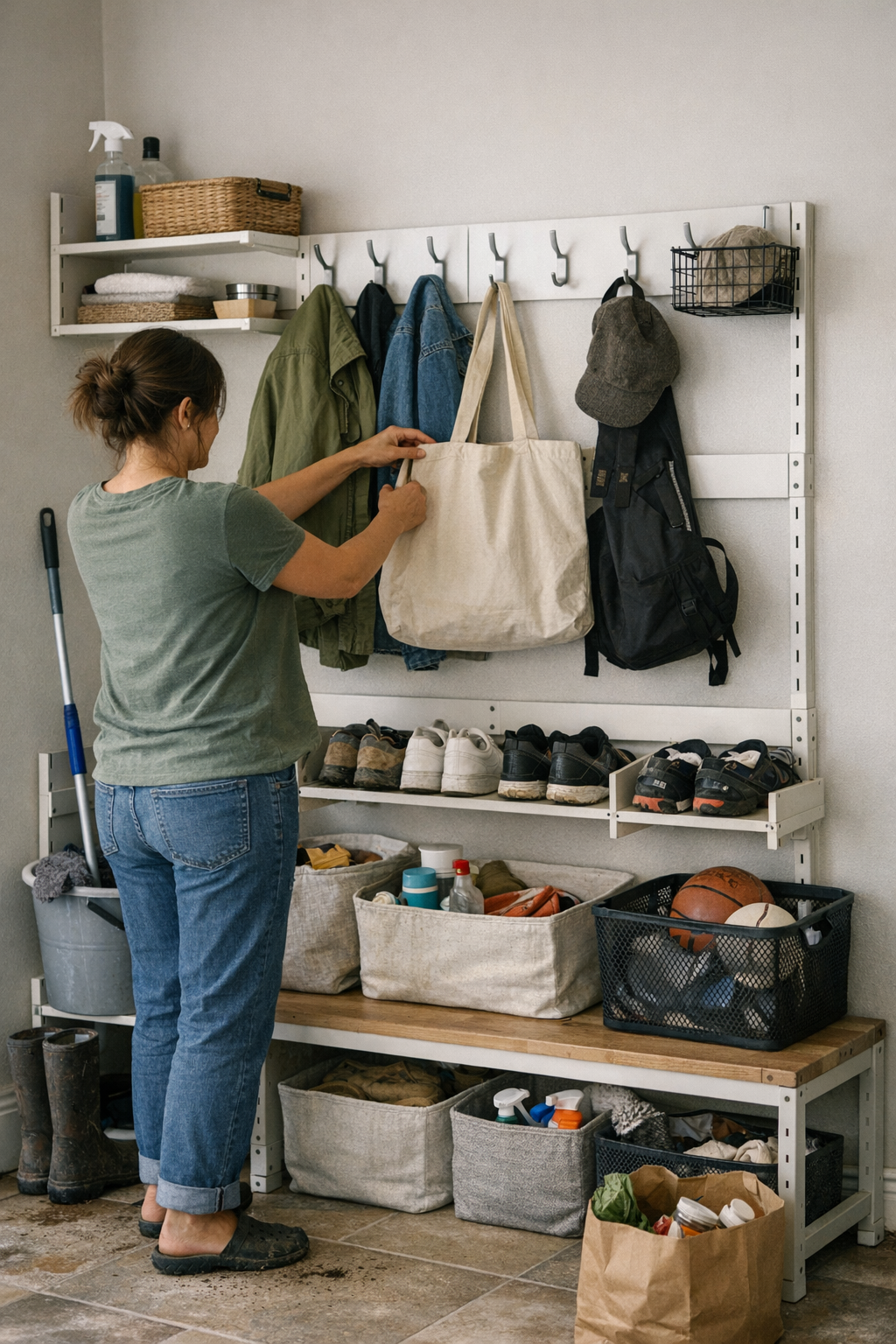
The breakdown always starts right at the threshold. In a utility room or any entry area forced to double as a landing zone, storage “systems” unravel quickly under real use. One rushed arrival, and the lineup—shoes, bags, coats, cleaner bottles—immediately overruns what seemed like enough space. The bench, if it exists, shifts from a spot to sit to a magnet for overflow. By midweek, the entry “setup” doesn’t keep up. A space can look organized from the doorway and still turn into a maze of shoe piles, toppling bags, and too-narrow walkways almost overnight. The real divide isn’t between tidy and messy—it’s between zones that absorb daily routine, and those where each reset just buys you a couple more days of crowding and detours.
When Clutter Quietly Takes Over
Clutter doesn’t barge in; it seeps through the cracks of weak storage. The shoe rack somebody thought would corral boots until spring fills up by the second wet day. Hooks mounted at the “ideal” height seem clever until a heavy bag shares space with two backpacks, and the whole cluster ends up slumping off the rack onto the bench. That tall basket intended for hats and gloves? It morphs into a dumping spot for whatever nobody wants to deal with right now—leashes, delivery packages, a stray grocery bag. The result is slow-motion takeover: every quick drop-off leaves behind another layer to work around. A pair of wet sneakers multiplies by Thursday, pushing clear paths into obstacle course territory.
Everyday Movement Becomes Negotiation
Function breaks down before looks do. A utility room or threshold zone isn’t just storage—it’s traffic flow. When overflow creeps onto benches and blocks the floor, returning with groceries or laundry turns into a series of minor evasions. Setting anything down becomes a calculation—will this trip someone, will it dry, will it even stay put? Every detour adds friction that nobody planned for. Before long, just getting out the door means pausing to reshuffle or sidestep someone else’s earlier detour.
Why Single-Solution Setups Break Down Fast
Sleek hooks in a row, that fresh bench beneath… they settle in nicely for about a week. Then the real routine begins: kids latch onto the lowest hook, oversized jackets overflow, and heavy totes never hang up. Shoe rows, so satisfying when empty, break formation and edge out past the bench limits, wet treads spreading wherever there’s bare floor. “All-in-one” baskets hide the mess instead of sorting it—what was a glove bin now eats mismatched gear no one can find later. The neat setup becomes a scene of category drift and failed boundaries, fast.
Visual Calm vs. Mixed-Use Reality
The quiet order of a newly set bench evaporates at crunch time. Garden shoes, rain gear, and rogue totes pile up, joined by bags of groceries and sports equipment. Cleaning supplies lose their assigned spots and migrate to wherever there’s a gap. Unclear boundaries—like a bench edge not sharply separated from shoe storage—invite a steady overflow. The difference isn’t subtle: what looks organized out of use collapses as soon as the routines overlap. Predictable chaos returns if your storage can’t make mixed use obvious and easy.
Designing for Repeated, Overlapping Routines
Storage isn’t universal—routine differences expose weak systems. What can look “organized” in a photo rarely fits the mixed flows of real use, especially when several people are coming and going. Wall-mounted racks free up floors, but if they’re set too high or the sections are vague, people bypass them. Drop zones blur: a bag lands on the bench instead of a hook, a muddy boot gets left on the edge instead of the shoe slot, and slowly everything creeps toward the easiest open surface. The moment three categories hit the room at once—mop bucket, school stuff, muddy gear—your original plan collapses into catchall chaos.
Segmented Storage Makes Return Flow Easier
A wall panel split by use—shoes low, bags and coats above, side rails for tools—provides a self-explaining map. Each section signals what goes where. The difference is practical: someone dumping a stray tote on the bench stands out immediately, so a quick grab puts it back in slot and the flow resumes. It’s not just a tidier look; it’s a friction reduction—less lost time, fewer late-night resets, and visible signals when the routine gets off track. Well-marked slots cut down how often you need to “start over” just to make the room passable again.
Practical Scenes: Stress Tests in Daily Use
Typical afternoon crunch:
- One person drops muddy shoes and a garden tote at the edge because no slot is clear; existing shoes compress, and the bench is half-blocked again.
- Another hauls laundry and groceries, finds the upper hooks out of reach during a rush, and everything lands on the nearest flat surface.
- A wet mop bucket, left even briefly, blocks the path so everyone detours through tight gaps rather than a clean pass-through.
- Sports gear—helmet, pads, a rogue water bottle—spills into the walk zone, nullifying any hope of keeping the entry clear.
When temporary placements harden into blockages, routines unravel. Each makeshift stop reinforces the mess. The slow squeeze—extra minutes cleaning, returning, or just escaping the house—becomes daily background noise.
Making Utility Storage Actually Work: Small Shifts, Stronger Flow
Replacing baskets and guesswork with a segmented wall panel at reachable height can flip the pattern. Place shoe slots low—no bending or confusion over whose go where. Space coat hooks just enough to stop bags merging into a single tangle. The bench returns to its original job: a brief stop for putting on boots, not a graveyard for overflow. Preserve a visible sweep zone under the lowest rack—no more emptying half the floor before you can vacuum. Every design tweak fights clutter drift and forced reshuffles.
Category Drift and Slot Discipline
If shoes or bags start creeping sideways into new territory, that’s the system giving up boundaries. Assign each person a row, and don’t let unused pairs or random bags settle in for the long haul—rotate them out. Visible, divided slots keep categories from blending and from turning the routine into maintenance work by Wednesday.
Mounting Height Matters
Vertical storage can be your strongest tool—but misplace it, and it barely gets used. Anything mounted too high gets ignored on busy days. Hooks and racks should meet people at their real, not theoretical, reach. If unloading groceries means dropping bags on the floor because a hook is too high, the system invites failure. Make every access point match real daily movement.
Blocked Thresholds vs. Open Movement
The core question: Can you move through, even when it’s busy? Storage that works preserves a clear threshold even after the third messy arrival. If shoe rows crawl into the aisle or bags crowd the bench, the setup is failing under real pressure. Segmented, wall-mounted panels limit spillover—open baskets and unsorted benches just soak up clutter til they’re full, then leak into the walkway. A single bench edge collecting all “last stop” items is your red flag: your layout isn’t absorbing pressure, it’s just staging it for the next reset.
The Subtle Impact of a Better Setup
The real payoff isn’t visible after a one-time reset—it shows in how little you have to fix each night and how soon you notice something drifting out of place. If the clear zone near the door holds up even on muddy, gear-heavy days, you’re not just tidier: the utility space runs quieter, smoother, with less late-night maintenance. Tuning boundaries, accessibility, and separation over time steadily reduces the drag of nightly re-sorting. The difference isn’t just order—it’s less friction in every pass-through and fewer obstacles to leaving and returning at speed.
If your entry area depends on improvisation and constant reshuffling, the tradeoff is daily: more friction, more lost time, and more frustration. A better foundation—segmented storage mapped to your home’s actual return flow—restores order not just for looks, but for movement and routine. See Betweenry’s practical storage options designed for real transition-space routines.