
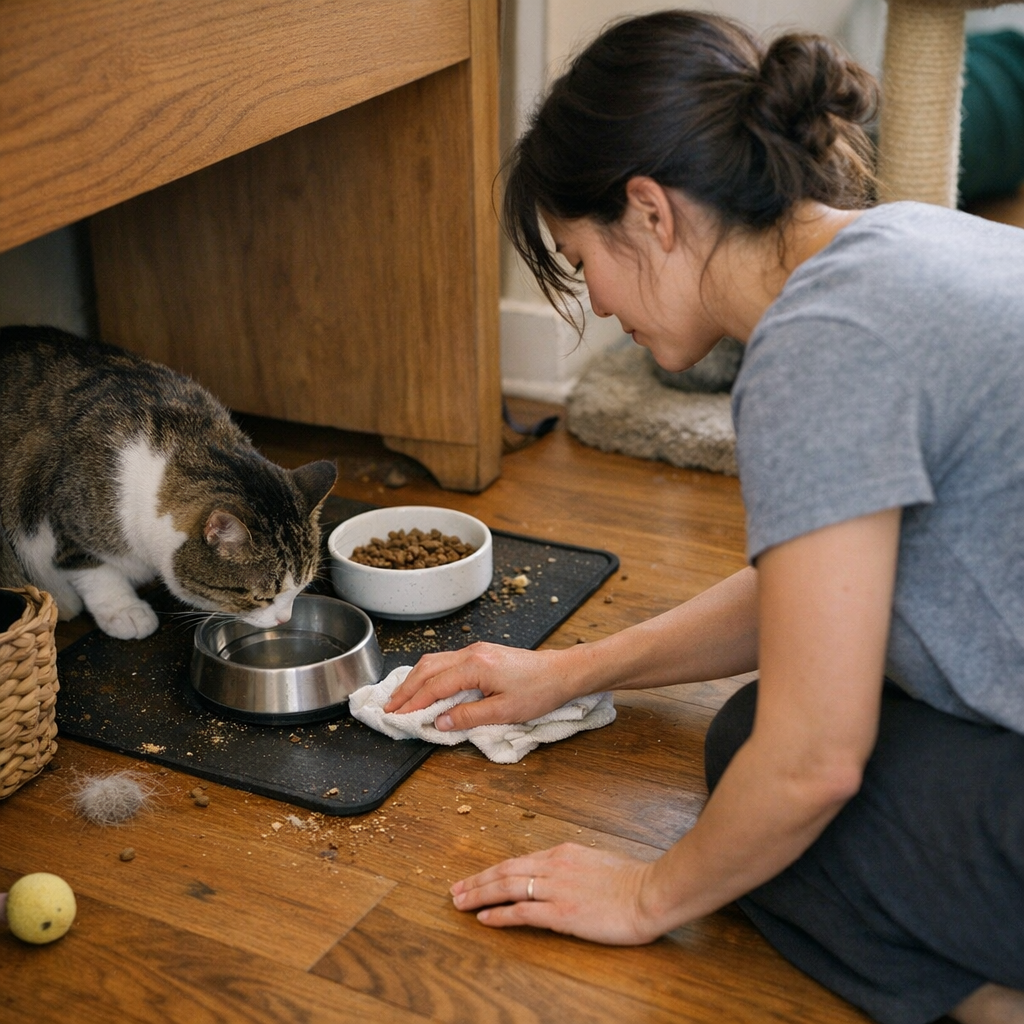
A feeding area that looks organized on Monday morning can turn into a source of extra work by Friday—even if you never see a dramatic mess coming. For most indoor cat owners, the feeding setup is less a solved space and more an ongoing adjustment: bowls shift, mats creep, stray pellets migrate, and what started as “tidy enough” quietly becomes a small but persistent hassle. Walk by midweek and things might seem fine. But after a few skipped resets, unnoticed drips, and crumbs tucked just out of view, that low-key corner demands a full scrub and drains the energy you meant to save.
When Visual Order Masks Real-World Mess
The catch isn’t obvious—until it is. Bowls lined in a row and a mat sitting straight can hide an invisible buildup: grit settles under edges, water seeps behind seams, and debris drifts where you rarely look. Cleanup feels simple day-to-day—until you kneel down and realize most of the mess never showed up until the weekend reset, when you’re forced to dig it out. Visible order doesn’t equal easy upkeep; a setup that looks calm on the surface can still pile up the next big chore underneath.
This problem goes past looks. The setup that appears “fine” can lull you into skipping quick wipes or failing to re-center the mat. Every shortcut after work quietly hands off residue to the next day—until, days later, one “easy” corner has hardened edges, stuck bowls, or that unmistakable gritty feel underfoot. The burden shows up all at once, not as a crisis, but as repeated work you thought you’d avoided.
A Familiar Scene: When “Neat” Isn’t Actually Clean
It’s easy to do a quick check after feeding: refill, glance, move on. But the mat picked up crumbs near its farthest edge, the back rim of the bowl collected a film after the last water refill, and that cluster of kibble near the wall hasn’t moved all week. On Thursday evening, nothing looks urgent. By Saturday, your foot snags a rough patch near the cabinet, toys from a late-night game carry bits of food into another room, and sticky spots resist a basic wipe. All the skipped “two-second” resets compound until you’re stuck resenting the corner you carefully organized.
The Hidden Consequences of Skipping Real Resets
Most indoor-cat cleaning is less about mess explosions and more about friction that accumulates—quietly, relentlessly—until it slows you down. A mat once good at trapping debris now has an immovable border. A bowl with “just a little” residue suddenly won’t wash clean. The headache isn’t the initial mess—it’s how invisible layers build up in places you thought were under control, forcing a bigger job you never scheduled.
This is where appearance blindsides real function. Nightly good intentions fade; crumbs drift under the mat, dust combines with fur, and water sneaks between the mat and wall. When the “contained” zone seeps into shared space, you get reminded—you’re not just managing a feeding area, but chasing its creep all over your home, especially by the end of the week.
What Actually Happens in Real Repeated Use
Reaching for a Quick Fix—and Finding It’s Not So Quick
Anyone who’s bent down expecting a fast bowl reset, only to brush old crumbs, knows the reality: supplies aren’t always handy, and grabbing that wipe from the next room is enough reason to put it off. The cleaning cloth lives in the drawer, not beside the bowls—so a two-minute task becomes a ten-minute chore on Saturday, when grit has set in and the whole area feels layered with missed details.
The Human-Cat Dance: How Cat Life Complicates the Routine
Small changes make a big impact. Slide the bowl closer to the wall to stop scatter, and feeding gets neater—but now the bowl blocks a cabinet or makes reaching awkward. Use a softer mat for comfort, and it cushions paws—yet it also hangs onto crumbs, making a one-wipe reset impossible. Every improvement for the cat can introduce one more friction point for you, slowing resets you wish stayed quick.
Movement Patterns that Multiply Mess
Cat routines don’t respect boundaries. One paw flick sends dry food moving; a tail swipe launches water past the mat. Toys rolling through the feeding area turn into debris couriers, redistributing dirt into living spaces. These slow interruptions aren’t accidents—they’re the pattern that guarantees even “contained” zones spit extra work into other rooms, bite by bite, swipe by swipe.
Practical Tweaks That Shift the Whole Experience
The difference between a once-a-week time sink and an easy daily upkeep boils down to what your setup allows you to do without thinking. In many homes, bowls are pushed tight together, the mat crowding the wall, and the most accessible path blocked by a stray item that “belongs” but complicates the reset. A setup that’s hard to move or clean locks mess in the same problem zone, every week.
Move and Lift—Don’t Just Wipe What’s Visible
Instead of only wiping where you see crumbs, get in the habit of shifting bowls and mats an inch or two after meals. That quick lift exposes where buildup starts: the seam behind the bowl, water that escaped the mat’s edge, crumbs hiding under the rim. Interrupting the layer before it hardens means resets don’t pile up—the weekend never surprises you with fossilized messes.
The One-Inch Rule for Rim Grime
The first spot to trap stubborn mess is the last inch along the back of the bowl. A single damp cloth pass here, right after dinner, stops sticky buildup before it becomes a chore. When you handle this each evening, bowls rinse clean, mats lose that tacky feel, and you avoid the musty end-of-week smell that signals skipped resets.
Keep Cleanup Tools Handy—But Not in the Way
A stash of cleaning wipes or a designated cloth right next to the station—within hand’s reach but clear of the feeding path—makes fast resets normal. Out-of-sight means out-of-mind; too close means blocked access and causes you to skip it anyway. Placement matters: if grabbing the tool is automatic, daily cleaning is too.
The Real Test: How Setup Choices Play Out Through the Week
The risk isn’t that the feeding area explodes into disaster—it’s that tolerable clutter silently becomes overwork because the system needs more daily intervention than it gets. What repeated use actually reveals: If you’re pushing bowls aside to chase old mess, you’ve already let the friction build up. If crumbs and dust travel past the “feeding zone,” the setup isn’t just holding pet life—it’s creeping into yours.
Accept That Some Spill Happens—But Stop It from Settling
No matter how carefully you arrange things, some food escapes, some water drips. The smart move is giving yourself a structure that lets you recover easily: quick resets, fast moves, nothing blocked or buried. If you notice Saturday is always the rescue day, your system is passing all the invisible work to the weekend—and the work always grows.
Why Most Setups Need One More Adjustment
A perfectly arranged feeding area is only as effective as its resetability. If it can’t be moved quickly, wiped underneath, or checked for stray debris in seconds, small messes become lasting friction. The real difference isn’t how straight things look, but how many times you find yourself re-setting the same items after the fact.
Final Takeaways: The Difference Between Looking Fine and Feeling Easy
Anyone can stack bowls in a row and smooth a mat. A truly workable feeding zone is one that lets you reset in real time, not one that quietly hands off stray work to your future self. The most livable setups don’t chase perfection—they make it normal to shift, lift, wipe, and get on with the day, saving every weekend from a project you didn’t plan.
For more practical indoor cat setups and tested home-life solutions, visit StillWhisker.