
Weak lighting is never just an eyesore—it’s a repeated interruption. You cross the hallway and the switch feels warmer each week. In the bathroom, the mirror brightens with a lag, leaving your face unevenly lit. On the stairs, a stubborn shadow slides across a single tread, making every trip feel less sure. The cause looks obvious—a cheap bulb, a tired switch—but too often, the real failure is buried deeper: a wire nut installed with the wrong tension, hidden inside the wall, quietly undermining how your lights perform day after day.
How Wire Nut Tension Disrupts Everyday Lighting
Lighting failure rarely explodes into view. Instead, it creeps in: a hallway that once glowed now flickers in your periphery; a work surface that looks “lit” but leaves you moving your hands to chase clearer light; a vanity fixture that shifts from flawless to spotty, never quite right after a few weeks of daily cycles. The problem doesn’t announce itself. It grows as wire nuts loosen or bite down too hard, pushing small weaknesses into every repeated use.
That’s how the friction builds. You find yourself adjusting your walk to dodge a shadow strip along the kitchen counter, double-tapping the switch to “wake up” the light, or pausing at the stair landing, waiting for your eyes to adjust. These disruptions seem small—until steady routines become a checklist of workarounds and missed expectations.
The Real Cost in High-Use Rooms
What does the wrong connection really do? Imagine the contrast: stepping onto a landing where the light always breaks cleanly over the stairs versus one where dimness pools just as you reach for the railing. A fixture toggled twenty or more times per day slowly exposes every hidden flaw inside the box. Too loose, and you get inconsistent power—lights that hesitate, flicker, or fade unevenly. Too tight, and the wire insulation pinches, setting up failure that can’t be seen, only felt when the reliability slips, tap by tap.
- Loose wire nuts: cause flickering, slow starts, and occasional outages—especially obvious when corridors, stairs, or baths get heavy traffic.
- Overtightened wire nuts: stress and deform the wire, reducing lifespan and leaving circuits weaker over time, even when the fixture looks firmly in place.
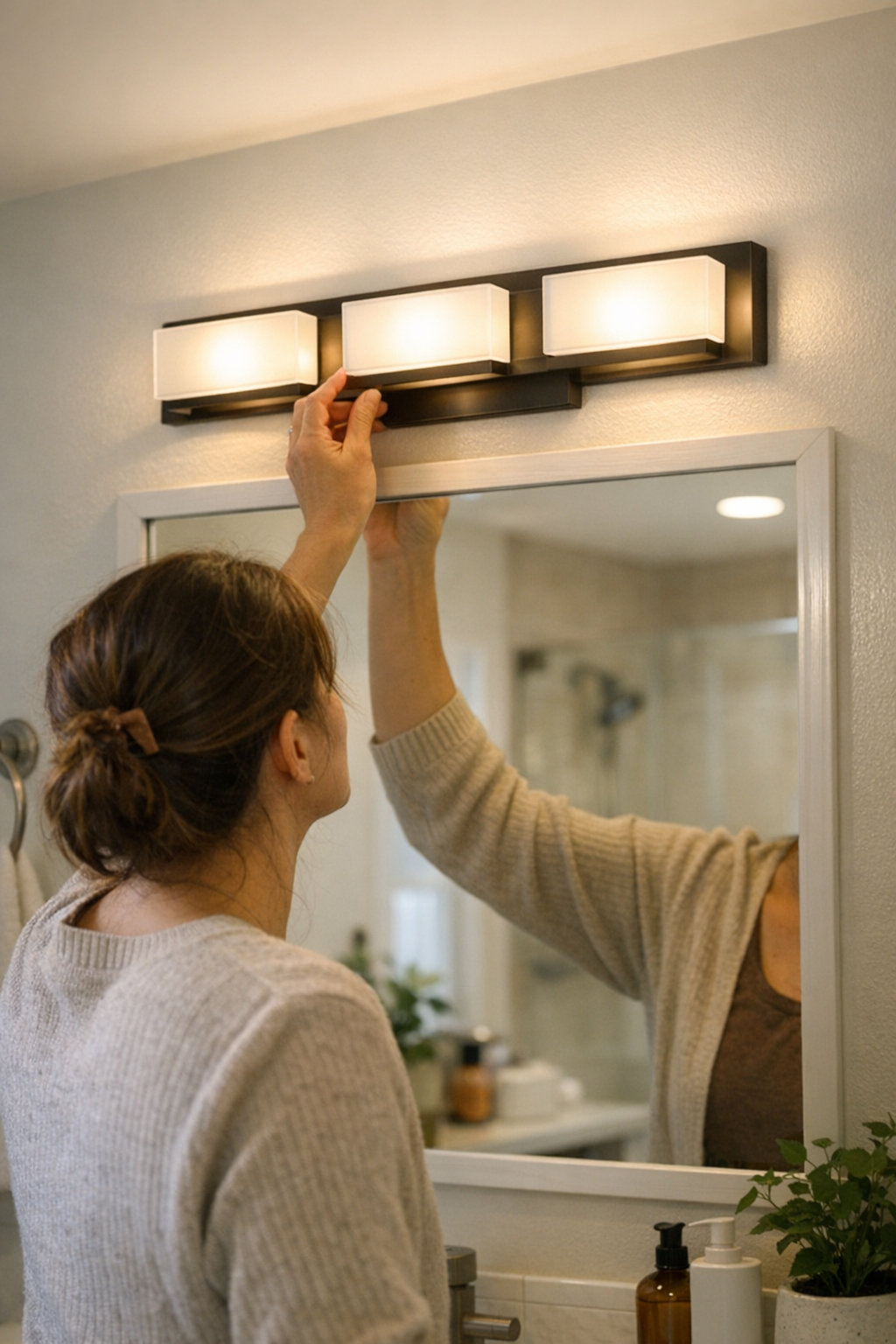
In vanity zones, the story repeats. At first, the lighting spreads evenly—no shadows, no fuss. Weeks later, one side dims or a plate feels warmer to the touch. You’ll notice hesitancy in the reflection, uneven light for shaving or makeup, and a creeping unpredictability in a routine that used to be automatic. All from a barely visible connection behind the wall—showing itself only with the repetition of daily living.
Spotting Trouble That Hides Behind the Surface
You rarely get flashing warning lights. Instead, look for:
- Fresh flickers when toggling a hall or closet light—growing more frequent after weeks of use.
- Switch plates or fixtures that run warmer than usual after a few quick cycles.
- Shadows crawling over countertops, sinks, or stair landings even when overall brightness seems “fine.”
- Uneven, off-balance light spread from fixtures that used to wash the whole area without drama.
None demand immediate repair. But they chip away at trust in your home’s lighting: leaning closer to the mirror to see details, sliding your chopping board to catch the right light, or pausing before crossing a dim stretch of hallway that used to feel safe, automatic, and obvious.
Scenes Where Small Wiring Weaknesses Become Visible
Stairways and Landings
The turn at the stairs should be automatic. But when a connection is imperfect, the shadow appears exactly where you need clarity—forcing a slower step or a hand searching for the rail. The discomfort spreads: every trip accentuates the flaw, and what used to be a smooth pattern becomes a moment of second-guessing, every single day.
Bathroom and Vanity Mirrors
Mirror light isn’t just about brightness. It’s about steady, balanced, shadow-free illumination that makes routines seamless. A loose wire nut means one side flickers or dims—forcing you to shift in search of even coverage just to shave or apply makeup. The split between “good enough to leave the house” and “just right” becomes a friction you can’t ignore when your hands are full and your time is short.
Countertops and Under-Cabinet Lines
A kitchen counter might look lit, but still fail if the wire nut isn’t right. One bad connection, and the run of light weakens—casting partial shadow, making chopping or reading labels more awkward. Instead of getting to work, your movement shifts and your eyes strain, wasting time for a fix that should have faded into the background long ago.
Securing the Fix—Not Just Tightening for the Sake of It
The solution is never about brute force. After another round of flickering under-cabinet lights, the instinct is to crank the wire nut harder. But overtightening only sets up fresh failure. The answer: twist until the wires are just secure—gently test with a tug. No slippage means you’ve landed the connection. If the insulation starts to twist or strand, you’ve gone too far. If it moves at all, you haven’t done enough. This balance—not force or neglect—restores reliability each time you flip the switch.
The effect is immediate, and it holds up: flickers vanish, switches stop running hot on busy days, and—just as crucial—light returns to its intended state, steady and forgettable. No drama, no daily reminders, just a space you can move through without exception or workaround.
Quick Testing Habit
Whenever a light misbehaves, open the circuit box and check every connection, even those not directly behind the problem fixture. One off-balance wire nut anywhere can spread instability down the entire chain. Re-make each suspect connection with fresh wire nuts, toggle the switch several times, and check for stability: insulation smooth, wires anchored, result steady and unremarkable—just as it should be.
Why Repetition Reveals What Occasional Use Hides
Low-use rooms can hide wiring flaws for months. High-traffic zones—bathrooms, hallways, stairways, utility corners—turn every flicker or hesitation into a repeated interruption. Here, fixture reliability isn’t optional; it’s the difference between spaces that support daily habits smoothly or make every routine feel compromised. Weak wire nut practice that’s invisible in a guest room becomes constant friction in places where lighting matters most.
Lighting That Disappears into the Routine
When lighting just works, you stop noticing it. Hallways don’t make you pause. Mirrors don’t force you to squint or shift for balance. Counters and stairs stay fully usable—even in the busiest moments—because the fixtures do their job, and the connections behind them hold up under pressure. That’s the quiet value of a wire nut set right: not making the lighting perfect, but letting it do its job so well that your day—step, glance, and routine—doesn’t depend on it anymore.