
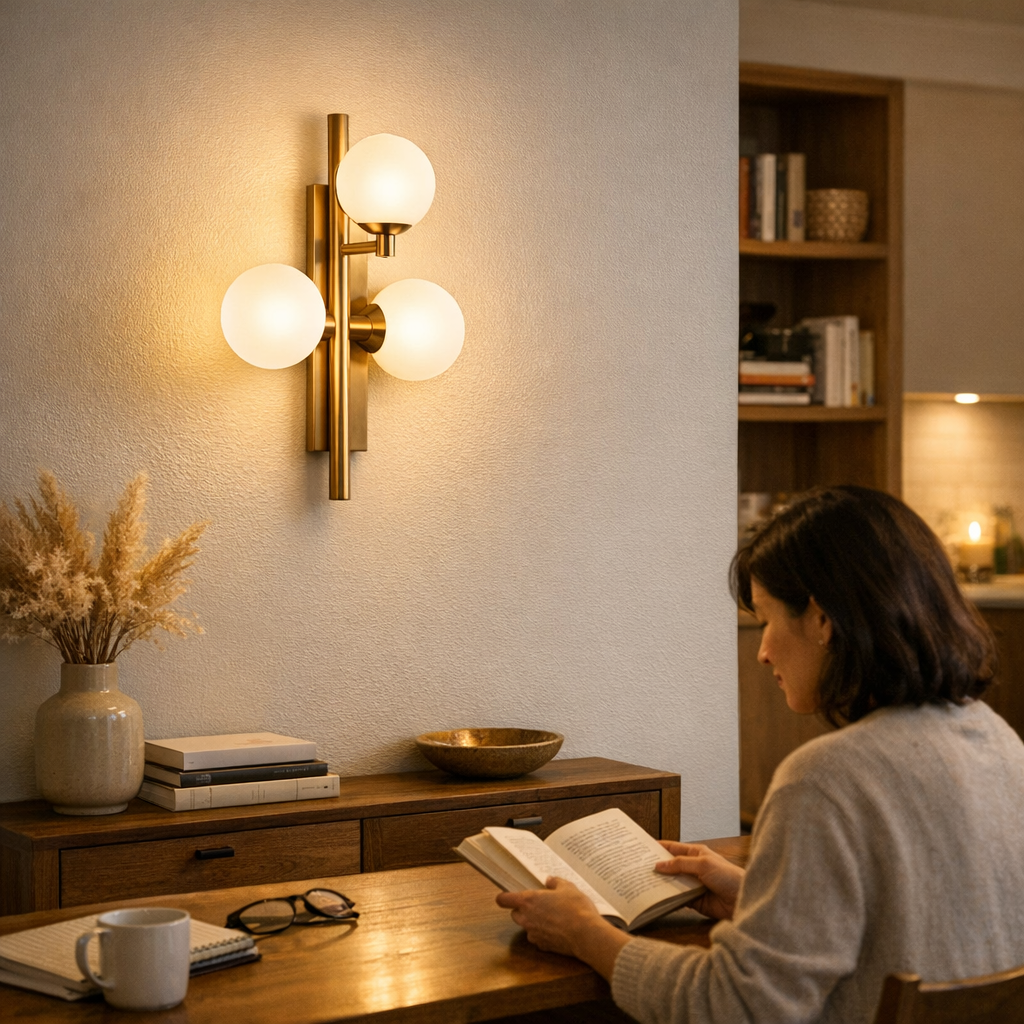
The first sign your ceiling light isn’t enough isn’t darkness—it’s the small, daily friction that starts piling up. Edges of tables go dim. Corners and shelves fade into uncertainty. You reach for something on the counter and miss. The room looked “done” when you installed that bright, clean overhead fixture, but within a couple evenings, the setup feels unresolved: conversation zones half-lit, faces unevenly shadowed, and surfaces that never catch enough light along their edges. This isn’t just about needing more lumens or replacing the fixture; it’s the inescapable blind spots of top-down lighting, especially after living with it through the real rhythms of your evening routines.
When Overhead Lighting Falls Short—And Why It Keeps Happening
It sneaks up the second you settle in. A group meal exposes the short reach of the ceiling light; people at the far end eat in partial shadow. Later, you’re stretching to see what’s on a shelf, or you realize you’re always turning your chair to dodge a glare band. Beneath the neat appearance—no cables visible, floors completely clear—surface-level “brightness” gives way to an unsettling flatness. Visual edges blur. Shared zones become awkwardly generalized. After a few cycles of bumping into these same problems, the frustration is hard to write off as a fluke.
The Problem Isn’t Just Brightness—It’s Vertical Surface Blind Spots
One major flaw: most ceiling fixtures ignore vertical surfaces almost entirely. They flood the floor and catch the center of the table, but wall edges and shelving sit in a dull gray. Bookshelves become shadow banks. Artwork disappears before night’s half over. Suddenly, you’re hauling in desk lamps or flicking on every under-cabinet light just to make corners usable. Even high-rated fixtures “underperform” in the spaces where daily work and storage actually happen. For every task, it’s coping—moving gadgets, squinting at margins, compensating instead of just using the space.
Wall Lighting: Giving Shape Back to the Edges
This is where wall-mounted lighting stops being a “nice to have” and starts feeling essential. Sending light horizontally, wall fixtures reclaim corners, show where shelves begin and end, and make edge storage as usable as the room’s center. The difference is obvious in any space where routines cluster away from the ceiling’s brightest circle: bookcases, workstations, dining nooks, even hallway seats. Suddenly, the silhouettes at the far end of the table become faces. The spine labels on the shelf are legible without a hand lamp. Details lost to dim edges come back into play.
Trouble Starts with Placement, Not Just the Fixture
Real improvement depends almost entirely on where you put the light. Mount a fixture too high, and its beam floats above where you actually use the space. Squeeze it into a distant corner, and the center stays flat while edges still vanish. Eye-level glare lines can make a newly installed lamp more disruptive than dark. Most irritating: a room that reads “finished” but requires you to constantly adjust—reposition a reading chair, shield your eyes, or shift the lamp for each activity. The only installations that actually solve these problems do the opposite: target where real routines need coverage, not just where it looks symmetrical or stylish.
How Standalone Lamps and DIY Fixes Stack Up—And Fall Short
Plenty of people patch their way around flat overhead light with desk lamps, clamp-on spots, and runs of LED tape. On paper, it should work. In reality: cable clutter sprawls. Outlets fill. Lamp bases migrate weekly across crowded counters. One bad tug on a cord, and the whole setup unravels. The room never feels fully “clear”—you’re dodging plugs to reach a drawer, or rerouting a lamp just to avoid a puddle of glare on your notepad. Every adjustment reminds you: the light still isn’t where you need it, and the support hardware keeps interrupting instead of disappearing into the background.
Installing Wall Lights Where (and How) They Actually Help
The shift comes when you prioritize daily use over decoration. Wall fixtures become assets when placed for activity, not appearance. For example: mounting a slim lamp two feet above a desk, away from corners that generate glare, but low enough to illuminate the upper shelves, transforms repeated tasks. Cables, when managed tightly along the base or trim, vanish into the room’s outline instead of drawing the eye or catching a foot. Gradually, your routine changes—less hunting for plug-in points, fewer awkward lamps crowding the table, cleaner lines of sight right where work, reading, or conversation happens.
Best Heights and Spacing for Shared and Work Zones
Most multipurpose rooms benefit from wall fixture centers between 48–60 inches from the floor. This isn’t just a number—it’s the zone that hits seated faces, catches table and desk edges, and keeps shelving visible while standing. To avoid “bright spots” that don’t help where you need them, space fixtures for overlapping coverage in activity areas—not just along walkways. If your counters, corners, or shared work surfaces still look dull or leave shadow stripes, check your spacing and mounting height: too close or too high, and you’re back to ceiling-light problems, just relocated.
How to Spot—and Solve—the Most Common Setup Flaws
The most common mistake? Seeing bright circles beneath the new lights, but still tripping over dim edges or missing the start of a shelf. This usually means fixtures are bunched together, mounted too high, or trained on walls where nothing happens. Test your room at dusk. Where does your attention snag—what spots force your eyes or your body to shift? That’s where a light is missing or misplaced. Prioritize mounting along actual use points: reading chairs, counter runs, group desk edges. Ignore broad rules. Instead, let daily behavior dictate where support is needed—your eyes (and routines) will tell you more than a tape measure ever could.
Wall Lights Aren’t One-Size-Fits-All—But They’re Core, Not Optional
Don’t expect wall lighting to replace focused task lamps for fine work—those narrow beams still have a job. But as a foundation, wall lights change a room from a patchwork of coping strategies to a usable, organized space. They deliver depth and edge clarity, making every shelf or work zone visible without extra gadgets cluttering the view. The transformation isn’t always severe on day one, but after a week of working, reading, or socializing without moving lamps around or losing tools to shadows, the improvement is inarguable.
Why “Clean Looking” Isn’t Always “Easy Living”
Rooms styled for cable invisibility and empty floors often end up hiding the real cost: last-minute desk lamps, glare dodging, constant cable rearrangement, and a setup that never fully works across all surfaces. Installing wall fixtures doesn’t just add light—it solves for repeat friction. By placing lighting where actual support or visibility is needed, you systematically remove the need for clunky end-run solutions. Bit by bit, visible and usable zones appear where once there were only bright centers and murky edges. Surface-level “clean” no longer means daily compromise.
Flat edges, lingering shadow bands, and underlit shelving signal a setup that works visually but not practically. Lasting improvement comes from matching lighting to everyday routines—and choosing mounts, cable paths, and fixture alignments purposefully. When wall lighting answers real habits, its help shows up dozens of times a day—and the space finally feels ready for every use, not just inspection.
Find more practical lighting and support solutions at LightSupport