
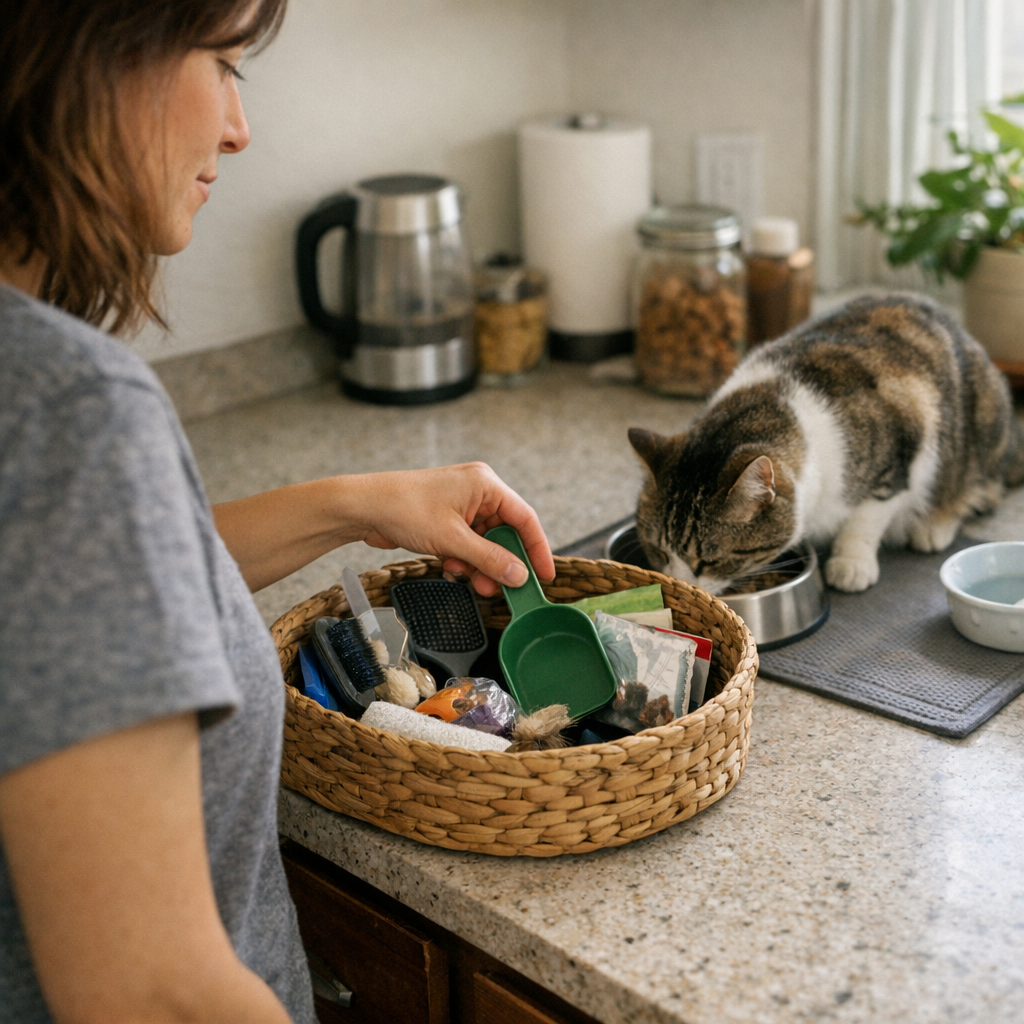
The counter looks under control after a Sunday reset—bare, supplies stowed, nothing in the way. But by Wednesday, the refill bag is rubbing elbows with the coffee maker, the grooming brush has drifted to food prep territory, and the kibble scoop hides behind a bowl. Even neat setups quietly turn into an obstacle course: one errant spoon, one pouch in the blind spot, and breakfast runs straight into a reshuffling tangle you didn’t plan on. With every reset, the same silent pattern returns—cat-life tools spreading into every open space, stalling your morning, and erasing any sense that “tidy” means easy upkeep.
Invisible Build-Up: The Counter Clutter Loop
A tidy setup at a glance doesn’t mean it will stay workable midweek. You fill water, grab treats, brush fur, and keep parking each tool “just for now”—creating small blockades for next time. By Wednesday night, the scoop’s vanished behind wipes, treat packets edge under the placemat, and grooming tools wedge near the sink. The buildup isn’t just visual; it grinds down every routine—reaching for a can opener only to bump a sticky brush, nudging a toppling refill bag, or trying to fish a litter scoop out from a wonky gap behind the stove. Every step gets a little slower, every fix a little less satisfying, and the friction quietly returns just when you need the area to go on autopilot.
Flat Surfaces: A Magnet for Micro-Mess
Cleared counters look like order but double as magnets for mess within two days of real use. Most setups cluster feeding, care, and cleaning tools along the flattest, most available stretch. After reset, everything lines up. But within hours, feeding scoops overlap with half-used bags, a water additive bottle inches into the wrong zone, and by Thursday, a supposedly quick breakfast demands five minutes of shuffling around misplaced items. The warning sign? When a treat pouch starts sliding under the mat’s edge or a brush edges too close to prep space. Flat surfaces attract “temporary” drop-offs until the real fix—one big counter sweep—gets delayed again and again.
The mess doesn’t show up with catastrophe. Instead, it leaks in: a toy under the dish rack, feeding tools trailing behind prep spaces, and slow creep as regular routines overflow into the same free space. Every delay—refilling, wiping, hunting for a lost scoop—signals a structure problem, not just a tidiness lapse.
Routine Friction: When Function Doesn’t Follow Form
Clutter changes daily rhythm fast. Suddenly, you’re sidestepping wipes to fill a water bowl, relocating a stray brush before you can prep food, or trying to clean up breakfast only to find yesterday’s toy jammed against the litter scoop. What looked like order after reset becomes a pattern of detours and repeat-mess. Instead of your setup supporting you, you’re working around its blind spots—and the backup builds with every feed, refill, and “just leave this here” moment.
This tension stays background but real, making each task slightly slower and more frustrating. Cat care areas don’t just look less pleasant—they take more time, more movement, and sometimes more mess, quietly working against the feeling that your space fits your routine.
The Open Basket: Turning Chaos into Containment
One open, heavy basket near your cat care setup changes the problem. Rather than micro-clutter spreading across the counter, the basket corrals the high-turnover tools: treat pouches, feeding scoops, water additive, the lint roller, the timer for water refresh. Each used item lands in the same zone, not scattered through prep, coffee, and sink areas. The routine changes—mealtime ends, scoop gets dropped in, brush returns straight in after a quick use, refill pouches drop into a single spot. When it’s time to actually reset, one glance tells you everything: nothing’s hidden behind, everything’s out and visible, and the cleanup at the end of the day doesn’t spiral.
What Happens Without the Basket? Daily Memory Leaks
Drop the basket, and every routine leaves an invisible trail. After a few rounds, you’re searching for the scoop (it’s under the kettle again), chasing a treat pouch that rolled behind something, picking a brush up from the floor because a quick cat paw sent it flying. Tidy looks fade as each use secretly undoes the last reset. The weak point? Every object that’s not anchored returns as a friction point—until the only solution is starting over from scratch.
Choosing the Right Basket: Function Over Flair
The best basket is practical, not pretty—shallow but with weight. If it’s too light, your cat can shove it onto the floor with one swipe; too deep, and daily tools disappear into the pile. It should be easy to grab from, hard to accidentally tip, and visible at a glance so you never wonder if an essential’s gone missing. Test for real use: does a wet scoop drop straight in, or does it tip the basket? Can you find the brush without digging? Does it absorb clutter or just add another thing to trip over?
Location matters. If the basket lands right in your cat’s main sprint zone, it’s just another thing to scatter—or for a playful swipe to send rolling. Move it close enough to your care area to stay useful, but out of the lane of cat traffic and kitchen chaos. Actually run through your routine with it in place and see if it survives the first day’s cycle.
Only the Essentials: Defeating Overflow Before It Starts
Most basket systems fail by trying to pack in everything “just in case.” Extra medicine droppers, back-up bags, spare collars, and dried out sprays do nothing but clog up fast grabs. The more you stuff in, the more every reset adds time and guesswork, as low-turnover supplies pile on top of true essentials. The easy fix: keep only the things you use in a single day’s cycle in the basket. If you’re staring at three types of water additive or digging under an old pill container for a treat, something’s ready to rotate out. Overflow turns “organized” into another routine roadblock.
Hands pausing mid-grab are the early-warning system—if you stop to sort, you’ve lost the supposed speed advantage. Reset is about quick, repeatable flow, not storage for every possible need.
The Pitfall of Multiple Containers
Trying to separate feeding, litter, grooming, and toys into different bins feels organized but usually multiplies steps. Each extra container adds a round trip, a new spot to check, and stacks of “sorted” things that in practice just fragment the clean-up and make quick resets more complicated. For most setups, a single, visible, open absorber is faster, more honest, and tougher for real-life clutter to defeat than a set of neat, semi-empty containers that still slow you down.
Signs Your Maintenance System Is (Finally) Working For You
- Reset takes one minute, not five. The scoop, brush, and wipes are all right where you expect—not scattered or stuck behind appliances.
- Nothing blocks human or cat movement. Chaos gets absorbed in the basket; tools no longer detour into meal-prep zones, walkways, or risky ledges.
- Cleanup tools land where they’re supposed to. No hunting for a missing brush or scoop—they’re always in reach when needed, not halfway across the room.
- Overflow is obvious, not sneaky. As soon as things outgrow the basket, it signals a cull—no more slow creep or stealthy pileup.
- Essentials stay in real rotation. At a glance, you can spot what’s low, what needs replacing, or what’s overdue for a reset—no more lost tools or extra purchases because something slipped past your mental list.
Real Changes, Not Just Visual Improvement
Looking tidy isn’t the same as moving smoothly through routines. A good basket system does more than clear visual mess—it keeps feeding, cleaning, and reset cycles easy, even after the fifth run of the day. When clutter creeps back in—basket overflow, or too many “just in case” extras slowing grabs—a quick purge restores speed. The system should be flexible enough to absorb disruptions but firm enough to keep basics visible. The payoff? Less wasted motion, fewer forgotten tools, and a setup that’s actually use-ready, not just good-looking after a reset.
Resetting Your Indoor Cat Life—One Reach at a Time
A basket isn’t magic, but it anchors your routines. Routine friction drops, resets stop ballooning, and your home keeps pace with every daily cycle—without making you repeat the same old cleanup work.
Explore the StillWhisker world for practical indoor-cat-life upgrades.