
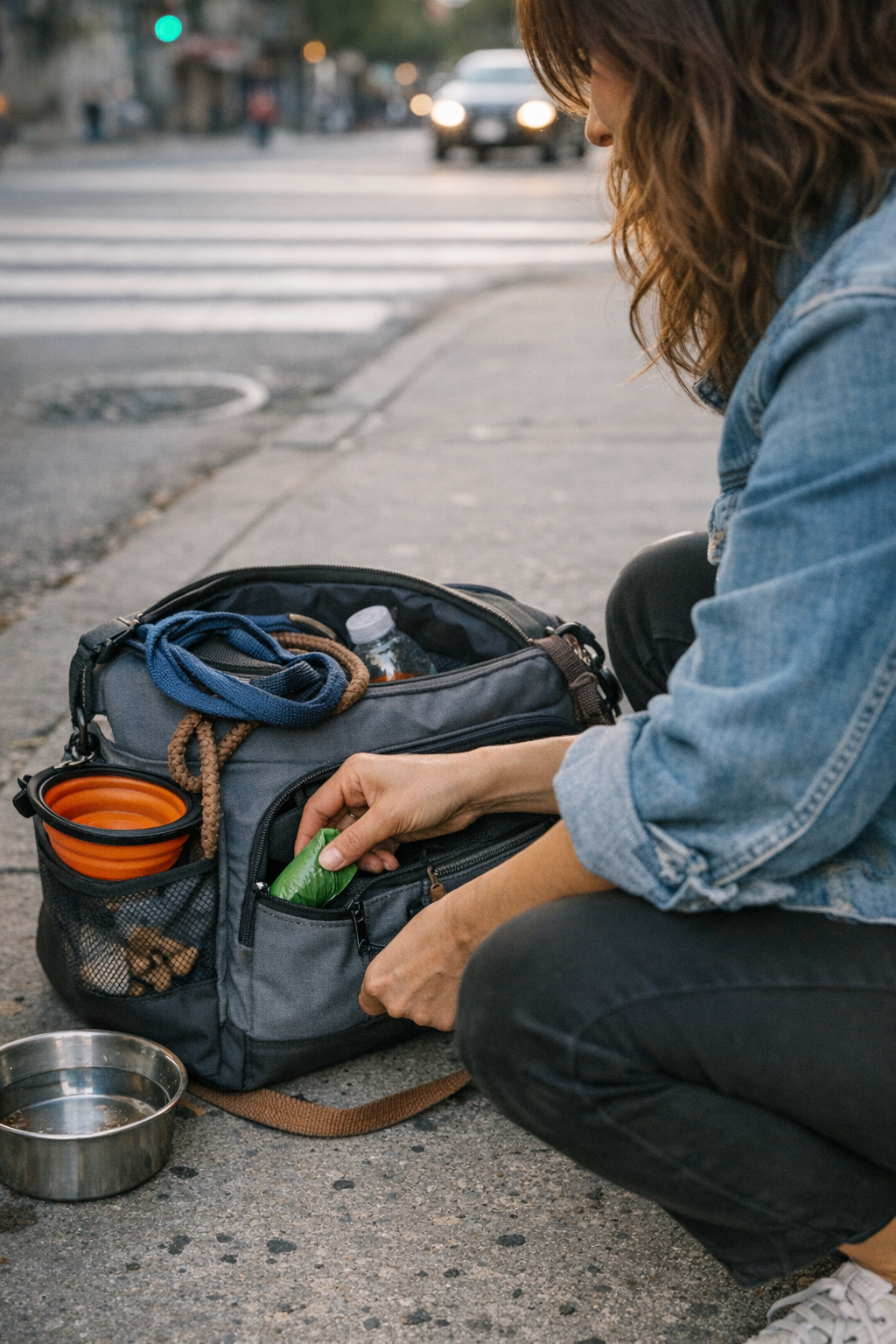
A pet-travel bag that looks perfectly organized at home will still fail you if it can’t keep up on real walks. The flaw shows up fast: the moment you hit the street, every “in its spot” promise gets stress-tested by quick stops and repeat reaches. What seemed sorted in your entryway quickly turns into a sequence of blocked grabs, gear overlap, and too many zippers at the worst moments—especially when your dog is already pulling forward.
When “Neat Enough” Isn’t Quick Enough on the Move
Order collapses as soon as minor items get buried the first time you reach for them: waste bags end up trapped behind an extra leash, wipes migrate to the bottom, the collapsible bowl slides under your water bottle. That sensible home setup fades fast. When every block brings a new pause, each “just in case” item becomes a barrier to what you actually need:
- Digging for wipes—but they’ve migrated under unused gear since you started walking.
- Grabbing a treat means shuffling through rope or rolled-up leads you won’t need all trip.
- Pull one leash and a bag of snacks comes spilling out—or something crucial catches on the wrong carabiner.
The more stops you make, the more your so-called “organized” bag forces slowdowns. Items overlap, pockets collapse, and the outside order never matches what’s actually needed. Every normal pause becomes a reminder that looking prepared is not the same as working efficiently—especially when every second counts for keeping your pet calm and moving.
The Persistent Friction of Repeated Stops
Pet travel mostly means interruptions: street crossings, sniff detours, rushed cleanups, quick sips of water. These are not unusual events—they’re regular friction points that expose weak setups again and again:
- Needing to set your bag down on dirty ground just to locate a single waste bag.
- Pockets sag or fold after a handful of items have come out, mixing clean and dirty gear in the same pile.
- Each pause turns into a shuffle: pushing comfort items aside to get to cleanup, or losing your spot while searching under a mess of leashes and snacks.
By the fourth or fifth interruption, what started as “organized” becomes a string of minor hassles. Your patience drains with every search. If your bag needs to be rearranged every single stop, you’ll start skipping resets—or miss small messes—just to keep moving. That slow leak of convenience is what sets mediocre setups apart from those built for real movement.
The Gap Between Looking Ready and Working Smoothly
Visual tidiness is not performance. That bag that looked sorted in your hallway starts feeling like a puzzle box by the third street corner: everything inside was “packed for every scenario,” but now, pulling out one thing ruins the arrangement for everything else. Practical travel setups are not about neatness—they’re about access, speed, and recoverability:
- A single over-packed compartment turns every grab into a tangle of straps and pockets.
- Supposed “convenience” pockets look clever at home, then fold limply, swallowing their contents as soon as real movement starts.
The difference becomes sharpest when you can see your pet looking up, waiting out your next clumsy search for a lost wipe or crumpled cleanup bag. They register the delay even when you try to shrug it off.
Real-World Scenes: When Setup Flaws Keep Surfacing
Take a common evening walk: quick leash swaps at intersections, speed bumps for water or sniffing, and at least one rushed cleanup when you’re partially watching traffic. If your cleanup bags are under another pouch, the essentials are never where you want them:
- Fumble a zipper just as your dog strains to rejoin the sidewalk rush.
- Lose momentum at busy crossings because the gear for the next step is buried two layers down.
- Miss a dropped treat in the grass, only realizing you’re out of wipes because you can’t reach the pocket without setting the bag down.
These aren’t one-off annoyances—they show up every time you expect a clean reach and get friction instead. Sometimes a comfort item for your pet covers the zipper you need in a pinch. Sometimes your own phone, tossed in at the last moment, crashes the sequence—suddenly locking pet and owner essentials together in the wrong order. Clean separation matters more the more often you have to handle or reset gear.
The Subtle Power of Better Placement
The fix is rarely more gear—it’s smart layout for how you actually reach. One change, like moving waste bags to a distinct outer pocket, means you only need a single gesture, not a full-bag dump at every cleanup. An owner may not notice the design at home, but on the street, it means no missed moment, no spilled wipes, no gear avalanche when your rhythm breaks. The real impact isn’t measured in “packability”—it’s in the seconds saved and interruptions avoided across dozens of stops.
Small layout shifts often outperform a total repack. A clearly separated cleanup zone, wipes with their own entry point, or clipped comfort items that don’t block the critical pockets—all of these turn use friction into routine flow. The proof doesn’t show up as neatness at home; it shows up in smoother, less stressful movement hour after hour.
Packing for Movement, Not Just for Looks
Real-world pet travel puts repeat action above appearance. Bags and organizers that privilege reach, side-access, and shape-stability reduce the trap of “reset and repeat”:
- One pull retrieves what you need—no full search or spillover required.
- Comfort items help calm your pet, but can be stowed so they never block wipes, bags, or hydration gear at speed.
- Movement resumes without micro-stalls or frustrated resets at every new block.
The difference is easy to underestimate on day one but becomes painfully obvious after a week of disrupted routines. Your attention goes to your pet, not bag management. You don’t have to steel yourself for the next stop—because the gear is where it should be, every time.
Why Setup Details Matter More Over Time
The inconvenience of a so-so kit is a cumulative one: a weak point you tolerate once becomes a daily glitch, a repeated break in your rhythm, or even a small but predictable missed chance to keep things cleaner and calmer. The first time, you sigh. The fifteenth time, you stop resetting—and start accepting small chaos as “good enough.”
The better move: pack for the real sequence of use, not appearance. Prioritize clear access for high-frequency needs; keep pet and personal zones from overlapping. The result is not just a tidy starting point, but a pet-travel flow that protects your attention every single stop, and keeps showing up—trip after trip.
Find practical organizers and gear for real-world pet travel at PawGoTravel.