
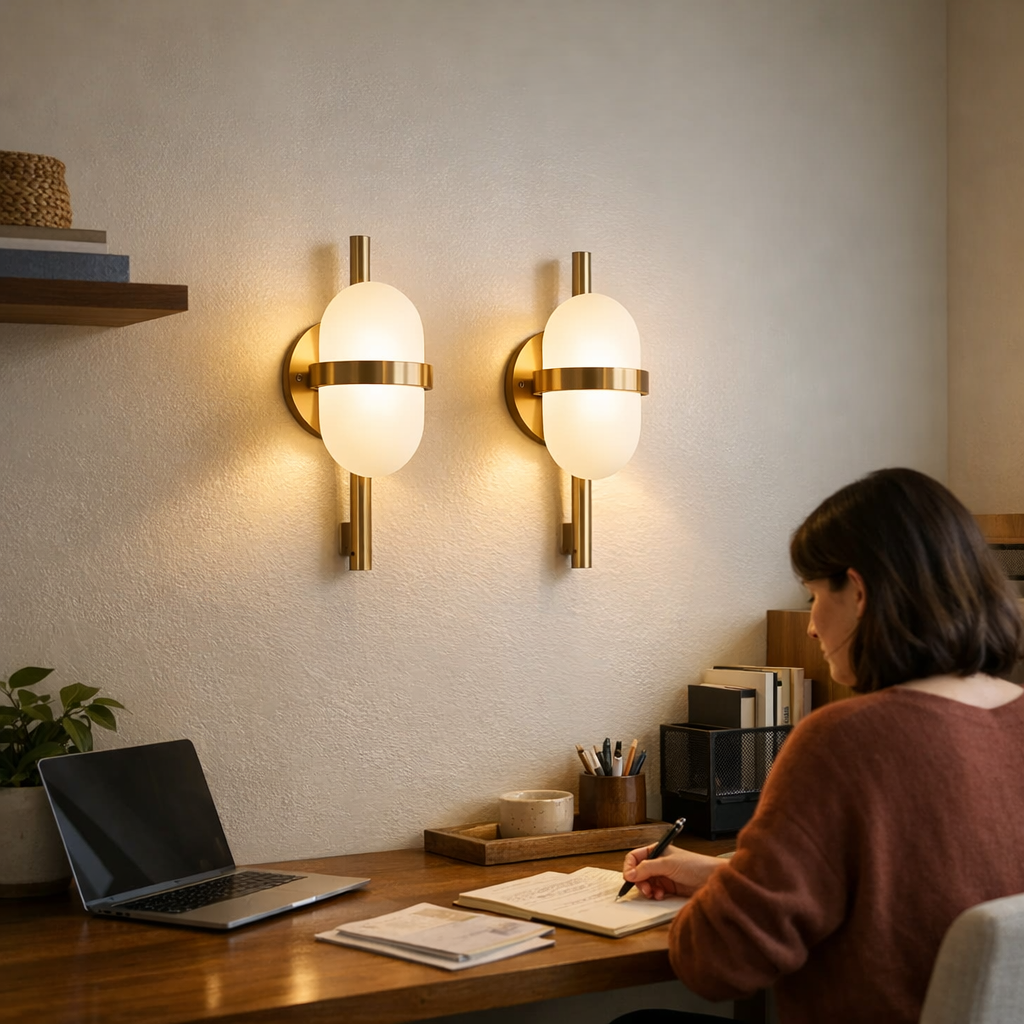
Ceiling lighting makes rooms “look” finished—but leaves desk edges, shelves, and shared tables annoyingly dim. You set up the space, mount a single fixture, and for a moment, it feels resolved. But the promise of general brightness fades fast. Repeated use exposes what the photos hide: the center glows, while everywhere you actually reach—the far side of your desk, the ends of your shelves, the edge of a group table—slips back into shadow. It’s not just one missed spot. Every day, you stretch for a paper and lose it to a dim edge. The shelves you meant to use vanish behind silhouettes. Instead of feeling organized, the room starts demanding small workarounds just to stay usable.
The Surprising Limits of Ceiling-Only Lighting
Mounting a ceiling fixture feels like a shortcut to a clean, cable-free room. In reality, overhead-only setups almost guarantee friction where you least want it. The surface may look uncluttered, but it’s a trap that repeats on real days, not just move-in day:
- Desk edges stay dim—papers slide just past the light, tools roll into unseen patches, and you start dragging items closer to see them.
- Glare grows persistent—ceiling light bounces off screens or glossy tables, forcing you to shift your seat or shield your eyes just to focus.
- Blurry perimeters—room edges merge with shadow, navigation feels subtly uncomfortable, and multi-use spaces reveal awkward, underlit stretches.
This isn’t atmosphere—it’s the ceiling fixture’s central output failing at the edges. During work, reading, or prepping, the border zones become a problem. The difference between “looks bright” and “works everywhere” isn’t cosmetic: it decides whether you end up fixing the setup or working around it every day.
Compensating for Bad Light: The Common Workarounds
No one accepts dim edges forever. Annoyance turns into habit-forming fixes that don’t really solve anything:
- Dragging table lamps across the desk to chase shadows—then stumbling over cables each time you get up.
- Shifting your chair to monopolize the bright patch, leaving half the surface underused and making shared work frustrating.
- Threading power cords across worktops or under tables just to force a little more light into a neglected corner or shelf.
Minimal on paper but cluttered in reality: lamps colonizing every open spot, cords visible before you notice the room. You spend minutes each day re-aiming lamps, unwinding cables, and still find corners you can’t use without extra improvising. The supposed “neatness” of central lighting turns into a daily loop: what edge will you wrestle with today, and how much can you fix on the fly before giving up?
The Real Fix: Bringing Light to the Edges
Wall lighting, under-shelf strips, and mounted task lights change not just what you see, but what you can actually reach and use. Vertical lighting—targeted just above a desk, along a shelf, or around a room’s edge—unlocks areas that overhead light keeps underlit:
- Visibly frames the room’s border—nothing slips into the gray. Every inch of the desk or shelf becomes available, not an afterthought.
- Reduces glare shifts—task and wall lights balance out the harsh ceiling glare, making it possible to look at screens or documents for hours without fatigue.
- Cuts clutter instead of spreading it—a wall sconce or under-shelf light manages cables out of sight, ending the daily crowd of lamps and unsightly extension cords across your work zone.
The result is immediate: the desk edge stays as useful at night as it is in daylight, without cable chaos. Walking by a shelf, you spot what you need on the first glance. In meetings or projects, people don’t battle over the single lit spot or knock over a lamp just to see their notes—everywhere is usable, not just the center patch.
A Real-World Example: From Dim Corners to Clean Borders
Picture this adjustment: two pared-back wall sconces, mounted 15 inches above your desk, angled out just enough to wash the whole surface. Before, the far side was a lost zone—where things disappeared into darkness. After, the entire four-foot run of desk is evenly lit. You notice, not just once, but every time you work:
- Papers tracked across the entire desk stay visible—no more collecting stacks into the “bright” patch and ignoring the rest.
- Cable lines run behind the mounts, stay put, and fade out—no loops snaring sleeves or trailing toward the floor.
- The tug-of-war with desk lamps ends. You’re not adjusting, re-aiming, or adding another fixture just to reclaim a surface edge. The light lands where your hands do.
Why Edge Clarity Beats Appearance Alone
What fixes the setup isn’t just mounting a fixture to look finished: it’s edge clarity that transforms use. In actual routines—grabbing something from a shelf, glancing down a desk, or prepping materials for the next task—it matters whether you can trust the lighting to show everything. Edge visibility shrinks clutter, demotes cables to the background, and makes routine resets automatic. When perimeter clarity holds, organization is an everyday baseline, not a project you have to redo every week.
Small Adjustments with Big Impact
You don’t have to overhaul everything to see the shift. One slim wall light, a plug-in strip under a shelf, or a slight bracket reposition can reveal the hidden capacity of a room. Getting the fixture at the right placement stops a string of daily hacks. These aren’t touch-ups—they’re what finally stops the room from fighting back when you use it for real work.
Lighting That Keeps Up with Real Use
Where routines repeat—shared offices, reading corners, dining tables—the right lighting support gives edges actual purpose instead of dead zones. Treating the perimeter as valuable means less scrambling, fewer cable traces, and fewer hours spent “fixing” the layout. The step from visually neat to consistently usable is simple: stop ignoring the edges. When lighting support follows the forces of daily use, the room stops demanding attention—and quietly works the way you needed from the start.
Find practical wall lighting, mounting solutions, bracket supports, and under-cabinet options at LightSupport.