
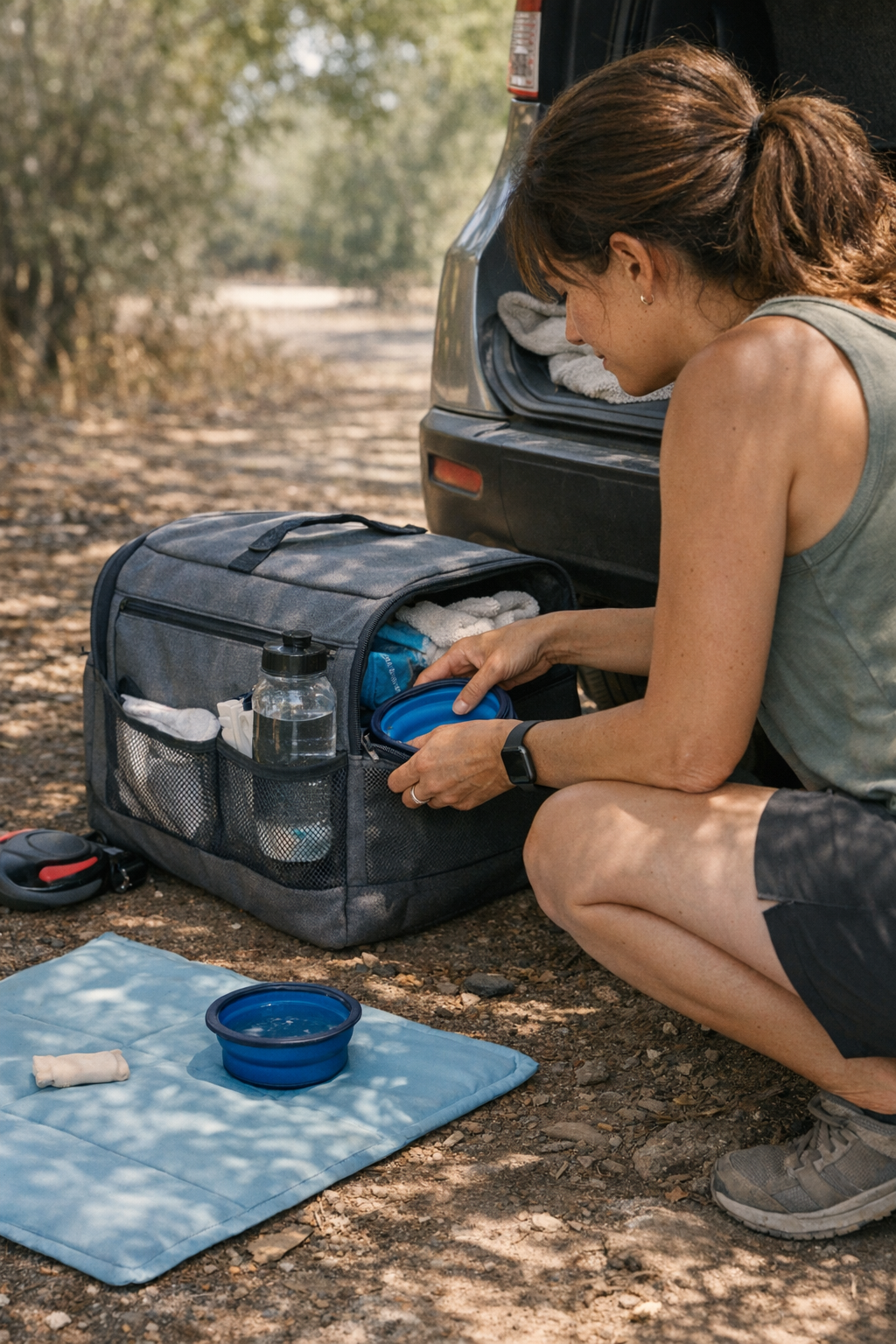
Hot-weather pet travel exposes the cracks in your bag setup long before your pet runs out of patience. Your pet’s panting, you’re fumbling for water, but the “organized” bag won’t give up the one thing you need—because in real shade-stop rush, buried hydration is as useless as forgotten snacks. That first break in the heat betrays the difference instantly: looking packed is not the same as acting ready. Shaded parking spot, kit on the passenger seat, and still you’re wrist-deep, digging for essentials as your pet circles and the window for relief closes. That’s when you spot it: the structure that seemed “travel tested” at home is already working against you on the road. PawGoTravel gear exists for these friction points, not just for appearances.
When “Packed Neatly” Becomes “Hard to Use Fast”
On a table, a pet travel bag with zipped pockets, stacked bowls, and clipped leads looks under control. But every real-world stop exposes a different hierarchy: water ends up under a cooling mat; wipes wedge between toys. Shade is supposed to buy your pet a cooldown window—yet what should be a five-second reach turns into a semi-unpack every single time. Efficient packing turns out to be efficient delay. On the second or third stop, you notice yourself reshuffling faster, but the process drags—pet panting, your hands tracing the same obstacle course. By the last stop, there’s no margin for fumbles left.
Real frictions multiply— what starts as a tidy layout decays into repeated rescues: bottle under pad, treats over wipes, and each item swap making the essentials even less reachable. Visually “smart” setups stall when it’s time to act with one hand and a restless animal two feet away.
The Hidden Cost in Every Shade Break
Under real sun and seat-belted restlessness, each shaded pause becomes a race. Every extra second your hand spends inside the bag is one second less vigilance on your pet, one more tick toward distress. Even a bag that was loaded carefully throws you into a loop—stop, search, pull supplies in the wrong order, reset, repeat. The whole point of shade slips away while the heat inside the car lingers and your dog (or cat) starts shifting nervously again.
Typical moment: You slide the bag onto your lap, crack it open, and—again—the travel bowl is trapped under spare leads and rolled mats. Lifting out one thing sends the wipes off balance and under into the pile. Next stop, you try for a better pack, but the moment you need those wipes, they’re lost under snacks you never meant to move. On a two-hour trip, this cycle is the rule, not the exception—and every time, relief is a beat too late.
Repetition—How Small Delays Build Into Big Discomfort
It’s rarely the first break that breaks you. By the fourth, you’re tense and your pet is restless, pacing or vocalizing because routine means “now,” not “wait while I shuffle the gear.” Hydration and cleanup needs don’t line up with your packing logic, and the delay feels longer with every stop. The bag’s slick zipper snags just as a squirming dog pulls on the leash. The bowl comes out, but wipes are buried. Pet drool sets into the car seat as you hunt for cleanup. This is when you realize: each misplaced item adds up—not just in inconvenience, but in cascading agitation for everyone packed into that small, hot space.
Pressure points: zipper resistance, slick pads that double as cover and as barrier, essential items surfacing at the wrong time. Restarting travel never feels seamless; it’s a partial reboot, not a continuation—and every reset is one more test of your nerves and your setup’s design.
Exterior Mesh Pockets: The Unassuming Fix
The simplest structural shift—moving wipes and water to an exterior mesh pocket—rewrites the whole stop routine. No detours through liners or mats, no tactical layering, no wrestling with stiff zippers. Bag down, hand out, water ready, wipes in reach—without breaking eye contact with your pet or juggling overlapping items to retrieve a bowl. In practice, exterior access means less panic, quicker routines, and essentials staying put rather than shifting deeper into packed layers. It’s a five-second reach instead of a two-minute scramble.
Stops stop being stress-tests. Your pet actually gets the full shaded pause for relief, not just for watching you unpack. You recover instead of re-pack. And when the vehicle gets moving again, there’s no mental checklist gnawing at you—the gear returns to ready, not just to “packed.”
Comfort That Doesn’t Undercut Itself
That plush pad you added for your pet’s comfort? If it lands on top, it covers every quick-access item and turns hydration into a juggling act. When relief, cleanup, and water aren’t separated, comfort becomes a block instead of a benefit. The best setups—what you end up wishing for after the second or third heat break—let you reach for essentials instantly, regardless of what “showcase” item was packed first. The difference is in the seconds between parking and helping your pet: with friction, you’re dealing in minutes and spilled supplies; without it, you’re present and responsive, not distracted by bag mechanics.
Real readiness means more than surface neatness— it means stripping away any pause between stopping and acting. Each layer that forces a reshuffle is a layer that slows actual comfort.
Why Pet and Owner Items Keep Clashing
Travel reality: your things and your pet’s things will try to merge, even if you swear you packed them in their own zones. Leash in the same pouch as house keys, snack bag nudging sunglasses, cleanup wipes hidden behind a phone charger. Every short drive and stop shifts the packing order, creating a bag interior that’s new each time you open it. More compartments don’t stop the problem—they usually add more nested layers to sort out under pressure.
The real answer? Build for stop-and-go with dedicated exterior or side-access pockets for the repeat-use trio—water, wipes, and bowl. That single change deflects owner/pet item confusion, cutting down on spillover and scramble at every rest. Interior order becomes less critical when the top-used items float, not sink, during travel.
Not Just “Packed Right”—Actually Ready to Move Again
Side-by-side, the “neat” bag wins Instagram. But real travel—the kind that runs hot, with repeated shade stops and species that do not wait politely—exposes the structural weakness of setups that bury relief under presentation. Tolerance for delay diminishes quickly; every cycle of dig-and-reshuffle burns away your margin for real comfort. Reliable travel gear, especially in heat or with restless pets, keeps what truly matters within arm’s reach, not just in theory but in every messy, real-world reset. It doesn’t matter if your setup looks ready at the start; it matters if it still works after the third time you have to flip it open, half-stressed, when the shade slips away.
Discover pet travel solutions for real-world routines at PawGoTravel.