
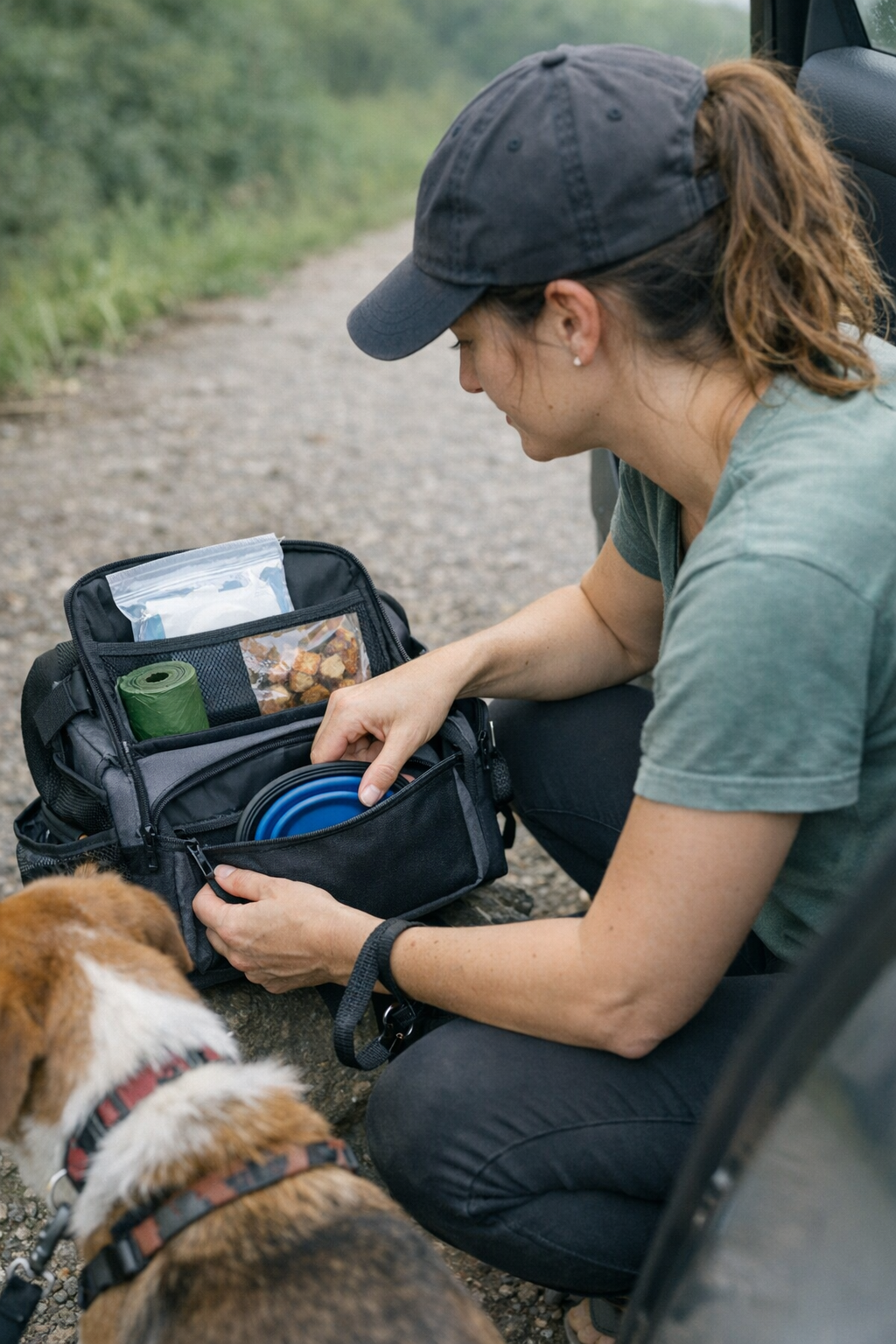
A pet-travel bag feels “ready”—until the second pause on a real trip exposes what’s wrong. It’s not your first stop that catches you. It’s that moment, leash in one hand, when the bag’s tidy pockets turn into blocked tunnels: wipes hidden under a blanket, treats trapped behind a half-packed bowl, owner gear tangled with dog gear. What looked sorted in your living room starts failing as soon as you need to grab, clean, and move—fast. If you’re digging, shuffling, or shaking out pouches while your dog gets impatient, the problem is never just about looking organized. The PawGoTravel world builds for these moments, not showroom order.
Why “Organized” Isn’t Always Ready
At home, every item fits and every pocket zips; it seems sensible to assume your setup will hold up in motion. But the calm evaporates by your first real break—any jostling, waiting curbside, or dirty paws increase pressure. Suddenly, the need isn’t for a beautiful arrangement, but for a setup that returns to “ready” after every stop. Most so-called organized bags can’t keep pace when you hit repeated stops: random gas stations, curbside delays, or quick cleanup after a nervous walk. You reach for wipes while blocking a door with your elbow, only to find a leash twisted through towels and cleanups pinned below bowls. Friction piles up with each shift; by round three, having to untangle the same overlap means the bag’s calm effect is mostly lost to small, avoidable delays.
Recognizing Overlap: The Slow-Creeping Tangle
Pocket count never saves you from overlap. Trouble happens when dog treats, wipes, and bowls end up fighting for the same “easy” space. Each stop adds a layer: you dig a little deeper, items shift, and before long, the simplest grab becomes a block-and-reshuffle routine. Reach for wipes and out tumble leashes; aim for treats and find your sanitizer snagged; a bowl, once accessible, is now wedged under everything. Every blocked or double-stacked zone multiplies friction on reruns.
Failure is quiet but deadly to routine when:
- Your dog’s comfort blanket always seems in front of quick-clean items, so you yank out two things at once or just skip the cleaning.
- Cleanup tools arrive, but only after you empty half the bag to reach behind tumbled gear—making every roadside mess a hassle, not a pit stop.
- The line between pet and owner essentials blurs; keys and bags cross with snacks, every search turning into an accidental full unpack.
Scene from Real Life: One Stop, Too Many Steps
Rest area, mid-trip: leash in your grip, you reach for wipes buried under a harness and towel. It should take seconds—instead, you fumble, your dog tugs, and each needed item is one layer too deep. Finish? Now you’re repacking as fast as your dog’s patience thins. The bag starts to look messy and—more important—resets get slower at every repeat. The trouble is structural: if high-use essentials compete for space, the friction after each restart isn’t just annoying—it’s repeated, trip after trip.
Every pause grows tense as “organized” turns obstacle course. Your pet signals impatience. The bag, built to calm you, now interrupts your flow. The wrong setup isn’t a small bother; it’s a routine breaker.
The Real Shift: Creating Intentional Gaps
Maxing out pockets is a trap. The setups that survive real travel leave some room unused—an empty row, a solo pouch, a half-filled side compartment—to keep traffic flowing. A few lived-through fixes:
- Wipes alone in a quick-grab slot: no double-layer, no confusion, just “in and out.”
- Bowls slip outside, away from tangled leads and snacks; no more scrabble fights between clean-up and feeding time.
- Dedicated cleanup zones where nothing but bags/pouches go—no wallets, no tissues, no mixed-use digging.
One real gap—one empty space—breaks the reshuffle cycle. Suddenly restarts get quick, and you stop asking, “Where did I pack that?” Breathing room is not wasted storage. It’s the difference between a grab-and-go setup and a repeated delay trap.
Repeated Movement: Where Friction Appears
The cracks in a pet-travel bag won’t show on leg one. You see them by the third curb stop—when you’re sprinting to beat the rain, your dog’s restless, and every “organized” pocket requires new searching. This is where:
- Stops drag out—“one grab” becomes “dig, ferry, repack” before moving again.
- Cleanup needs become mini-projects, not quick fixes—because wipes migrate and bags hide, you need two hands even with one free.
- Each attempt to reset the bag blurs order further, as stress makes items migrate and the neat structure disintegrates.
The difference is clear: setups with separated, repeated-use access keep both pet and owner calmer. The right setup wins back time, avoids unnecessary repacking, and makes every transition less of a negotiation between bag, pet, and hurried hands.
Real Solutions Over Perfect Packing
No pet travel bag holds a single perfect answer, but the real fix is always deliberate separation, not the illusion of order. Every essential that has its own space—sometimes just an unused strip or a solo pocket—makes difference. If wipes, treats, or bowls ever require moving something else for access, your system is built for appearances, not action. Redo layouts so reach is single-step, not double, and keep the high-traffic items isolated. Reducing drag comes from subtraction, not more organization theory.
A tiny improvement—like a wiped-alone pocket or owner keys outside the dog kit—shaves off routine interruption more than another zipped layer. It’s not about being clinical; it’s about getting your rhythm back between stops. At the end, not even a neat bag matters if movement feels stuck and your patience bleeds away at every opening.
When Looks and Performance Don’t Match
Sleek bags hide habit-slowing mistakes. Judge the setup by its worst repeat moment: does the same search happen on every stop? If a tangle or traffic jam keeps cropping up, the bag’s flaw isn’t excess gear, it’s failure to guard the essentials’ path. Fewer overlaps mean less wasted time, lower irritation, and a smarter, smoother pet routine. In the world outside pristine unboxing, it’s the setup that recovers itself—every single restart—that you trust.
For practical organizers designed around real pet-travel movement, visit PawGoTravel.