
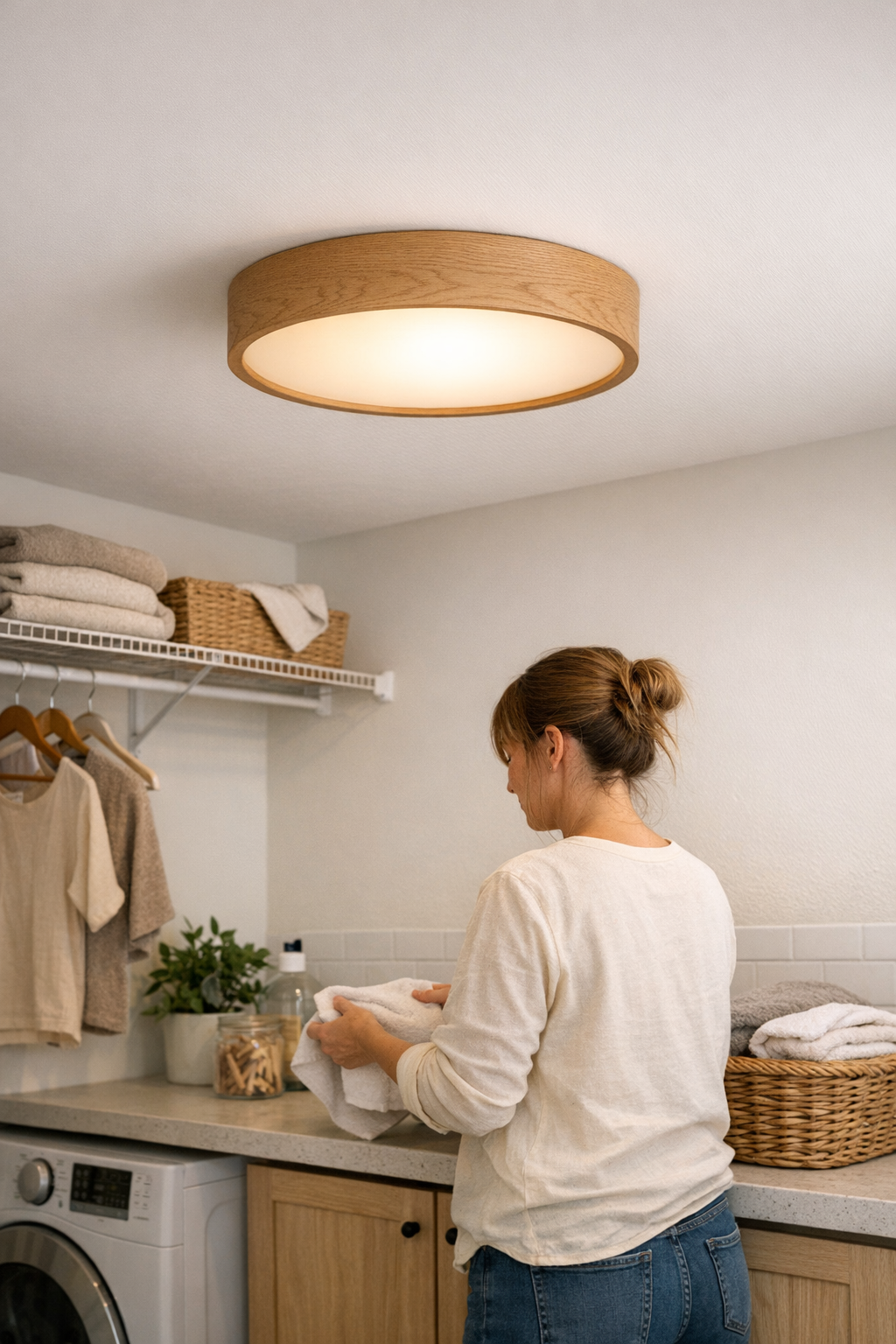
The real test for indoor lighting happens after the first week, not the first switch-flip. You turn into the stairway and realize the far step is vague, not from shadows—just from heat lingering at your shoulder. In the laundry corner, what should be cool ceiling light turns muggy by midweek. It’s not catastrophic failure; these are slow, invisible costs: warped diffuser edges, steamy air, color drift in your mirror or shadow lines growing unpredictable under fixtures that should be invisible to your routine. Most rooms pass the eye test until you live with them—then you start noticing what the wrong bulb, fixture, or rating really does to your path, your cleanup, your habits.
When the Wrong Bulb Stays In
You don’t always catch a bulb mismatch until it’s left a mark: plastic rims softening, a lens yellowing, or just heat clinging around the dome long past use. In hallways or bathrooms, it’s the light that feels “dense,” not just bright. The first hint is rarely visible—it’s sensed in the daily moves you make: quick hallway crossings, rinsing at the sink, handling laundry on repeat. A fixture isn’t built for unvented warmth, and when the bulb pushes past its rated limit—sometimes by just a few watts—wear piles up with every cycle. These are the edges where comfort and fixture life both quietly erode.
Flush domes, closed sconces, and damp-rated setups have tighter tolerances. Using a too-strong bulb (even “any LED” that isn’t made for enclosed or damp space) vents nothing. Heat gets trapped, the fixture softens or clouds, and what started as a solid setup drifts into annoyance—glare marks, color loss at the rim, plastics that start to warp or shift the way clear light is supposed to fall across cabinets or mirrors.
Comfort and Wear are Slow-Burn Problems
No fixture fails in one night. Instead, the routine suffers: the dome that’s still warm after you leave; the mirror edge where colors smudge subtly over months; the feeling of stale air or a sticky dome mid-laundry. Each use builds friction. You stop using the spot the same way—avoiding a too-hot sconce, ignoring that shadow by the door. Over time, the fixture and light setup become obstacles, not supports.
Where Fixture Type Makes Routine Harder or Easier
Stairway turns, windowless laundry rooms, cramped bathrooms, shallow entry zones—these are places where poor light is more than a style issue. Fixture choice here sets the daily pattern. If the bulb runs hot in a dome, the ceiling above the washer gets sticky, the air feels like it never cools off. In a closed vanity, a small wattage mismatch means you feel warmth at the lens, notice a haze in the mirror, or see edges darken and lines drift as the plastic sags. Every time that fixture is flipped, it’s working against its own setup.
This isn’t about “pretty” light. It’s about a fixture holding form—and function—amid real humidity and zero airflow. Over time, plastic domes yellow, rim lines fade, and movement feels heavier. These quirks aren’t just cosmetic: they signal the fixture is past what it should handle, reshaping how you use and avoid parts of the room.
Not All “Any LEDs” Are Equal—And It Shows Up Fast
“Switch to LED” only covers half the problem. Plenty of LEDs can still overheat in closed or semi-enclosed fixtures, especially in baths or stairwells with no draft. Even so-called “cool” bulbs, if not rated for those conditions, will cycle heat into the fixture. The result isn’t dramatic—just increased shadowing under cabinets, edge glare, or a constant slight haze that changes how clean corners and mirror tiles stay. The only fix is matching both rating and output, so the routine goes unnoticed and the room stops feeling incomplete no matter how many times you cross it.
The Subtle Differences Over Time: A Real-World Breakdown
Take two bulbs—one standard halogen, one LED meant for enclosed, damp, or utility setups. At the start, both look fine. But give it a month of hallway crossings, laundry loads, or mirror scrubbing, and the real impact sharpens:
- Incandescents and halogens: Trap heat fast, leaving plastic soft, coloring edges, and deepening shadow intensity near walls or cabinets. A fixture starts to feel like a low-grade space heater, with every pause or cleaning becoming slightly less comfortable.
- Wrong-fit LEDs: Seem safe but quietly overheat. Light quality turns “off”; fixture edges haze or yellow, and even regular cleaning can’t stop the creeping heaviness in the air or the drift of true colors and shadow lines.
- Properly rated, low-wattage LEDs: Keep both fixture and air clear. There’s no temperature spike even after hours. Shadow lines stop shifting, no touch-hot plastics, no lens discoloration. The light doesn’t just look right—it lets you ignore it completely, which is what a ceiling or task light should do when used as often as needed.
Real-Use Scene: The Laundry Dome
Typical setup: a flush-mount dome squeezed close to the ceiling in a windowless laundry alcove. New bulb goes in Monday; by next weekend, the dome ends every wash cycle warm—sometimes sticky. If the bulb is over-wattage or not approved for closed housings, plastic yellows, shadow lines break at the counter, and the air thickens with every laundry load. In one real case, a neighbor’s over-watt halogen didn’t just run hot—it left the diffuser warped and useless before the first bulb actually burned out.
The Quickest Fix is Also the Most Durable One
Getting lighting that just works is less about picking “an” LED, more about picking the right match for the install and space. If the dome is labeled for enclosed or damp rooms, only pair it with a low-wattage LED designed for those zones. The difference surfaces fast: no more lingering warmth, no more plastic fatigue, no shift in shadow or light balance after weeks. That muggy, off feeling in entryways, stairwells, or laundry corners disappears—and so does the subtle background stress of fixtures fighting their own hardware limits. The best setups are the ones you stop noticing, even after a hundred cycles or crossings.
Small Tip: Always Double-Check the Bulb’s Enclosure Rating
Taking 30 seconds to check for “enclosed fixture compatible” beats months of fix-it headaches or surprise discoloration. Damp-rated, low-wattage LEDs extend both fixture and light quality, so daily rooms stay safe and easy—no hot spots, no flicker, no lens stress. For high-use, low-vent zones, this is the only way the light vanishes into the background—the way a good ceiling, wall, or vanity fixture should.
Lighting That Just Works, Every Time
In stair landings, utility rooms, bathrooms—rooms you don’t decorate but navigate—the difference between a smooth routine and subtle daily friction lives in the fixture and bulb pairing. The right choice means: no pausing to check a step’s edge, no dodging a hot dome, no creeping scent of plastic mid-task. Lighting should erase itself from your mind, not pull your attention back every time one detail stops working. The cost of ignoring real-use ratings is paid over months, not days—so when you see these signals, treating fixture setup as routine maintenance makes the whole house flow better, errand after errand.
Find fixtures and solutions built for these real moments at LightHelper.