
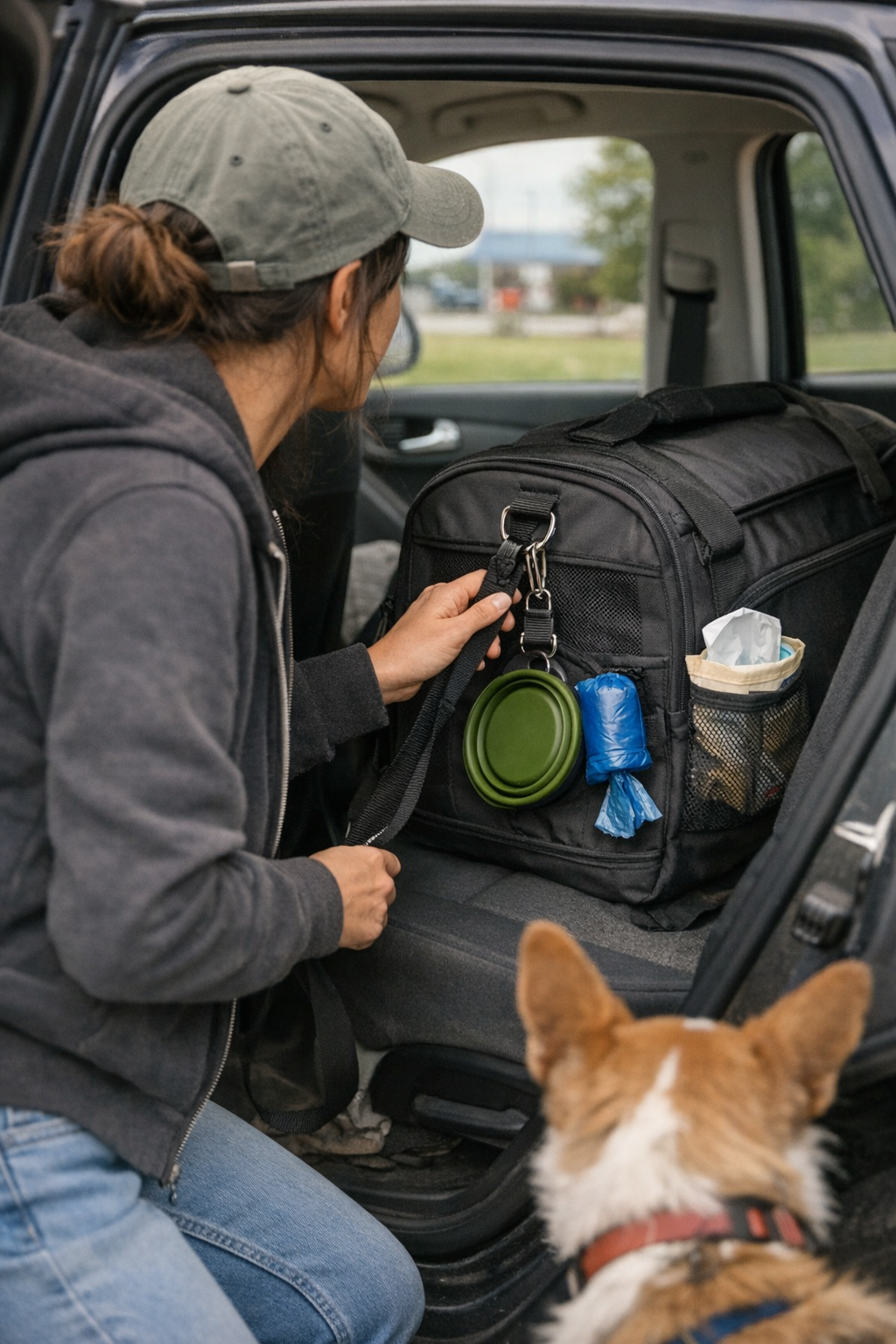
Rest stops don’t reveal weak setups—they multiply them. Pull in after an hour’s drive, dog already pulling to explore, and you know the routine demands speed: leash, waste bag, wipes, maybe a quick water break. But the “organized” travel bag slows you down at the very first stop. Leash tangled behind a bowl, waste bags swallowed under comfort blankets, wipes slipped into a zip pocket that now needs a two-handed dig—what looked neat at packing becomes a scramble under pressure. One hand holds back a restless dog, the other tries to free essentials that should never have gotten buried. The real pain isn’t a missing item—it’s the repeated drag: fumble, reshuffle, restart, every stop, every time.
When “Looks Organized” Doesn’t Mean “Works Fast”
Real-world pet travel is a test of access, not just order. The familiar letdown hits when there’s a pocket or pouch for everything—yet nothing is instantly grabbable when movement counts. Unzipping just to find items blocking each other, wipes nested beneath a double-stacked bowl, leash clasped behind treats—at rest, the kit looks tight. In use, it’s layered frustration:
- One zipper opens…but the bowl’s in the way of waste bags.
- The wipes you need must be fished out, leash-hand cramping from a dog’s pull.
- Mid-trip, you’re repacking because you never found a way to avoid bottom-of-the-bag delays.
The more stops you make, the clearer it gets: “organized” can just mean “stacked behind each other.” For multi-stop days, every slow retrieval becomes its own mini roadblock—especially when you’re juggling leash, carrier, and keys in one lopsided motion.
The Multi-Stop, Multi-Interruption Trap
Efficiency drops fastest on trips with repeated short stops. At the first break, you tolerate a slow search. By the third, you’re low on patience, reshuffling to keep up any sense of order. Small bags are no protection; if items overlap, even the best dispenser or folded blanket adds to the tangle. You grab for wipes and hook a finger on the dog’s ball instead. The mess isn’t just clutter—it’s lost flow, every single outing.
Real-World Access: The Difference One Clip Makes
The split between “looks good” and “works fast” is the access structure—what’s reachable at a seat edge or carrier door versus what’s swallowed inside. The first upgrade isn’t storage; it’s separation.
Picture the high-friction rest stop: you’re pressed for time, dog ready to lunge, keys half out. Instead of scanning pockets or repacking on the car hood, you reach straight to a clipped waste bag at the seat’s edge—done. The leash is ready, clipped just outside the bag, no digging or double-hand fumble. Movement barely breaks stride; the restart is smooth, pet energy stays focused, and you skip the classic bag-juggle that frays nerves over a long day.
Travel Friction You Only Notice When It’s Gone
Repeated stops make weaknesses loud. Even a bag that impressed on day one will turn against you if daily use means constant reacharounds and forgettable pockets. True upgrades shove recurring items—leash, waste bags, wipes—into direct-access, not shared pouches or deep zips. Yes, the kit looks busier, less tidy. But efficiency overrules show: you transition from curb to car and back with nothing stuck, nothing overlapping.
Common Setup Friction Points
- One-hand fails: Needing a cleanup bag while both hands are full, forced into a risky unzip-and-search that risks dropping something or losing grip on your pet.
- Stacked gear drift: Every item stacked just right at first—but by the third stop, wipes and bags have sunken out of instant reach, slowing movement every single time.
- Owner/pet mixups: When a wallet, phone, or charger shares a space with pet gear, even a quick grab for treats turns into a full routine interruption.
What’s barely tolerable at stop one gets old fast by stop four. Unless you fix the access logic, you’re dragging the same friction and delay through every leg of your trip.
The Single-Reach Upgrade: Small Fixes, Big Flow Improvement
Practical fixes aren’t about more pockets—they’re about smarter reach. Move your highest-use items to clips, visible loops, or outer pouches placed at the seat edge or carrier opening: waste bags clipped to the door, leash swinging from a carabiner, wipes visible in an open side slot. Each item split, never stacked, so nothing gets buried at the worst possible moment.
This shift pays off in momentum:
- Stops go smoother; less rummaging every time you park.
- No tangled hands, no forced two-handed acrobatics with an impatient dog.
- Cleanup and leash transitions run faster—movement feels reset, not stopped.
- Pet stays engaged, less rattled by pointless pauses and owner-side scrambling.
After a trip, you’ll find repacking is easier too—since nothing important disappeared into the bottom layer of the bag in the first place.
Why “Prepared” Isn’t Always Practical
The expected promise: more tidiness, more readiness. But tidy setups, especially fresh from packing, only feel effective if you ignore what real use exposes. “Prepared” matters less than “usable in motion”—especially when tired, distracted, or managing a high-energy pet under pressure.
On long travel days or back-to-back stops, a system with true single-reach flow makes the difference between preserved patience and a day of friction. It only takes a missed waste bag or blocked leash to turn a simple stop into a hassle. The strongest upgrade can’t be photographed—it’s the flow that actually survives real travel. You only notice what works when, for once, nothing interrupts the pace, nothing saps your energy, and your pet isn’t left waiting while you hunt for what you already packed.
Find pet-travel solutions and seat-side upgrades designed for real, repeated use at PawGoTravel.