
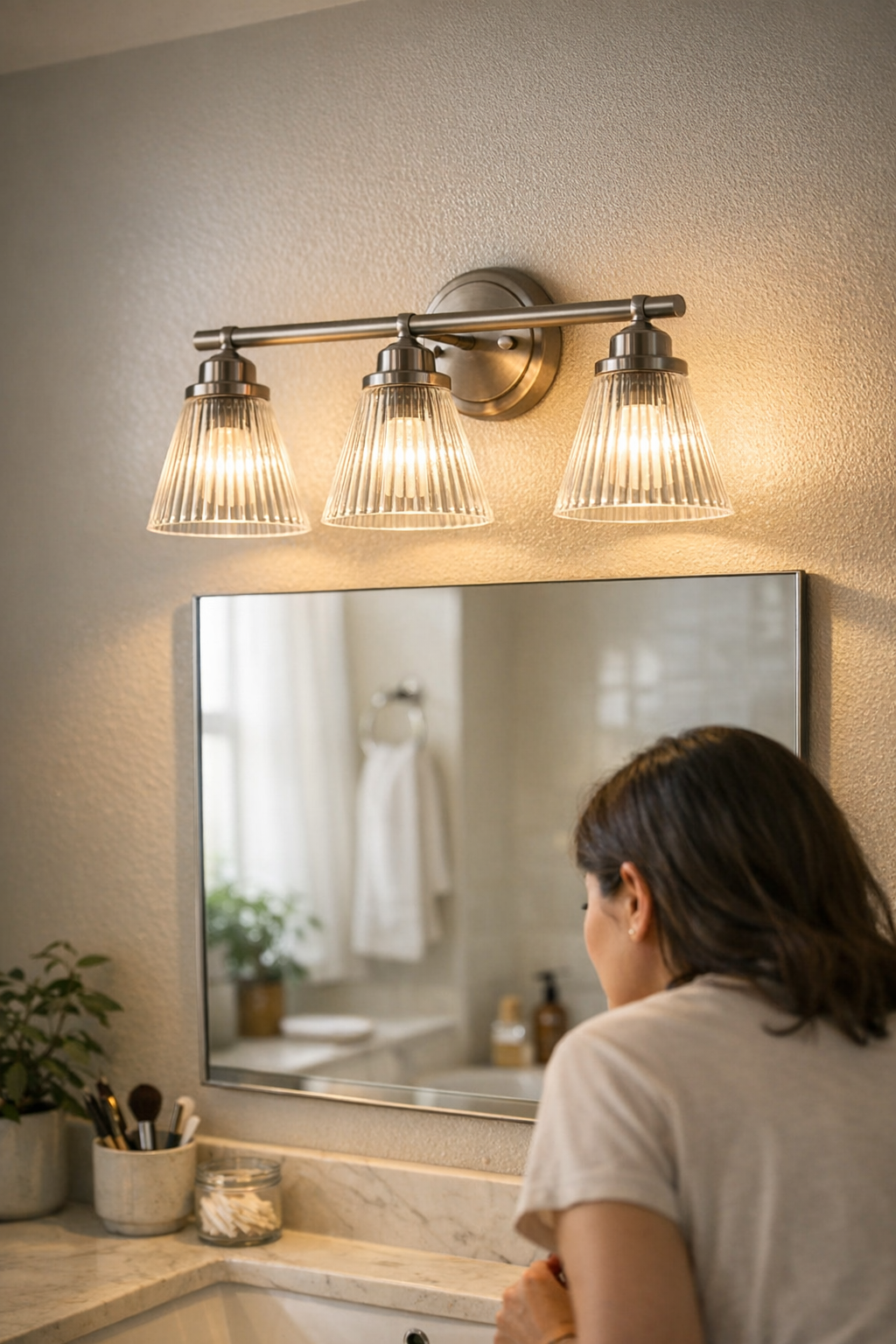
Most people won’t spot an off-level light fixture when they first walk into a room. But step up to the bathroom sink, climb the stairs after dusk, or fold laundry in a tight corner, and the flaw becomes clear: shadows stretch the wrong way, glare hits the mirror at just the spot you need clarity, or half the hallway drops into gloom while the other side is washed in excess light. The ceiling or wall might look finished at a glance, yet daily routines quickly expose a tilted fixture as more than a cosmetic miss. Each time you lean, reach, or turn, awkward light repeats itself—reminding you, in real use, that something is out of line.
Why a Slightly Tilted Fixture Matters More Than You Think
Just a few millimeters off level isn’t a small issue in practice. Lighting that looks decent on install day can turn tasks into annoyances: harsh shadow splits across your bathroom mirror, dark corners on a kitchen counter where you prep food or fold a towel, or angled glare cutting across the path you take every evening. Real routines make weaknesses obvious—especially when using wall sconces, vanity lights, or flush-mount ceiling fixtures designed to provide even light. One side of your reflection might be crystal clear while the other is trapped in uneven dimness. If you notice yourself unconsciously turning or shifting position in front of the mirror to “catch the light,” you’re already compensating for sloppy fixture alignment.
When a Bright Room Still Feels Off: Hidden Friction in Everyday Light
Lighting isn’t just about total brightness. Leveling is what steers light predictably, giving you usable clarity where you need it. An off-kilter light sends stray shadows along your main workspaces and blindsides you with glare. In narrow corridors or stairwells, a half-lit wall makes each step uneven and every turn less certain. Instead of a room flowing with clean, helpful light, you navigate around the fixture’s failings: working only at one end of the counter, avoiding a reflection, or slowing down to spot the next stair tread. The problem doesn’t fade into the background. It quietly shapes your behavior, baking clumsy routines into daily movement just to avoid the weakest spots.
Small Tilt, Large Effect: Scenes Where It Shows Up Again and Again
Staircase turns: Dark patches collect at the landing, just where you need confidence in your step. With the fixture skewed, the stair edge is murky, and glare from above distracts more than it helps.
Bathroom mirrors after dark: No matter how many times you adjust, half your face is reliably in shadow because the vanity light isn’t squared to the mirror. Applying makeup or shaving means shifting angle, not just standing still.
Hallway crossings: Entering a corridor, one wall jumps out in bright relief while the opposite side hangs back, feeling vacant. The path lights unevenly, urging you toward the better-lit side despite the whole ceiling glowing overhead.
These small failures mount up. The room itself hasn’t changed shape, but the way you use it narrows—guided by where the light isn’t reaching, by the shadows you work around, by the side you squint at nightly.
The Simple Solution: Leveling with a Shim
The fix is mechanical, not decorative: slip a flat washer or slim plastic shim behind a mounting screw—raising or lowering a single point—before tightening the fixture back up. This minor adjustment resets the fixture against real reference lines like the edge of your mirror, the run of cabinets, or the true ceiling plane. Forget “eyeing” the alignment on install; use a torpedo level or straight room feature as your guide, especially in narrow or angled spaces where what looks straight from the door turns wonky at a sink or stair landing.
How a Tiny Adjustment Resets the Whole Space
Once level, the shift in routine is practical and immediate. You stop tilting your chin for better light at the bathroom sink; both sides of your face appear evenly in the mirror, and shadows don’t pinwheel with every move. Hallways feel stable and evenly lit—no more dodging glare on entry or hesitating on a dim stair. Laundry and kitchen counters regain their full usable width, without reaching into dim corners or squinting past streaks of light. The real change isn’t just “brighter”—it’s smoother movement, clearer work surfaces, and the end of unnecessary workarounds for routine visibility.
Is This Worth Tweaking Everywhere?
You’ll notice the difference fastest in rooms where precise, consistent light matters every day: hallways you walk through before sunrise, stairways you climb at night, bathroom mirrors where detail counts, laundry rooms where you need every inch visible. Leveling turns a fixture from tolerated background to invisible supporter—removing the distractions created by even a tiny tilt. If you’ve ever shifted habits to dodge awkward light, there’s likely a fixture begging for a shim and a second look.
Bringing the Room Back to Its Real Potential
Leveling is less about chasing perfection and more about ending a pattern of small, stubborn friction wherever you rely on your lighting most. Getting this right removes ongoing annoyances from spaces you otherwise take for granted. The difference isn’t showy—it’s letting the room do its job, every single day, without forcing you to compensate for weak light or odd shadows.
Find lighting that’s made for real use, visible clarity, and daily reliability at LightHelper.