
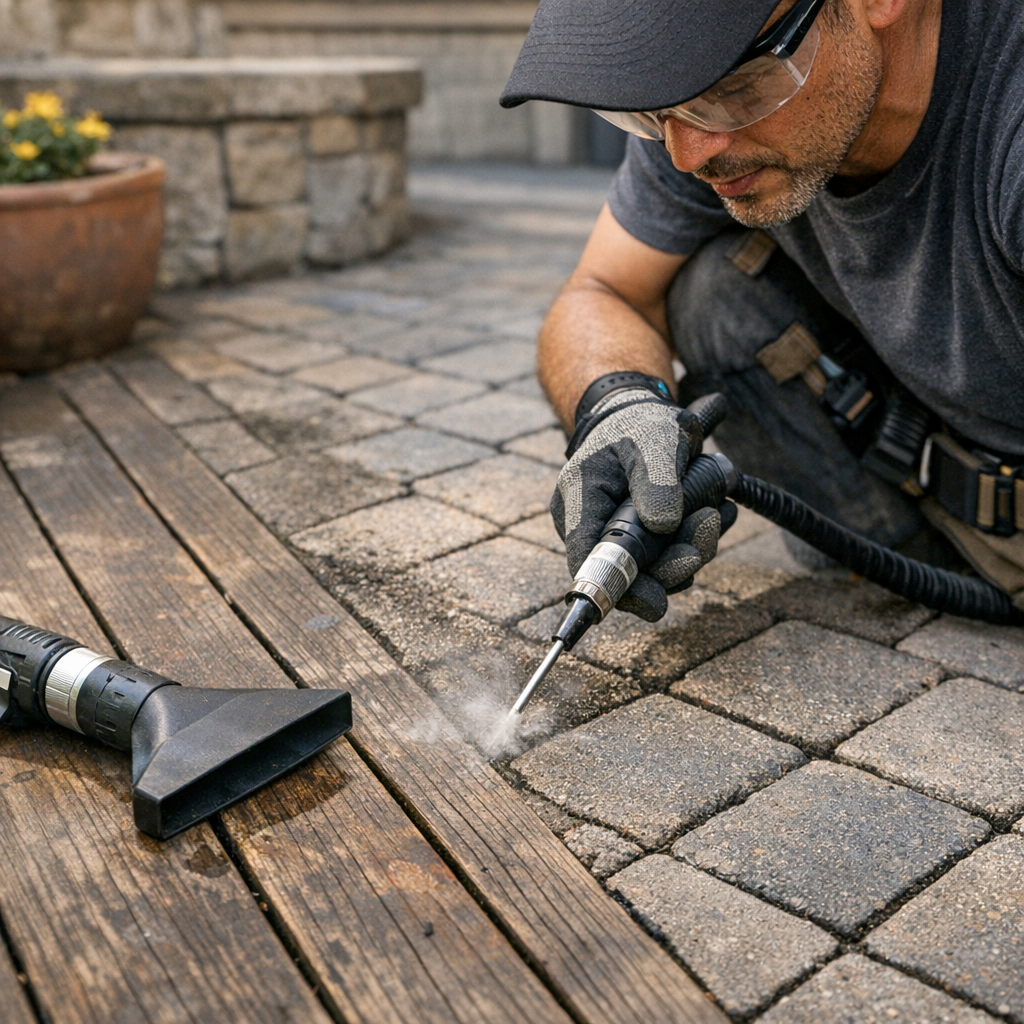
Spend an hour with an air tool, and you’ll feel what most never see: the real difference between “good enough” and clean, efficient work isn’t raw power—it’s the nozzle on the end. Straight out of the box, fan heads and pinpoint tips look like minor variations. But the illusion lasts only as long as you stick to the easiest surface. Sweep a wide shop bench after sanding, and sure, any nozzle gives you results. Move on to rough concrete edges, coarse pavers, or brick seams—suddenly dust comes back, stubborn grit clings in lines, and what felt simple becomes a repetitive grind. Every missed patch is another squeeze of the trigger, and every pass is another minute lost.
The Hidden Cost of Settling for “Close Enough”
Here’s how it plays out on an ordinary cleanup: You start with a fan nozzle, clearing the bench after a sanding marathon. Sweep the floor, flick away wood shavings, everything looks on track. But as soon as you hit the textured brick base of a wall, the nozzle glides uselessly over ridges. Dust settles into grooves, dark streaks snake along low spots, and you end up chasing scraps from under tool racks. You push harder, but nothing budges. Frustration comes quietly—hands tiring, mental focus slipping, and the finish getting patchier with every extra pass.
This isn’t just a workshop quirk—the same headache turns up in garages, onsite corners, and gritty walkways outside any job trailer. When the wrong nozzle faces the wrong surface, energy drains fast. The problem isn’t lack of effort. It’s a tool that’s just outmatched by the demands of the job—the flat sweeps are fine, but messy edges ruin the end result.
Why Nozzle Type Matters, Every Single Time
Put the accessories side-by-side and you’ll see three clear personalities:
- Fan nozzles: Ideal for fast, even coverage across big, flat decks or shop floors. Perfect… until you run into inconsistencies—grooves, ridges, or anything below the surface. They float, but don’t dig.
- Pinpoint nozzles: Precision jets for narrow seams, cracks, and rough texturing. They dig out old joint dust and packed grime, but covering a full slab with one is like trimming a lawn with scissors—tedious and fatiguing.
- Turbo heads: Pure force for caked mud, stuck shavings, or post-construction grit. Too much on soft woods will scar the surface—the brute strength solution where subtlety fails.
One pass with the “right” tool can save five with the wrong. But the catch is, most people grab whatever’s close and stick with it—so grit piles up in joints, pressure marks scar soft material, and what should be a five-minute blast drags into twenty. That’s not just lost time. It’s repetitive work, growing fatigue, and a finish that never quite looks professional.
Where the Frustration Builds: The Mid-Job Reality
Problems don’t show up in the first sweep—they sneak in after fatigue sets in. The classic example: you’re doing annual shop cleanup, moving quick with a fan nozzle over the bench. The visible dust clears, boards shine. But you roll over to the concrete base and find grimy lines stubbornly hanging on. Multiple passes, stubborn dirt, and suddenly your “almost done” turns into “what am I missing?”
This is where you realize: the problem is the surface, not your skill. The fix isn’t more pressure or more passes. It’s knowing it’s time to swap nozzles for the surface—not just out of routine, but when the work throws up resistance.
Quick-Swap: The Move That Saves You
The single biggest workflow change? Keep both a fan and pinpoint nozzle handy—and switch the second you feel progress stall. As soon as you start seeing streaks, or as soon as corners stay dirty after a pass, pause and swap. Don’t gut it out or wait for frustration to peak. Clicking over at the first sign of drag means you don’t double your effort or spend the rest of the job fighting with the tool.
Does the Right Nozzle Really Save Time and Energy?
Reality check from long shop days: sticking with a fan nozzle on pitted or dirty surfaces can cost you roughly a third more backtracking compared to simply grabbing the pinpoint. For anyone moving between surfaces—a bench here, concrete there—that’s the difference between finishing today or dragging the job out. Quick nozzle swaps aren’t about speed—they’re about consistency and not running hands and wrists into the ground.
How to Tell You Need to Change Nozzles
It’s subtle at first, but these are the red flags:
- Dust lines standing out after the first cleaning sweep
- Grit tucked deep in seams or brick joints, resisting pass after pass
- Swirl marks or minor scarring after heavy use of turbo heads
- Your hand aching after “just a few more tries” in the same spot
If cleanup doesn’t get easier with repetition, or if you hear the slap of air change pitch over rougher zones, that’s your cue. Swap early, not at the end.
Real-World Use: Shop Routine to Dusty Brick
Picture this: after re-sawing lumber and blasting joinery, your workspace floor is a patchwork of fine dust, odd corners, and brick baseboard. The fan nozzle makes quick work of the main drag in the open—but as you hit the edge bricks, dust stacks up. More pressure just numbs your hand and barely shifts the mess. Swap in a pinpoint tip, and suddenly the grooves clear, with less squeezing and less repetition.
Miss this moment, and you waste energy chasing stubborn debris. That extra strain doesn’t just slow you down—over time, it breaks your rhythm, adds drag to every workflow, and leaves a jobsite that never quite looks finished.
One Change: Keep Your Nozzles Ready
Don’t bury your alternates at the back of the bench. Clip a fan and pinpoint nozzle to your tool belt, apron, or utility pouch every time you start a mixed-surface job. The extra prep pays off the second the surface changes. Think of swapping nozzles like using the right bit or blade for the material—yes, there’s a pause, but the work is smoother, cleaner, and a lot less punishing over hours or days.
The Work Pays You Back
Real productivity isn’t in piling up accessories—it’s in noticing when the work slows and adapting, fast. A nozzle swap can’t polish a floor or fix bad prep, but it can cut wasted effort and keep results consistent. Next time dust starts to streak, or you sense fatigue ratcheting up, switch that tip. Your body, your schedule, and every job after will run smoother for it.