
The Small Delays That Undermine Daily Pet Care
Most pet care breakdowns start at the smallest level: a bowl not at arm’s reach, a towel draped over the wrong chair, the brush lost in a pile. Miss just one reset, and what should be automatic—feeding, water changes, wipe-downs—turns into a hunt or forced detour. Instead of a quick refill, you’re sidestepping clutter, moving stray mail, backtracking for the missing scoop, and trying to remember if the wipes are on the counter or buried in a bin. What breaks isn’t just tidiness—it’s the rhythm that keeps daily care low-effort. A routine that feels smooth for a week gets snagged on scattered essentials and minor blockages that keep coming back, no matter how clean the setup looks at first.
Take a basic morning: you go to feed your pet, but the bowl isn’t under the counter. Instead, there’s a pile of yesterday’s opened mail in the way, so now you clear space before even opening the kibble. That towel you meant to rehang after last night’s walk? Still damp, still in the hallway, forcing another bump in your path. Each retrieval or reset is quick on its own, but repeat it across the day and the time loss—and the feeling of running behind—builds up. The routine designed to save time keeps getting chipped away by awkward reach and missing basics.
Order That Lasts: Why Placement Matters
Even with new supplies and good intentions, routines rarely stay tidy on their own. The first week’s neat setup—bowls, brush, bins all lined up—doesn’t survive late nights, missed resets, or surprise interruptions. You answer a call mid-cleanup, and the brush ends up on the coffee table. The scoop is left by the door. Wipes slide behind the laundry, out of instant reach. By noon, the system already demands extra steps to keep working.
The friction isn’t a dramatic mess—it’s a slow stack of moments where you search or double back for what should be easy. One misplaced item means re-walking the same path, moving bottles to get to the cleaner, or kneeling to check under a chair for a missing toy. The space still looks okay, but the hidden disorder starts to slow every routine by afternoon.
Real Use, Real Interruptions
Midday is usually the stress test. Maybe you’re grabbing lunch at home and discover the water bowl is almost empty. The refill bottle isn’t under the sink—now you’re detouring to find it on a hallway shelf, breaking up a once-direct cycle. The grooming brush, left in the living room, goes missing just as your cat slips out of sight. Each skipped reset compounds until even simple tasks drag out.
After walks, the block is immediate: muddy paw prints on the floors, and the towel you counted on is missing from the entrance. Cleanup tools exist but are just far enough away to make quick wipes feel like full tasks, so small messes wait and grow. Even an organized room isn’t immune—put essentials behind lidded bins or under decorative covers, and what looked not-messy becomes a daily roadblock.
The Difference Between Looking Tidy and Functioning Smoothly
A space that looks clean isn’t always set up for repeat use. Hiding gear in deep drawers or stacking supplies high to reduce visible clutter slows you down every time you reach for them. That scoop looks good out of sight, but when it’s under a towel or pushed behind other bottles, the extra seconds add up. The system feels “finished”—until you’re rerouted one too many times by little access blocks.
The warning signs show in routine stretches: towels dumped on top of scoops, bottles you must move to reach others, toys left to interrupt a morning rush. Good intentions go unrewarded when every routine comes with an extra untangling step, and the calm appearance covers up the lingering hassle.
How Repeated Reset Habits Hold It All Together
The most effective fix: an immediate return habit. Every bowl, towel, brush, and scoop goes right back to its spot—not just “later.” If you refill the bowl, the bottle goes back on the shelf before anything else. Wipe the counter now, not after you’re halfway to the next thing. These habits, repeated, cut off small slowdowns before they pile up.
This matters even more when routines are shared. If one person puts away the brush and someone else the towel, the next use doesn’t start with asking, hunting, or delayed tasks. Lapses in return habits mean confusion, not chaos, but every miss shows up as a broken rhythm later on.
Grouping for Ready Access, Not Just Storage
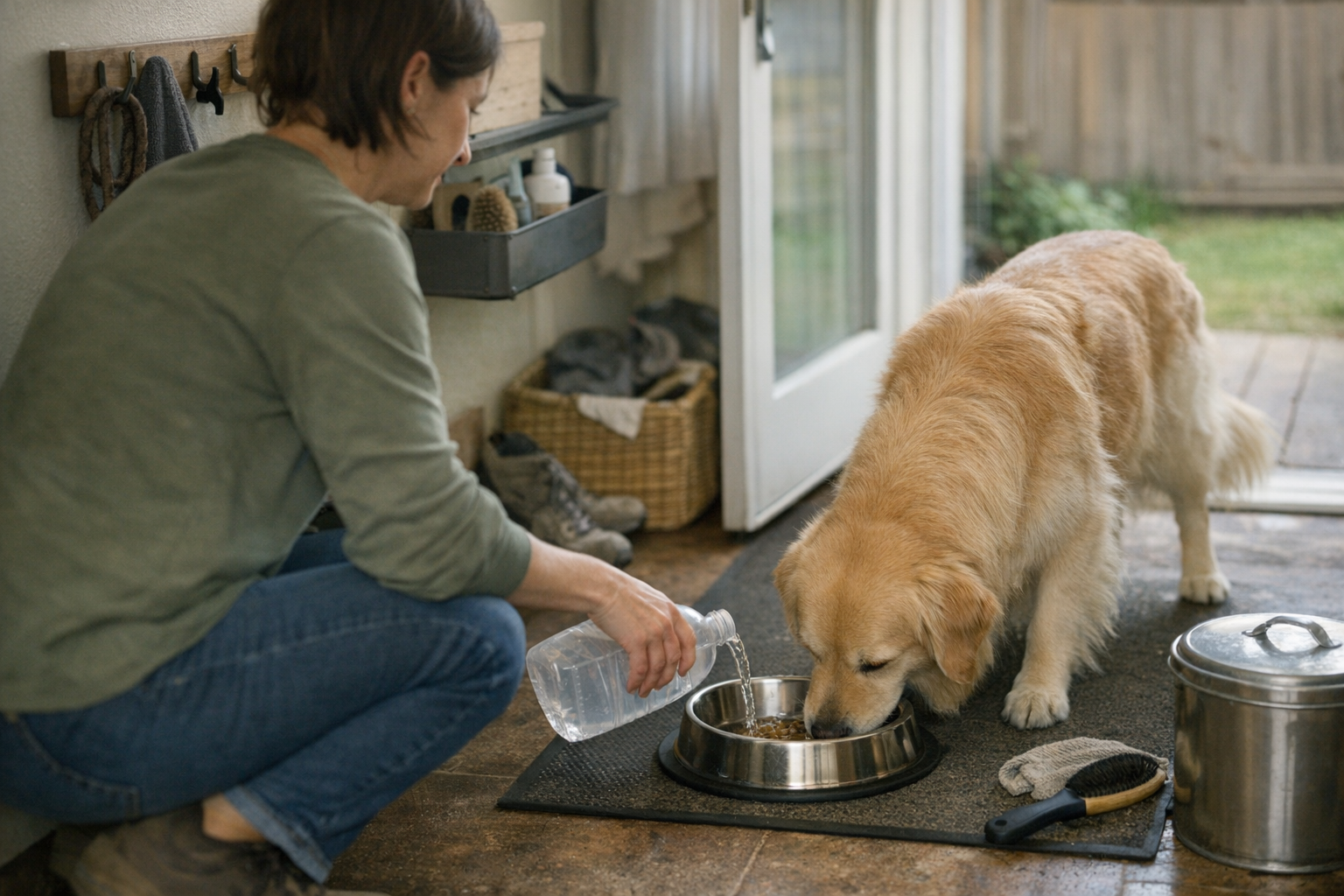
Core pet-care gear—bowls, towels, wipes, brushes—works best grouped where you use it, not just where it fits. Hooks for towels by the doorway. Shallow bins for brushes and scoops right at the feeding spot. If you can see and reach what you need with one hand, forgetfulness and mid-task searches drop sharply. Tidy, hidden storage looks calm but quickly costs you in extra retrievals during busy or tired moments.
Specific Scenes: Practical Impact Across the Day
The evidence for what works—and what doesn’t—shows up all day long:
- Morning: The bowl’s gone, kitchen space crowded, everything slows until you reshuffle.
- Water break: Need the refill bottle, but it’s out of sight; now you add an odd detour.
- Cleanup: Wipes and towels tucked away, so small spills don’t get handled until hours later.
- Evening: Toys and brushes migrate into the living room, turning “wind down” into an obstacle course.
- Night: Rushing, you skip steps since nothing is in reach—then hope to reset tomorrow.
The outcome isn’t outright clutter. It’s a slow drain—a pattern of micro-delays and half-done resets, where daily care turns into a series of obstacles and doubled-back steps.
From Tidy-Looking Spaces to Truly Predictable Routines
The only setups that hold up over time have three things: visible essentials close to where you use them, a habit of immediate resets, and grouping by function, not just for the sake of storage. This isn’t about perfection or strict tidiness—it’s about keeping care routines repeatable, straightforward, and ready to run smoothly whether it’s just you or a rotating cast of hands at home.
When the right basics are at hand and the return habit holds, routines stay light and interruptions fade. Even if mess tries to creep back in, a simple, visible system helps you reset faster, skip the hunt, and keep daily care from turning into a grind. It’s not about looking organized—it’s about making sure the next step is always easy to start.
Find setups that hold up to daily care at CalmPetSupply.