
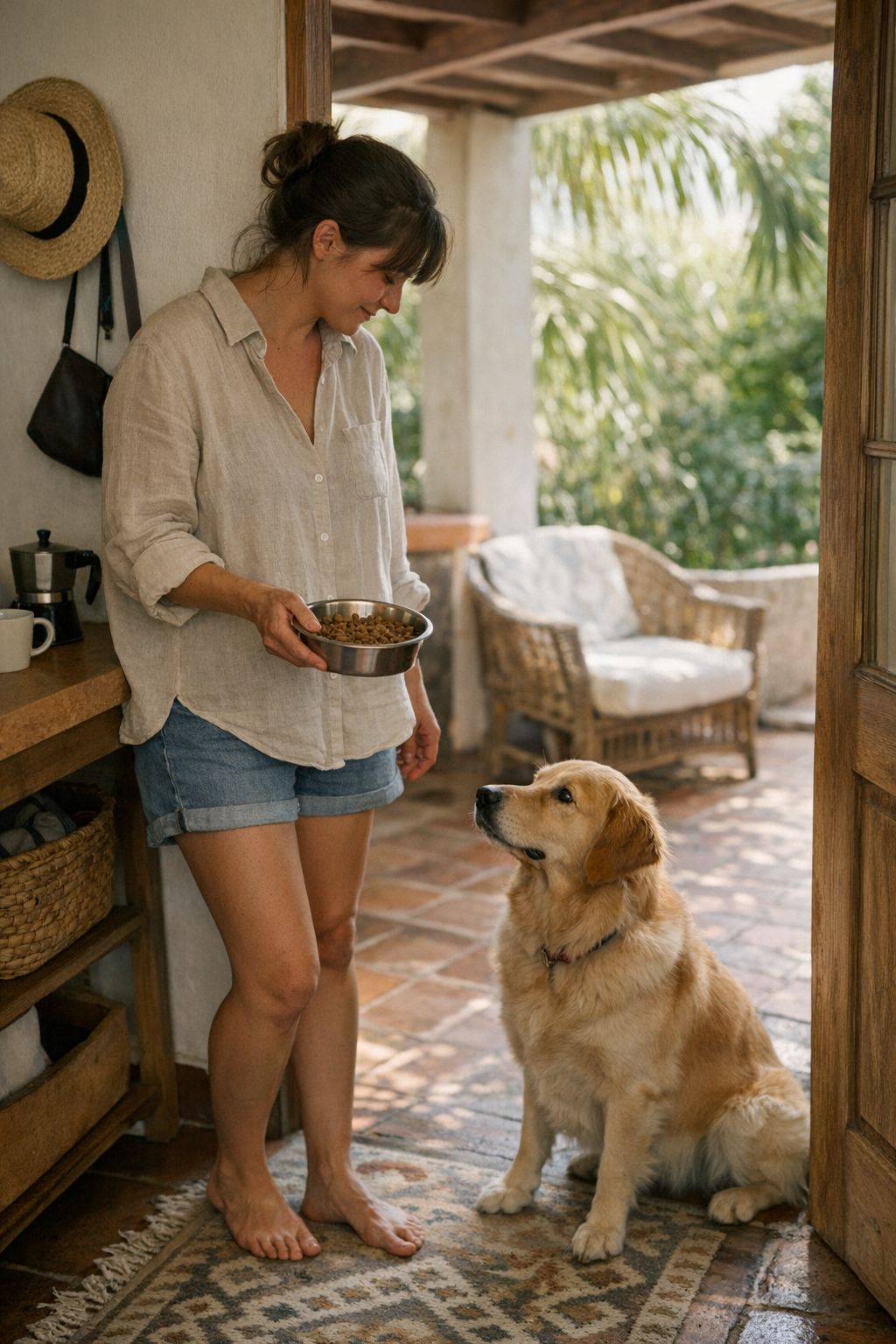
Your daily dog routine might look “done”—leash hook set up by the door, food bowls lined up, towels stacked, floors mostly clear. But that’s not how real dog-life feels in use. It’s the grab for the leash only to snag on a bag handle, the feeding zone that’s neat but keeps causing your dog to stall just outside the kitchen, or the towel that’s technically nearby but never actually in reach as muddy paws hit the tile. Organizing isn’t the finish line; repeated routines keep exposing the weak point you thought you’d solved. The real cost shows up after dozens of cycles, when a predictable snag—too-small path, awkward bowl corner, leash blocked by clutter—keeps slowing you down without looking like a mess. That’s where frustration starts, and where the difference between “tidy” and “truly workable” becomes clear in daily, quiet friction. This is the actual landscape DogPile is built for: not just looking organized, but smooth, fast resets and real flow during the parts of your dog’s day that most often break down.
The Invisible Slowdown: When Predictability Breeds Friction
One seemingly minor snag, repeated endlessly, wears you down. Maybe every time you grab the leash, there’s a moment of scramble—your arm blocked by a backpack or umbrella hanging from the same hook. Maybe it’s your dog halfway across the threshold, pausing in the one spot where you both have to squeeze sideways. This isn’t a personality quirk; it’s a small hitch that drags at you because it happens in exactly the same place and way, day after day. The first few times you barely notice, but each extra pause adds up, making the routine feel quietly off.
Watch what actually happens: bowl in hand, waiting as your dog stands outside the kitchen, visibly undecided. You toe aside a dropped shoe with your heel, stall at the door while the leash tangles, or pivot away from the water bowl just to clear space for clean-up towels. Each of these is a routine micro-interruption, invisible in a list of chores but deeply real in your morning patience. Over time, the energy cost is as noticeable as visible mess.
Order Isn’t Ease: The Difference Between Tidy and Truly Smooth
Why does a setup that looks fine keep interrupting the flow? The bowl is clean, the mat’s in place, toys are corralled, but you’re still negotiating awkward reaches or stops. Visual order hides functional stumbles. After enough cycles, you see the real points of failure aren’t about clutter—they’re about how the setup fits the actual motion of the day.
- Bowl placement is “correct,” but a stray toy or shoe routinely blocks the only open lane during rushed mornings.
- The leash hook is in sight, yet always has a tote or umbrella crowding it, leaving you fumbling with leash and keys as your dog sidesteps nearby.
- The rest mat makes the floor look ready for naps, but its edge always catches your foot when you’re coming through with crates or groceries.
These aren’t disasters. But they’re what erode a routine: friction that doesn’t show up on a checklist but keeps returning. Over time, you get faster at working around them—but never fast enough that it disappears.
How Small Pauses Multiply: Real Scenes from Everyday Dog Life
Big problems are rare. The real difference is made by repeated, small interruptions that slowly swamp your time and attention. These are the moments that push you into rushed problem-solving, or keep the routine wobbling just off balance.
Caught at the Door: Walk Prep Gone Slow
You want a quick, calm exit for a walk. Instead, you’re stuck: the leash is half-buried under a bag, your foot kicks a toy aside, and your dog waits awkwardly while you fumble and tug. The 10-second transition stretches into a scene of shuffling, blocked movement, and growing impatience—for both of you.
Mealtime Stalls: The Awkward Bowl Approach
Every meal is supposed to be a breeze, but your dog circles or waits just beyond the kitchen every single time. The bowl spot is visually neat, but off in the real world: maybe pushed back against a wall, or squeezed near a footpath. You hold the bowl, pause, and wait as your dog hesitates, breaking the flow every meal. It’s a harmless delay that never goes away—and makes you wonder what’s off about the setup.
Cleanup That’s Never Quite On Time
Back from a walk, you reach for towels or wipes, but the pile is just out of grab range—past a crate, over a blocked corner, or behind an easy-to-ignore stack of shoes. Your dog barrels forward, leaving a trail of muddy prints because the tools you “prepared” are never easy to seize in the moment. The rush to catch up means you clean in circles, fighting a losing reset after every walk.
The Accumulation Effect: How Repeated Small Interruptions Change the Day
One pause is nothing. But let it repeat—at the kitchen entry, at the doorway, by the crate—and your entire day gets nudged forward in small, costly increments. Maybe you rush feeding to make up lost minutes, delay walks to clean up, or keep calling your dog a little louder. The routine isn’t breaking, but it’s never relaxed. Even your dog starts to notice and adjust, sometimes with more hesitation, making the cycle self-perpetuating: friction in the setup leads to more hesitation, and more scrambling to keep up. The tidy look holds, but the living-with-it feels heavier, as if every chore runs just a beat behind where it should be.
Spot the Patterns: Are You Compensating for the Same Weak Point?
There’s a difference between the rare blip and a friction point that returns like clockwork. The real signals aren’t chaotic—they’re same-place, same-problem delays that reveal what your home isn’t lining up with your dog’s actual movement needs.
- Dog hesitating, circling, or pausing at the exact same entry—especially into the kitchen or at the door for walks.
- Indecision triggered only while you’re busy: arms full of grocery bags, bowl in hand, leash needed now and blocked by other stuff.
- Cleanup tools technically “available,” but always in the wrong spot—wipes on a shelf, towels off to the side, just never where your hand naturally goes at the real reset moment.
These patterns aren’t personality—they’re architectural. The way a bowl nestles into a corner, a toy box sneaks into the walking lane, or towels pile in a spot that feels “handy” but isn’t. Each teaches your dog to hesitate, or you to compensate—every time you both run up against the same weakness in the setup.
When Setup Outweighs Training: Small Tweaks, Big Routine Wins
It’s tempting to blame the dog (or yourself) and try “motivating” your way through routine stalls. But most often, the answer is a physical shift, not a personality fix. Real change starts at home-level, not behavior-level.
Sliding a food bowl out from a tight corner, moving a mat a few inches to clear the path, or swapping where a leash hangs can change the whole vibe instantly. Suddenly, your dog approaches directly—no circling, no slow hovering—and you finish meal or walk prep without a detour. Nobody notices the difference until it’s missing: then the routine flows straight through, and the invisible resistance is gone, even if nothing looks much different on the surface.
These wins aren’t about impressing anyone with neatness, but about stripping away the hidden shuffles and compromises that shave minutes and patience off every single day.
The Practical Takeaway: What to Adjust (and What to Ignore)
To move from a routine that looks okay to one that actually saves you time and friction, pay attention to the real-use signals:
- Look for returning delay points: Where do you circle, pause, juggle, or squeeze through—especially at meal spots, walk prep, doorways, or crate time?
- Question the “quirks”: If your dog stalls or circles at the same spot every day, it probably isn’t about them at all—it’s the home setup asking for a fix.
- Reconfigure before redirecting: Try repositioning items before you try training a behavior away. The right setup adjustment can eliminate the pause instantly.
- Organized, but not workable, isn’t enough: If you bend, shuffle, or detour every single use, rework the flow—not just the cleanup. Accessibility and ease should feel almost automatic as you move.
Living the Difference: When Routines Finally Just Work
True dog-home flow isn’t about a perfect-looking corner or always-impressively tidy bowls. It’s about quiet, practical ease—shaving away friction until routine transitions finally run on autopilot. The strongest sign isn’t a photo-ready space, but the moment you