
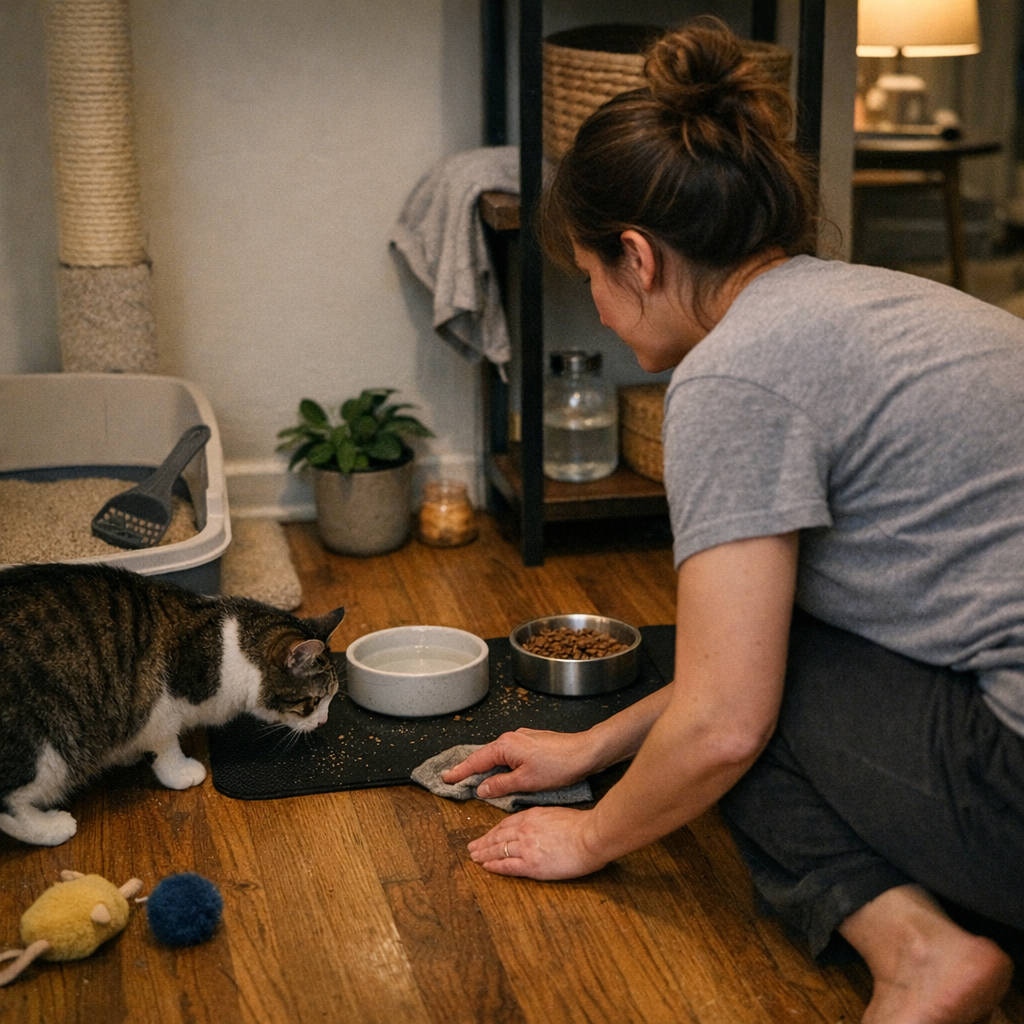
In most indoor-cat homes, it’s never the big cleanings that get to you. It’s what creeps in between: food crumbs piling up right at the mat’s edge, toys left in the hallway that you have to step around, and that layer of fine litter dust slipping past the spot you cleaned last night. You wipe down the bowl rims, straighten the mats, run your morning walk-through—and by late afternoon, you already feel the routine stalling. A kibble under your heel, a slick residue under the water dish, toys blocking your footpath, and litter that refuses to stay contained. “Tidy” slips into daily inconvenience fast, showing up first as small obstacles and then growing into a string of repeat interruptions. This is the real indoor cat-life problem: the setup looks managed but leaves you living more work than you notice at first glance. That’s where every missed or delayed reset pulls you further from a manageable flow—and exactly where serious setups, like StillWhisker’s, start mattering in daily use.
The Real Weight of Daily Cat-Life Maintenance
Most cat spaces look organized for a few hours after the morning reset. Fresh water, bowls in line, mats flipped straight—a controlled corner. But reality sets in quickly. By midday, the spills reappear, stray kibble sits waiting, tracked litter lines the floor, and the area you just cleaned now reroutes your walk to the sink. Slip a night of resets and these frictions double: sticky water rings take longer to scrub, toy clusters clog transitions, and every casual trip across the room adds a detour you didn’t plan. You’re not dealing with disaster—just relentless minor mess, which quietly demands more effort exactly when you want simple, non-disruptive upkeep.
Nothing explodes. Instead, upkeep turns into shuffling around small, recurring clutter: food scattered where you plan to stand, water bowls no longer sitting dry and ready, paths getting blocked by the slow drift of toys or a litter trace you keep finding near thresholds. The more you try to ignore it, the more those “small” messes steal actual time from the rest of your routine.
Small Messes That Multiply When Ignored
There’s rarely a single crisis. Crumbs spread sideways, toys colonize shared footpaths, and litter invades past the mat border you thought worked. You bend to scoop, only to find a new grit layer just outside the box; you reach for the water bowl, but there’s already a sticky ring underneath. Even tools ready for cleanup can hide under a mat edge or behind a blocking toy, adding more steps. The real cost isn’t that a cat item seems out of place—it’s that these things insert themselves exactly where your own space crosses with theirs. Every “quick” fix becomes a mini reroute just to get back to clear ground.
The Midweek Slide: When Clean Setup Feels Less Manageable
The difference usually shows by midweek. What seemed set on Sunday now feels worn: crumbs outlining the mat, a dull ring marking the bowl’s position, tracked litter pushing further out, and a lone toy wedged under your best chair. You don’t just see the shift—you feel it in each annoying pause. Even sitting down becomes a two-step move, as you detour around a toy or dodge grit tracked out overnight. Setup that looked under control fails hardest where real routines flow: in walkways, shared corners, and the feeding and litter zones you use every day.
The Power of a Five-Minute Nightly Reset
This is the threshold where a five-minute nightly reset pulls ahead. Instead of falling behind, you cut off the mess before it mats into the surface or spreads across pathways. Five minutes for a reset isn’t a chore—it’s insurance against everything snowballing tomorrow: kick back litter near the box, scoop floating toys off traffic spots, flick crumbs back onto the mat for easier pickup, run a quick wipe across the water bowl rim. Each small act is aimed at tomorrow’s footpath, not yesterday’s aesthetics.
Rather than trusting a styled pet area to survive the reality of midweek living, these resets keep the core structure flexible and in-use. The result isn’t perfection, but daily relief from the “lived-in” buildup that slows both you and your cat. It keeps toys out of walkways, wipes up sticky residue before it sets, and returns scattered comfort items back to a manageable zone, making each new day’s routine less of a repair job and more of a simple walk-through.
What “Enough” Reset Looks Like—And Why It Works
This isn’t deep cleaning. It’s containment: did the water bowl edge creep off the mat? Is stray kibble where your first step will land? A hand-flick under the feeding zone pushes most crumbs where mats actually catch them—for truly easier pickup tomorrow. Reset is not about scrubbed shine; it’s about preventing friction from layering into maintenance headaches. By targeting water, food, and high-traffic litter corners, you stop the reversible debris from maturing into mess that stalls the whole routine.
Within days, results show up: refilling isn’t delayed by stubborn grime. The path to your fridge (or bed) is less of an obstacle course. Mornings stop being about improvising workarounds for last night’s accumulation—cleanup shrinks from a ten-minute scramble to a one-minute habit.
Setup Friction: Where “Tidy” Isn’t Good Enough
The big trap is believing that an “organized-looking” feeding or litter station will do the work for you. Bowls on mats, box nearby, supplies grouped—this looks good for a day or two. But you quickly spot new trouble: rim residue creeping under the bowl, debris bands at the mat division, and litter outpacing its supposed boundary. Visual order sticks, but function falters—especially when you reach for a water bowl and find it awkwardly wedged by a shifting mat, or when a wipe-down requires moving everything again because residue returned faster than you expected. A setup that appears organized can become a stumbling block, forcing you to work around its weak points every time you touch it.
The Return of the Usual Weak Points
Most setups begin strong, but the flaws show up in repeated use. The resting blanket fills up with tracked litter by Wednesday. A feeding bowl slowly slides out of place, getting clipped by your foot each refill. Toy buildup at doorways and furniture gaps signals the return of scattered comfort zones. The structure itself didn’t break; the design just can’t soak up the real volume of minor mess under real-life use. What holds together visually collapses under the daily pressure of human and cat movement sharing space.
Sharpening the Setup: Practical Observations from Real Use
A setup earns its keep when it holds up to repeated interruptions, not just when it resists visible mess. The test isn’t photo-readiness but whether motion actually feels easier as the days go by.
- Bowl reach, path clear: When your feeding setup puts the bowl back within its assigned line—mat dry, rim clean—you don’t have to pause between steps or nudge things back into place during prep or quick cleanups.
- Cleanup that flows with movement: Placing an accessible wipe or scoop tool where your hand lands (not buried behind three toys) lets you fix small issues before they multiply. It ties the fix directly to your routine route.
- Toy retrieval built into the room: A bin near your own key path means toys get reset casually each night—instead of hiding under the couch until forced scavenging. The difference is felt every time you avoid tripping or kneeling to reach a ball that’s returned to human territory.
- Litter containment at the edge: A quick brush right at the litter boundary resets both the floor look and the foot-feel. The right containment edges mean clean walk space isn’t lost to daily drift.
The real test comes in the interruptions: a sticky spot you didn’t catch, a toy that blocks a nighttime walk to the kitchen, debris that grows on clean lines. Each is a signal that setup and movement are colliding, not complementing. The sharper you spot these points, the easier it is to select or adjust the right containment or reset solution for your own space.
Reset as Habit: The Difference Between Recovery and Ease
The biggest payoff comes from making reset automatic. Not as a frantic fix, but as the last task before lights out—bowl lined up, crumbs corralled, rim dried, toys snapped back to their holding bin. This isn’t a matter of organizing for appearance; it’s about reclaiming each morning’s step-from-your-room as something free from surprise friction or half-set mess. As you repeat the habit, the cost of not resetting becomes obvious—and the setup finally starts feeling like a background support instead of a hidden work generator. The line between “it looks ready” and “it actually works” disappears. That’s daily indoor-cat living as it should be: not flawless—just genuinely easier to wake up to.
Shop setups and supplies that make these resets faster, more reliable, and less frustrating at StillWhisker.