
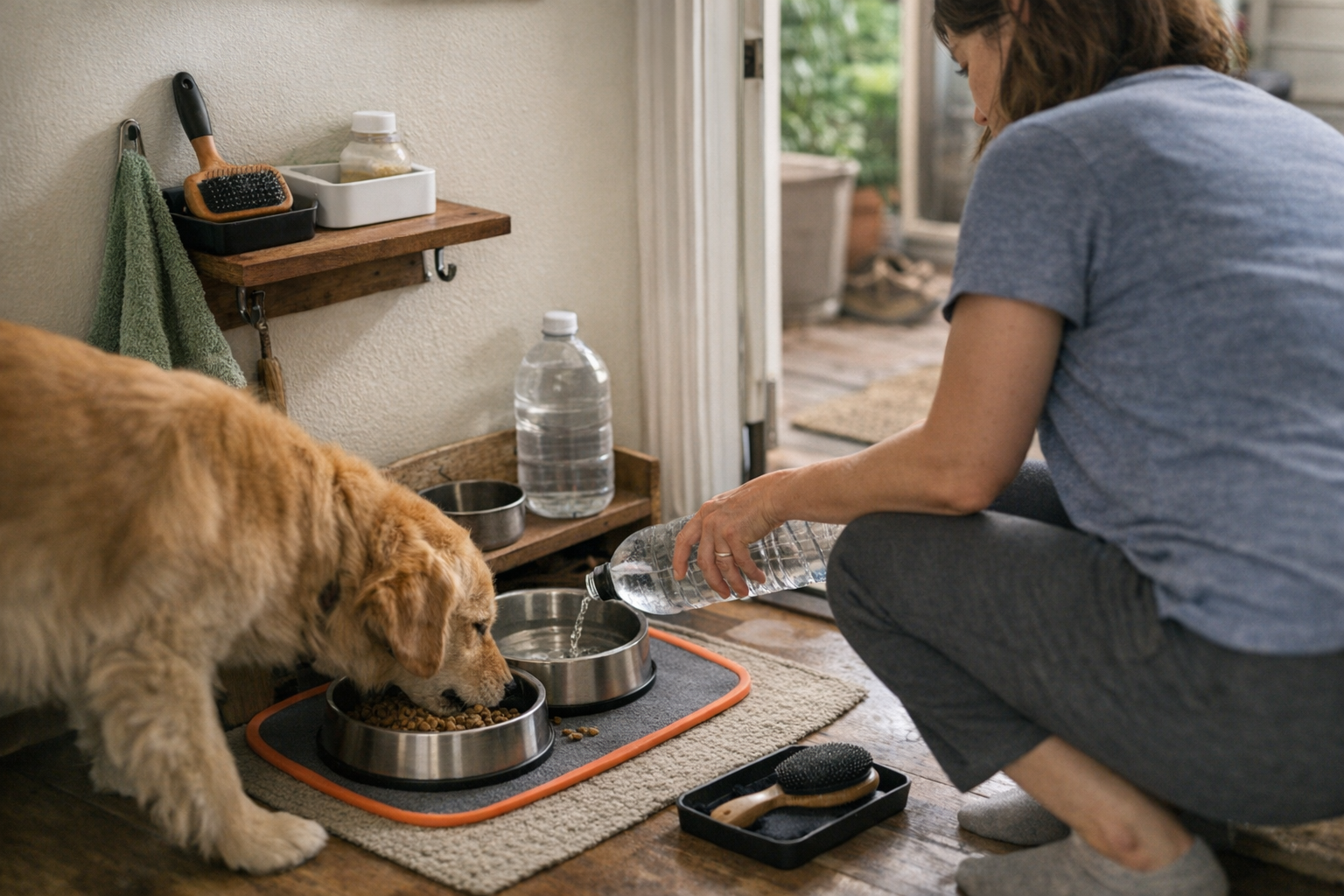
Pet care routines break down fast in daily use—even when they start out looking organized. You line up food and water bowls, set a grooming brush within reach, stash quick-clean wipes close by, and convince yourself the routine is handled. But by day three, a towel is missing from its hook, the water bowl is low again, or you’re shuffling supplies buried behind shopping bags. Each tiny delay—waiting, reaching, re-stacking—interrupts a simple reset, turning a ten-minute job into twenty. The problem isn’t a messy pet area; it’s a setup that can’t defend itself against real-life friction. CalmPetSupply products live in this gap: they’re not just for “looking ready,” but for cutting out the repeat work and surprise setbacks that creep in after the first round of use.
The Illusion of Readiness: Why Pet Areas Don’t Stay Functional
A prepared pet-care space looks finished—full dishes, mats in place, supplies within easy reach. But real routines stress-test setups faster than most owners anticipate. Pets nudge bowls out of alignment. Toys drift under furniture. The brush you ‘always’ keep next to the feeder finds its way into the laundry basket or behind a storage bin after just a few days. At night, you run inventory: water gone dry, stray kibble trapped under the console table, cleaning spray nowhere within arm’s reach. The weak link isn’t visual mess, but repeated small failures that become friction points with every pass through the routine.
How Small Disruptions Build Into Major Friction
Say it’s after work and you want the evening pet care cycle to flow. But now the cleaning towel is still in the laundry, so you improvise with paper towels—hunting for the roll, bending under the sink. You fetch the refill bottle, only to find the brush obscured by shopping bags from yesterday. At each stop, the system lags. It’s not about lost items, but about what’s blocked, misplaced, or too far out of reach when speed actually matters.
Over a week, these disruptions snowball. Quick resets demand extra moves: bending to grab wipes from a low drawer, clearing toys before water can be refilled, shifting bowls that keep migrating into walkways. Even a tidy setup by Sunday starts leaking into living spaces, with bowls edging into traffic paths and mats curling under passing feet. Every night ends up with more “quick” fixes—each one avoidable, but real.
The Problem with Quick Fixes and Visual Tidy-Ups
Setting up looks simple: bowls straight, supplies clustered, mats uncurled. But most quick fixes trade daily speed for temporary order. Cleaning sprays relegated under the sink slow down spill response. Grooming tools land neatly back in storage—until one busy morning pulls them into another room, where they sit out of sight for days. The routine works until a missing item or an awkward reach turns a five-minute maintenance into a full round of searching, shifting, and sometimes just leaving the cleanup for tomorrow.
The moment a pet knocks over water or tracks fur behind the bowls, you realize whether your “system” is built for actual use—or just for clean lines. Tasks stretch out, not because you’re unprepared, but because supplies ended up one room away, or tucked behind closed cabinets. Most missed steps aren’t laziness, but from systems that fail routine stress.
Daily Chore Chains: When One Weak Link Slows Everything Down
Real-world breakdowns usually hide in lag—not disaster. Towels drift from hooks to laundry for two days, letting pet hair pile up and making every future wipe take longer. The water bottle isn’t at hand, so refills get skipped or rushed. After-walk care pauses because the towel is wet or stored in the wrong bathroom. You might labor to keep other parts neat, but the weak spot reappears: supplies out of reach at the exact moment you want a seamless reset. No matter how tidy the space looks at breakfast, mis-anchored essentials guarantee drag by night.
Functional Over Decorative: What Actually Keeps Pet Care Flowing
Reliable routines depend on essentials that don’t drift. A silicone mat with a wide edge anchors bowls and traps spills—no more gradual bowl migration. Hanging a towel hook directly above the pet zone means a missing towel is obvious right away, not discovered after the fact. Shallow, open trays for brushes or sprays put the basics within eyeshot and arms-reach, which matters under actual time pressure. The right products don’t multiply clutter; they stop a dozen minor shuffles and repeated “make do” substitutions.
The point isn’t to add more gear or to make a pet area photogenic. It’s to cut out the repeat friction—less bending, less hunting, fewer steps back and forth—so feeding, cleaning, and grooming actually link together. Every reset becomes smoother because fewer things migrate and basic supplies stay anchored and visible at the pinch points of your daily flow.
Real-World Results: Why Anchored Supplies Change the Routine
With supplies anchored—towels right where spills happen, water bottles always under the bowl shelf, grooming brushes returning to their tray—each daily care block shrinks. Cleanups happen at the right moment, not an hour later. Refills stop being last-minute chores. Pet hair and stray kibble don’t accumulate in dead zones. Most crucially, less time is wasted on repeat searching and recovery. Care doesn’t just look easier: it is.
In practice, this means fewer half-done resets, less spillover clutter, and much less “mental drag” after the day is already long. The clutter reduction is visible, but what matters is the relief from invisible interruptions: fewer stops, fewer lost minutes, and a routine you don’t have to force yourself through. Organization stops being cosmetic and starts showing up where it actually matters—at the hand grab, at the cleanup moment, during the refill routine, and throughout every daily handoff between you and your pet.
CalmPetSupply isn’t about decoration—it’s for setups designed to hold up against daily stress, so the right item never drifts out of daily reach.