
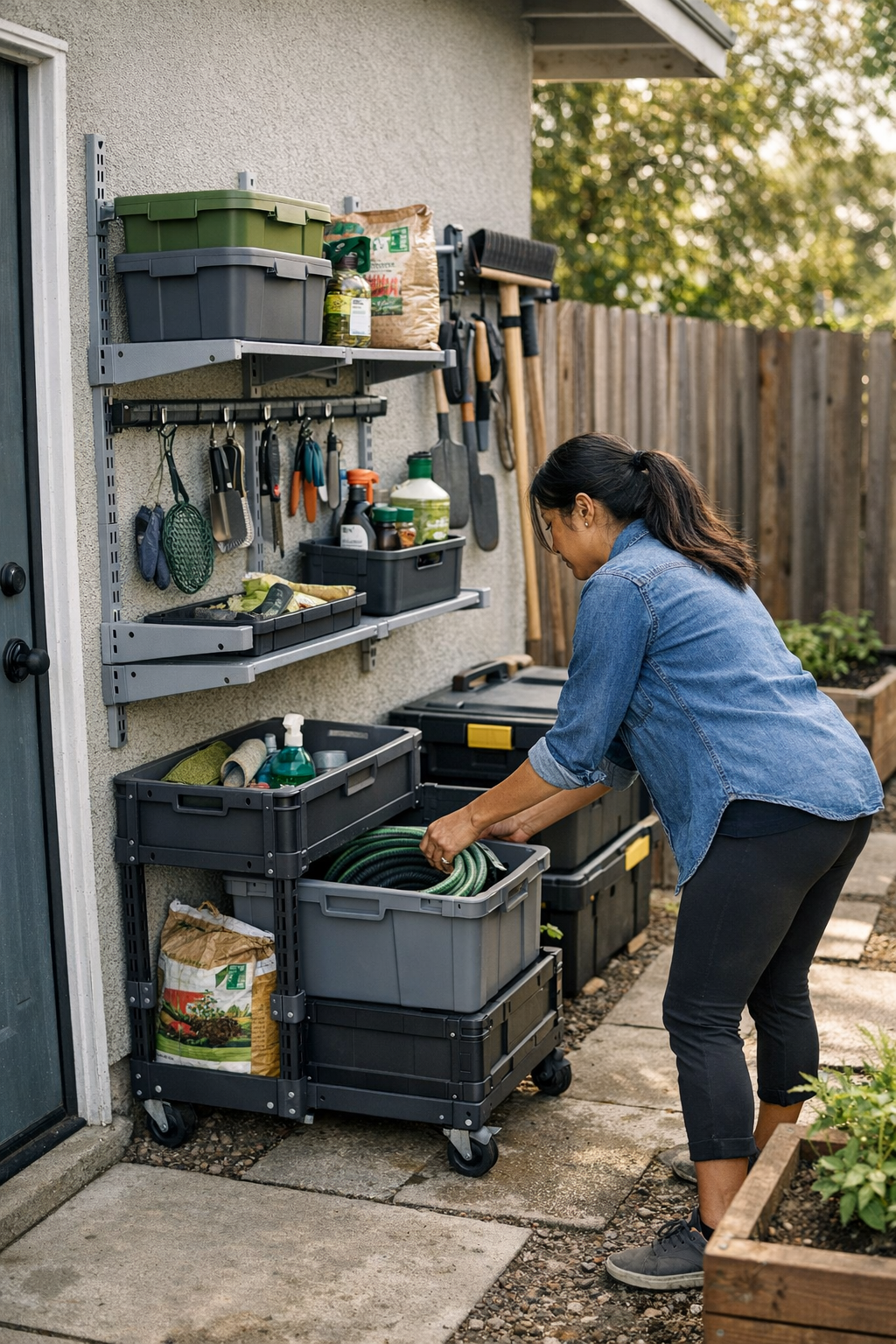
The side yard is finally organized—for about three days. Then real life sets in: the kids drop shovels, the garden gloves never make it back onto hooks, and what started as a clean, clear path morphs into a daily shuffle around bins and tools that never quite land where they should. Small backyards, skinny strips between the house and the fence, that awkward wedge near the garage—these are the spaces that promise relief with each new storage solution, but end up tripping you up, literally, as the routines grind in.
When Storage Looks Right—Until It Doesn’t
If you’ve ever lined up storage along a four-foot passage or jammed a corner unit in behind the grill, you know the early rush: containers close, tools have a slot, yard gear finally has “a place.” But by Thursday night, reality bites. The closed bin blocks half the walk. Brooms go in, but boots and gloves multiply beneath. That open rack? You meant for grab-and-go, but now every armload means unjamming a tangle of stray gear piled in where it won’t fall out—until it does.
The real test isn’t move-in day—it’s the twentieth time you try to return something one-handed while squeezing past someone carrying a planter. By then, the bins inch further from the fence. The rolling cart creeps until you’re side-stepping it every evening. Hooks once perfectly placed turn into unreachable tangles as tools migrate, or worse, just accumulate at floor level. Every return or retrieval means a shuffle, a pause, or a resigned sigh.
Where “Order” Unravels: Friction in the Routine
The smooth surface is an illusion. Each small inconvenience builds until the setup itself feels like work. A yard isn’t supposed to trap you in its own storage maze, but containers nudge into walkways, buckets become knee-high hazards, and even a simple task—like stashing the pruners before sunset—means awkward detours or picking your way over bags that were “put aside” days ago.
Look closer at the usual evening scene: you’re racing dinner, trying to get the hedge trimmers put away. The storage bin, easy on day one, now floats a foot from the wall. The lower rack is crammed, heavy loppers dangle over a pile of soccer balls, and the only space for that stray trowel is already blocked. Squeeze past, nudge a crate, scatter a pile of seed. Tell yourself you’ll get it “reset”—again—but next week, the clogs are back, only a little worse.
Zones of Flow—or Jam
In these tight outdoor corners, every foot matters. When hooks are set for adult reach, kids skip them. If bins wiggle loose, they wander into the walk. Floor storage multiplies, collecting whatever anyone can’t deal with in the moment. Share the area with someone else—gardening one minute, fixing bikes the next—and chaos creeps in faster than any “before” photo can suggest.
Letting these hiccups go means the area turns sloppy, piece by piece. The bucket left out on Saturday is still there a week later, now the default obstacle in an otherwise clear route. The floor space that looked “planned” collapses under hidden piles, and the original purpose—easy movement—gets buried with the mess.
Real-World Fix: Going Vertical, Staying Mobile
One side yard—a bare slice, less than four feet across—was a test case in miniature frustration. Floor bins anchored the setup, but the moment anyone needed to move fast or make room, those bins slid, stuck out, or got bypassed. Nothing actually made moving through easier.
A split approach worked: low, mobile bins for daily drop-and-grab gear, high, wall-mounted racks for the backup stuff. That cleared a visible running lane—never perfect, but always at least 28 inches wide, even after a surge of activity. You could drag a bin aside with your foot and keep walking. The wall hooks reserved for occasionally-used tools (hedge shears, snow shovels) stayed up and out of reach—still visible so they didn’t get forgotten, but not in the way. Routine resets weren’t heroic efforts; just a nudge here, a push there, and the path reappeared.
Wall Storage with Actual Payoff
It only works if the racks match real use. Too-high hooks turn into dead space for the kids; too-low, and adults trip. Long tools need vertical slots but shouldn’t scrape the floor or swing into foot traffic. Overflow often fills the path the moment rack space fills up, so it helps to dedicate a “swap” spot up high rather than let every new thing land wherever there’s a gap. Treating wall space as the traffic controller—rather than a dumping ground—keeps returns brisk and spillover visible.
Mobile Bins: Simple, Effective, Annoyingly Necessary
Rolling or modular bins don’t solve everything, but when gear multiplies—think sudden project, kids’ play, or storm cleanup—they let you clear or reshuffle without heavy lifting. On normal days, a marked boundary for each bin slows the silent drift across the walkway. The day’s debris gets scooped, rolled, and set back in place, not left to form the next blockage. That bit of discipline—slide back, check the edge—pays off the next time you’re rushing through with muddy boots or a cartful of plants.
Keep Paths Open: On-the-Ground Adjustments that Work
- One line of bins, one clear wall: Keep permanent floor units along a single side. The opposite wall, free from clutter, becomes the breathing room for daily in-and-outs.
- Overflow in its own zone: A crate up high, or a marked “extra” rack, gets seasonal or oddball items off the ground but still in reach when needed. No more piles growing quietly behind the hose cart.
- Regular micro-resets: Set a five-minute reset window midweek—slide bins flush, hook stray tools, sweep the “migration” back to the edges. Ignore it too long, and inch-by-inch drift eats half your route.
Good Enough—Not Perfect—Means You Can Actually Use the Space
There’s no final victory against outdoor clutter. Something will always roll out of place, a tool will land “just for now” in the path, and one corner will forever threaten to become a dumping zone. But real improvement shows when moving, grabbing, and returning gear stops feeling like an obstacle course. The setups that work—really work—aren’t the ones that look photo-ready on Sunday, but those where wall storage, obvious lanes, and mobile containers drop the hassle, not just the mess.
It’s not about showroom order. It’s about whether, on a regular Tuesday, you can move through with an armful of returns, reset with a nudge, and keep overflow from taking over the whole strip. That’s the difference between an outdoor setup that fits the space and one that actually fits the way you live out there.
See more practical outdoor storage solutions at TidyYard.