
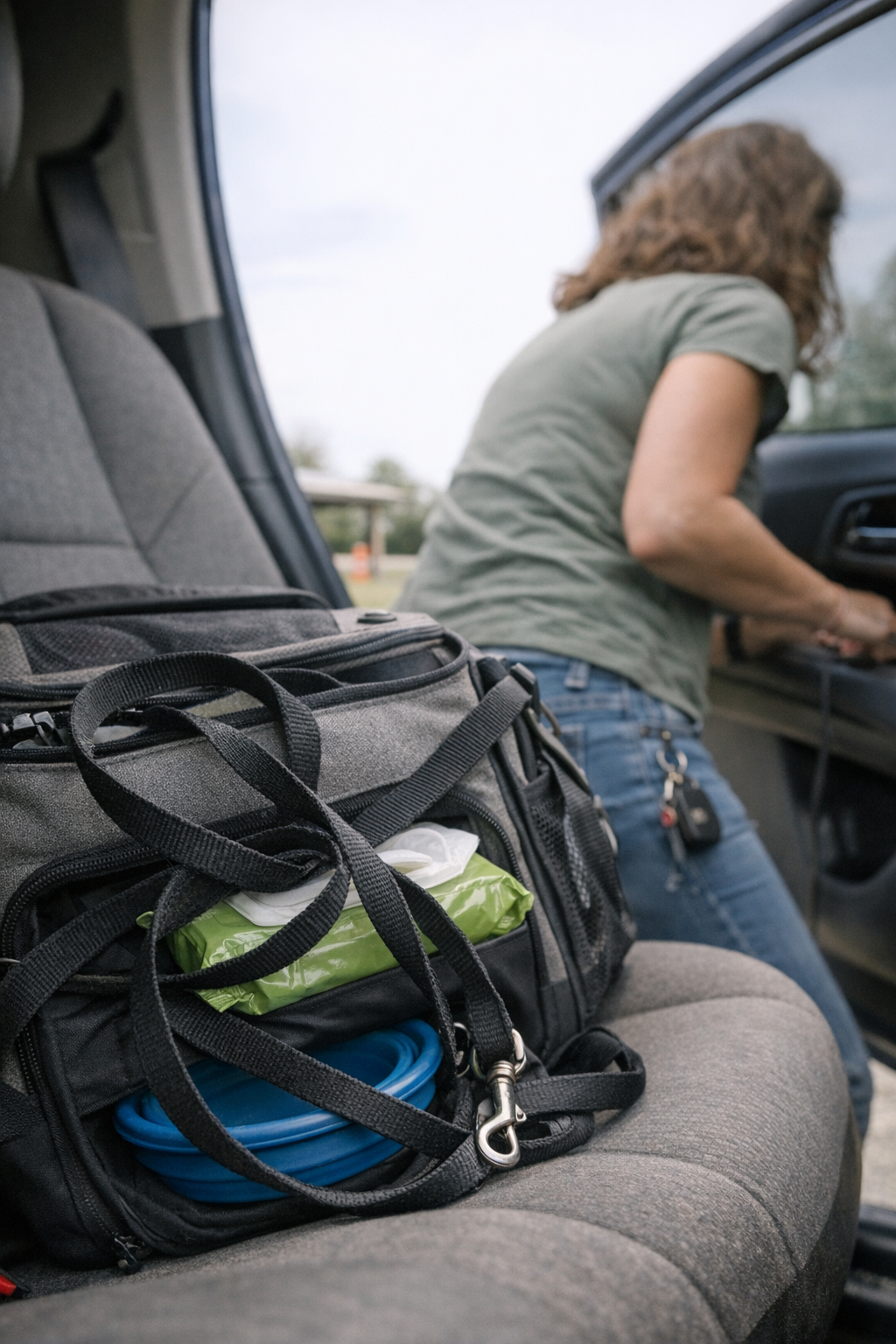
Every pet owner knows this moment: you start a trip with a bag or carrier that seems impressively organized—every item in its place, everything zipped, clipped, or nested just so. It looks ready. But by the second or third stop, the supposed “order” collapses: the leash that looked secure slithers into a seat crack, tangles with the bowl, or covers the wipes you suddenly need. Neatness slips into hassle. Instead of a smooth handoff—car door open, leash on, pet out—you’re stuck untangling gear, digging past comfort supplies, or reaching for cleanup items trapped under a loop of leash. What was supposed to make each stop easier now drags the routine, slows the return to movement, and leaves you rethinking your setup before you’re even halfway there. PawGoTravel’s world is built around these kinds of friction points—practical, repeated-use pet-travel setups that don’t just look ready but actually stay workable stop after stop.
When “Neat” Turns Into New Hassles
Letting the leash sit loose or unfastened between stops feels harmless on a single quick trip. But the real cost is in repetition. Every time the car moves, so does your gear—leash sliding into gaps, blocking fast access, hovering over wipes you need in a rush. By the time the trip has a few stops behind it, the initial neatness is gone, replaced by a low-level scramble: shifting, fishing, and reshuffling to get ready each time your pet needs out.
The snag isn’t just visual: you open the door, pet alert and pulling, and the leash is blocked behind wipes—or wound halfway around your bowl. You lunge for supplies, but everything interrupts everything else. That extra pause isn’t dramatic, but it repeats—and any setup that makes you pause is quietly working against you all trip long.
The “Slack Leash” Habit: Hidden Cost in Repeat Use
If dropping the leash loose seems easy, it’s only because the problem hides until it’s too late. Every time the leash isn’t properly clipped, it migrates. It coils under bags, loops over cleanup gear, or covers the same pocket you need for waste bags. By the fourth stop, one loose leash blocks the entire flow—interrupting speed, sapping focus, breaking the “in and out” rhythm you thought you had built.
This hassle spreads. One tangled leash makes the wipes harder to grab, delays waste-bag reach, and even pushes your own items—bottle, keys, sanitizer—out of order. Every missed grab shifts your focus away from the pet and toward managing clutter. Your setup isn’t just slow; it keeps turning simple actions into repeated, unnecessary little chores.
Repeated Stops, Friction Stacks Up
Pet travel only exposes weak spots through repetition: out, leash on, supplies grabbed, pet walked, back in. A leash lost under the carrier or an item slid over the wipes isn’t an isolated nuisance—it’s a flaw you relive every time. One second here, three seconds there, and when your pet grows restless or the weather turns, each friction point becomes a small test of your setup.
The interruption isn’t just mess. It’s loss of control when it matters most—dog on high alert, your hands full with the carrier, wipes just out of reach because the leash slipped into their pocket. The kit stays clean but the function breaks rhythm: what looked “travel-ready” can’t keep up with real use.
Rest Stop Reality: Where Setup Shows Weakness
You pull into a rest area. Pet looks up, tension rising. You open the door expecting to move fast—but you’re stalled, digging for a leash that’s wrapped around a water bowl, pressing the wipes just out of reach. Pet whines. Your organization buys you nothing because key pieces overlap, block, or bury each other as soon as you use the bag in motion. Not a disaster, but the strain grows obvious over a handful of stops: each slow restart is the sign of a bag failing repeated-use, not just looking less tidy.
Looks Ready, Works Slowly: The Setup Illusion
It’s easy to trust a setup that “looks finished”—leash buried, wipes zipped, all pockets flat. But stillness isn’t the test. In practice, the first hurried moment buries the leash under supplies or marries it to the wrong pouch, and the whole idea of “being prepared” falls apart. A bag that photographs as organized sometimes sabotages every routine with slow, repeat touchpoints you can’t ignore on the road.
Organization only pays off if you can reach what you need, when you need it, without rearranging the whole setup each time. After a few stops, any kit that resists quick access drains the very focus and calmness it was meant to deliver.
Practical Fix: Elevate and Anchor Your Leash
The least glamorous tweak is often the most decisive: clip the leash short and high—looped onto a top handle or dedicated ring—every time you re-enter the car. This isn’t about keeping things pretty. It prevents the leash from slipping into seat cracks, keeps it clear of wipes and bowls, and turns it into a one-handed grab instead of a treasure hunt. With leash anchored, gear overlap and last-second reshuffling drop off sharply.
This one change flips the routine: out, leash on, grab what you need, pet walks, supplies stay accessible, bag resets smoothly. Stops feel like movement, not maintenance. Bad weather, urgent stops, or anxious pets no longer multiply the hassle—repeated friction quietly melts away, making the whole trip easier without a total bag redesign.
No Setup Is Effortless—But This Kills the Worst Delay
No travel kit is perfect. Even with a clipped leash, comfort items might shift, a treat pouch can slip, or you’ll run into a pocket that’s not quite where you want it. But the main recurring hang-up—the leash blocking essentials, vanishing in seat cracks, or snagging cleanup gear—disappears as a routine headache. Over a day of travel, that means fewer interruptions, less forced patience, and a pet setup that doesn’t just look well-ordered, but delivers stop after stop.
Less Frustration, More Flow—What You’ll Notice:
- No more blocked pockets: The leash clears the way for wipes, waste bags, or other essentials—no more reaching around it.
- Minimal gear overlap: Bowls, comfort supplies, and quick-access items stay untangled and within reach, not trapped beneath a wandering leash.
- Restart friction fades: Getting out and back in stops being slow work—each step flows instead of repeating the same hunt for loose items.
- One-hand control returns: If your pet is antsy or conditions are rough, you can manage leash and gear without giving up control or dropping focus.
The Shift That Actually Matters
The change isn’t dramatic at first—just less struggling past overlaps, fewer seconds lost at each pause. But after a few rounds—coffee stops, a quick park break, messing with the tank at the gas station—the advantage is obvious. Travel setups that ignore this leash routine mistake the meaning of “organized.” It’s not about seat display, but about reliable, repeatable, fast routine—so your time stays on the move, not in salvage mode.
Find practical pet-travel solutions that keep your routine moving at PawGoTravel.