
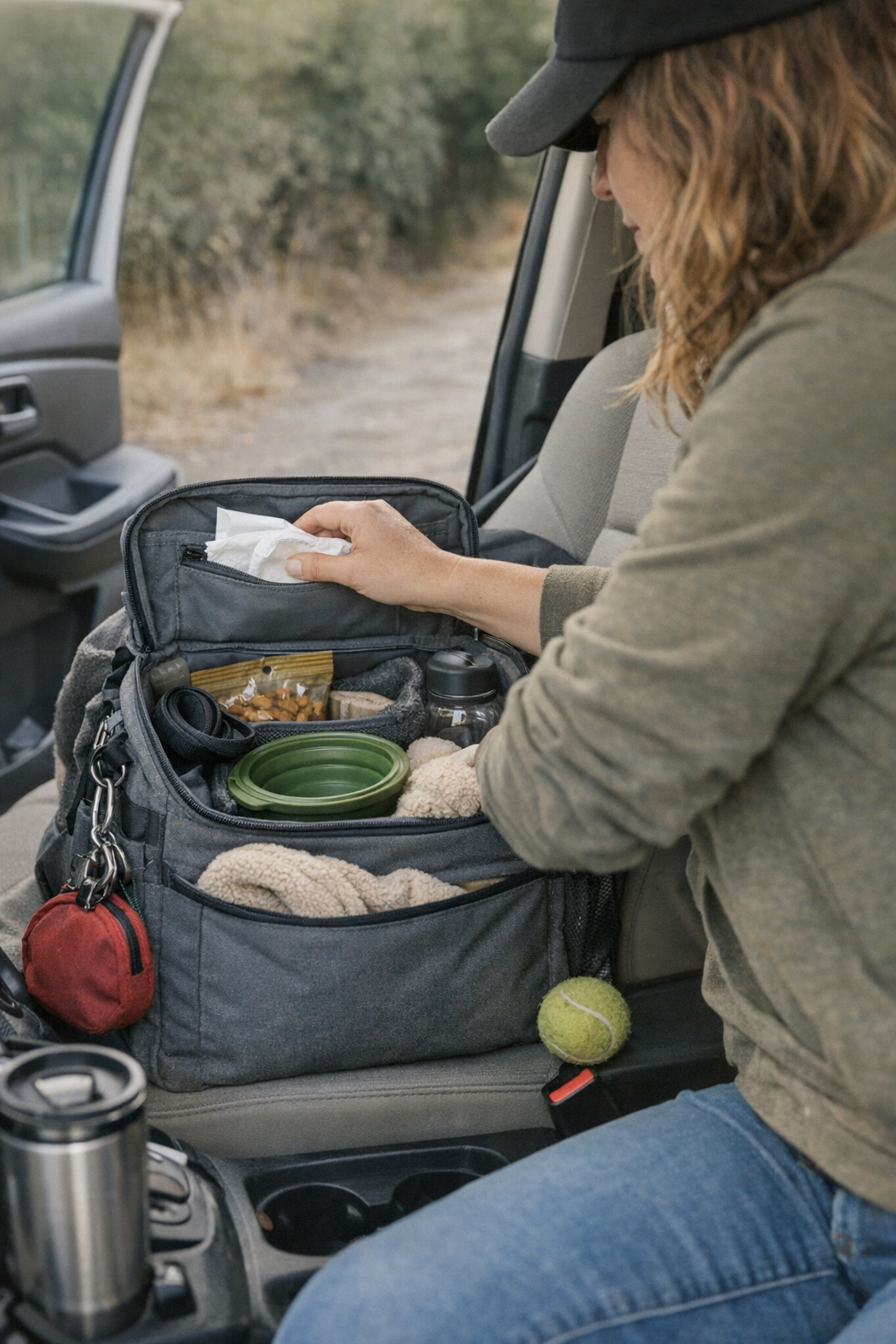
The difference between a pet travel bag that looks organized and one that actually works on the road only reveals itself under pressure—at the third stop, the fourth attempt to grab wipes, or the moment you need a leash with one hand while steadying your dog with the other. That bag that seemed “trip-ready” on the kitchen counter quickly drags you into small, repeating hassles. Treats slip beneath blankets, quick-clean supplies vanish under toys, and every pause becomes a mini scavenger hunt. If you find yourself rearranging at every break, you’ve already lost precious travel rhythm—most so-called “prepared” setups cannot survive real movement without constant reshuffling.
When “Organized” Stops Working on the Road
A travel bag that promises perfect order at home rarely survives the first shuffle of a real trip. It all unravels quickly: the first sudden stop splinters neat rows, a roadside clean-up pushes comfort items into access slots, and a snack break turns unreachable wipes into the source of a new mess. Travel with pets is mobile and unpredictable—where your initial arrangement collapses is almost never in the photos.
In use, weaknesses become obvious: wipes work their way behind pouches, seat-side pockets jam when pressed against the car door, and “smart dividers” designed for order actually make the leash impossible to snatch when speed matters. Appearance at rest is meaningless; only structure that supports messy, real-life restarts holds its own under travel pressure.
Tricky Reaches and Repeating Interruptions
The same pattern emerges for almost every owner: exit the car, pause, then fumble. Bowls wedge under travel blankets, wipes hide behind zippered pockets, and the leash you need ends up under everything else. Each supposedly “smart” pocket adds friction when it requires a detour—moving a comfort item, unzipping multiple layers, and finally reaching the thing you actually need after seconds lost to reshuffling. The initial sense of readiness evaporates as every basic action—grab, clean, calm—demands a workaround.
These delays rarely come all at once. Instead, they seep into the trip as a series of minor slowdowns—a treat pouch out of reach here, a set of wipes requiring two-step access there. Ten seconds here, twelve there, but at every stop: compound friction. Only in repeated use does the cost become obvious—the system slows you down, breaking flow every time you need a quick restart.
Carrying Transitions That Don’t Keep Up
Many setups calm the visual mess at the cost of creating new obstacles. If you’ve ever balanced a restless pet with one hand while fishing past a blanket, a bowl, and a side pouch with the other, you know how quickly a bag’s “logic” falls apart. Stationary order disappears under shifting bags, tangled backseat belts, and sudden stops. Pocket placement that makes sense on a calm countertop stalls you when the trip starts moving in fits and starts.
The Overlap Trap: When Items Block Each Other
The most common error is packing for looks, not access. Comfort gear—blankets, plush toys—tends to land on top because it fits easily. On the move, this means every water break or wipe-down turns into moving the same item again and again. Overlap doesn’t just look untidy; it repeatedly slows you when it matters most, trading faster access for superficial order.
Cleanup gear in particular nearly always gets buried: wipes jam behind bowls, treats get edged out by a plush, or hydration tools slide under a dog mat. In a real mess, the very things you need first are often the least reachable. Efforts to organize by visual separation actually lock essentials behind layer after layer, sapping your momentum the minute real travel disrupts your plan.
Pattern Failures and the Cost of Slow Recovery
Repeated use exposes every weak spot. The first stop goes fine—memory sharp, items freshly placed—but by stop three, reaching for essentials means guessing wrong, rechecking, or unpacking half the bag just to reload wipes. Suddenly, every action earns hesitation. Structure that seemed pristine at home stalls the trip at every turn, bit by bit.
It’s not just about items mixing together. Even visually separated pieces go wrong: a leash that demands two hands to retrieve, wipes that can’t be pulled with a finger, bowls stacked too far from the carrier opening. Multiplying slowdowns turn each stop into waiting and repeat minor misfires, and you’re left feeling less in control with every round of re-entry.
Building Access Into the Flow of Travel
Dividers and tighter pockets aren’t the fix—these often create new access barriers. The solution is structure that supports repeated exit-grab-cleanup cycles, not simply a tidy appearance. Changing a single slot—moving wipes to a top-facing elastic pouch, or using a carrier with a single, wide-access panel—shrinks wasted movement for essentials.
Separation without overlap is the key shift: leash clipped to the exterior, wipes pulled from a top opening, bowls in their own easy-reach section—never locked behind comfort gear. The goal is not to make the bag look untouched after every stop, but to allow for grab-use-go without second thoughts or forced repacking.
What a Real-World Upgrade Looks Like
One owner changed the wipes from a zipped inner pocket to a front elastic pouch—suddenly, muddy paw clean-ups took seconds, even while holding the leash in the other hand. Another switched to a carrier with a quick-snap snack panel, cutting nervous pet fumbles in the parking lot. Trips felt less interrupted, even if the setup no longer looked photo-ready by the fourth stop. The change wasn’t perfection, but movement felt smoother and less driven by the bag’s limits.
Signals Your Setup Needs a Rethink
If you’re routinely fumbling, reshuffling, or second-guessing where an item is mid-trip, the friction isn’t a one-off. These repeated irritations signal a structural problem in your current setup, such as:
- Cleanup gear always ends up at the bottom, not at hand
- Essentials—leash, treats, or bowls—keep getting blocked by blankets or toys
- Recurring confusion about where things are at stop three or four
- Tasks require both hands when only one is free
- The same slow-down repeats itself, no matter how carefully you re-pack
Every one of these is a trace of function being sacrificed for the illusion of order. The real test isn’t a photo finish at home, but whether you can reach key items instantly when travel is unpredictable and stops come fast and often.
The Real Win: Smoother Flow, Not Just Cleaner Looks
After the first few outings, the line is stark: what “works” in a staged kitchen rarely works at a backseat or park gate. No setup erases every snag, but arrangements that prioritize access, not just order, let you keep moving instead of hesitating or reshuffling. Every time the right structure erases a step, your routine gets less interrupted—and while the solution may never look as neat, the difference in how you travel is real, noticeable, and pays off most when you’re already in motion.
Pet travel isn’t about keeping a bag untouched; it’s about a setup that shrinks interruption, lowers repeated drag, and turns each stop from a restart headache into a quick, confident action. If your current bag slows you instead of smoothing your day, it may be time for a setup designed for movement, not just for looks.
Ready to upgrade your setup for real-world travel? Find solutions made for real pet movement at PawGoTravel.