
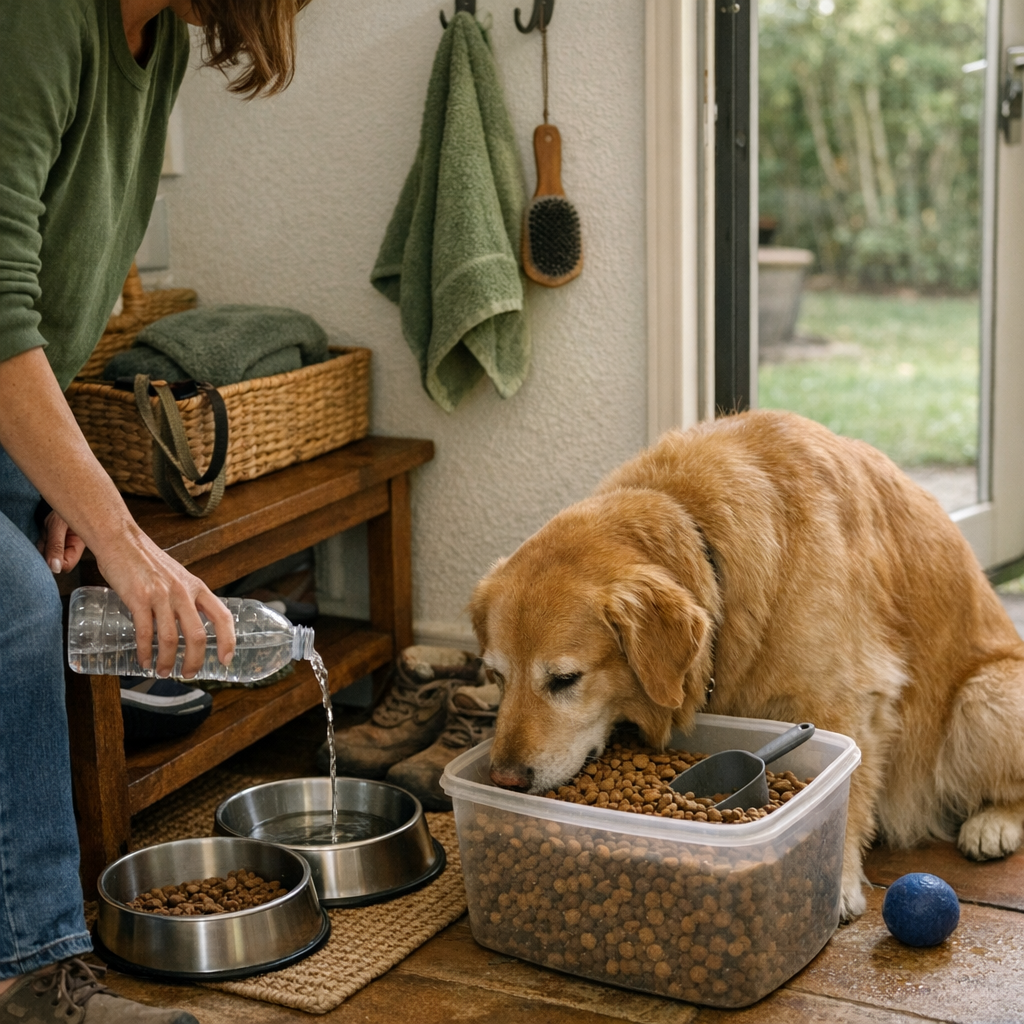
A pet care setup doesn’t fall apart in one day—it wears down through repeat frustration. The first hint is always small: a water bowl sits empty after breakfast, food bags gather near the entry because the bin is just out of reach, or wipes go missing when you need them for muddy paws. The system still looks organized at a glance, but one by one, the basics slip. You reach for a brush and find it stacked under bath supplies, or start refilling a bowl only to hunt for the right scoop while your pet circles the kitchen. These aren’t dramatic failures—they’re daily slowdowns. It’s the same care steps, but every move asks for extra work you weren’t counting on.
The biggest loss isn’t time—it’s trust in the routine. When setups stall, the day’s flow breaks: a water dish left dry because something blocked your reach, another wipe-down skipped because towels aren’t at hand. What claims to be “tidy” becomes another cycle of fixing, shuffling, and repeating tasks.
Small Friction, Big Drag: How Minor Obstacles Creep In
Routines break down when friction sneaks in through tiny, repeated misalignments. Feeding means reaching for a bowl—but someone stashed mail in the way, or the refill container’s further from the action than you remembered. Cleanup means finding wipes, but they’re high on a shelf or stashed behind cleaners. The brush for quick grooming drifts out of the rotation because lifting a box off it feels like a hassle. Each ask is minor, but in real repeated use, these micro-hurdles are what push the system from “grab and go” to “skip and delay.”
Most setup trouble comes from storage that looks right but ignores actual habits. Maybe you “put away” pet food in a container by the laundry—just a little out of the usual path—so the bag sits by the door meal after meal, slightly stale, always an extra shuffle to handle. These aren’t lapses—they’re the cost of needing an extra step every time.
Ordinary Scenes: Where the Routine Breaks Down
The gap between an organized setup and a usable one shows up in daily scenes. The dog drips across the entry after a walk. You reach for a towel by the door, but it’s gone—laundry again. The floor dries before you get back, so quick cleaning is skipped. In the kitchen, pet bowls wait in a sink already packed with pans, so breakfast starts late while you reshuffle dishes. Refilling water is one more delay, and after a few rounds, refill “later” turns into “forgotten.” Tidy bins and baskets impress no one if the basics aren’t there when you look for them.
Even a reorganization can just reshuffle where pressure lands. Maybe a new food bin closes tight and looks clean, but now the stiff lid means you avoid sealing it all the way, or leave bags unreturned. Stylish storage or toy baskets under a table reduce visible mess, but if you rarely reach them, yesterday’s toys drift across the living room by dinnertime. Surface order doesn’t guarantee function if access feels like work.
Why “Looking Tidy” Doesn’t Guarantee Smooth Function
Giving everything a “spot” on the shelf looks finished but can stall actual routines. When your most-used items live in closed bins, behind extra containers, or somewhere out of easy reach, you’re being asked to clear a path every time you reset. Attractive containers and high hooks make clutter vanish visually, but add just enough delay that you save cleanup for later—until later never comes.
If reaching a grooming brush means moving three boxes, it won’t be used daily. If wipes are stylishly stored but break the flow, messes linger until there’s more to clean, not less. Design and placement create invisible barriers; it only takes one extra move to push a needed reset further down the list.
The Role of Placement and Access in Daily Flow
Practical change comes by cutting steps between you and the actual care moment. That means bringing most-used supplies into direct, open access—right where your routine begins. Feeding gets easier when the food bin sits within arm’s reach of the bowls. One-hand-open containers and open-top bins leave no gap for delay, turning refill into part of the walk-through, not a side mission. Lowering towel hooks to door-handle height solves the wet-paws scramble—you’ll reach it even with hands full, not after the print dries.
Toys that live near your pet’s favorite spot return to the basket more often than those stored across the room. Wipes or sprays mounted along the main kitchen or entryway path shift cleanup from “something to get to” to “something you grab on the way.” If supplies are on your daily route, resets and spot-cleans happen almost without thought—and friction points quietly vanish.
Repeated Use Reveals the Weak Points
“Good enough” setups reveal their cracks after a few days. That food scoop always goes missing, the container’s lid jams or never closes fully, or too many backup bags stack up on the counter. You find yourself improvising—using spoons as scoops, working around towels that never left the laundry, letting wipedowns slide to the bottom of the list. Each of these is the signal that the setup prioritizes order over motion, and the routine eventually slows to a crawl.
Even after a cleanup blitz, the friction returns—awkward lids, unreachable towels, brushes that only surface once a week—if your setup wasn’t built to match your real patterns. The area may look calm, but actual care gets patchier, more repetitive, and a little less reliable with every missed reset.
From Looking Good to Working Well: Practical Steps
Reliable routines aren’t about hiding everything neatly—they’re about instant access to essentials right where care happens. Move backups or specialty supplies out of daily zones and into a closet or high bin, so daily workspace stays clear. For anything touched multiple times a day, use open containers and put them on shelves or hooks at the height you naturally work. At the end of each day, don’t just tidy—check that nothing blocks tomorrow’s first step. If a system resists you, strip it back: less closed storage, more open access, so friction never has time to build up in the first place.
Calm isn’t about hiding; it’s about setups that keep you moving. When nothing is in your way, keeping up becomes the easiest part.
Making Pet Care Reliable (and Easier to Repeat)
The best pet care setups erase every excuse to delay. Bowls don’t hide behind dishes. Brushes live within reach—not at the bottom of a bin. Water gets refilled as part of walking past—not as a separate task that drags out. When your setup removes every last snag, resets happen in stride, and missed routines stop sneaking up on you. Your care keeps pace with your day, even when things get crowded or unpredictable.
It’s not about getting to “perfect.” It’s about making day-to-day care too easy to stall—so your pet’s routine sticks, messes don’t pile up, and you stop chasing a system that kept looking ready but never felt easy to use.
For practical setups and everyday pet care tools that stay out of your way, visit CalmPetSupply.