
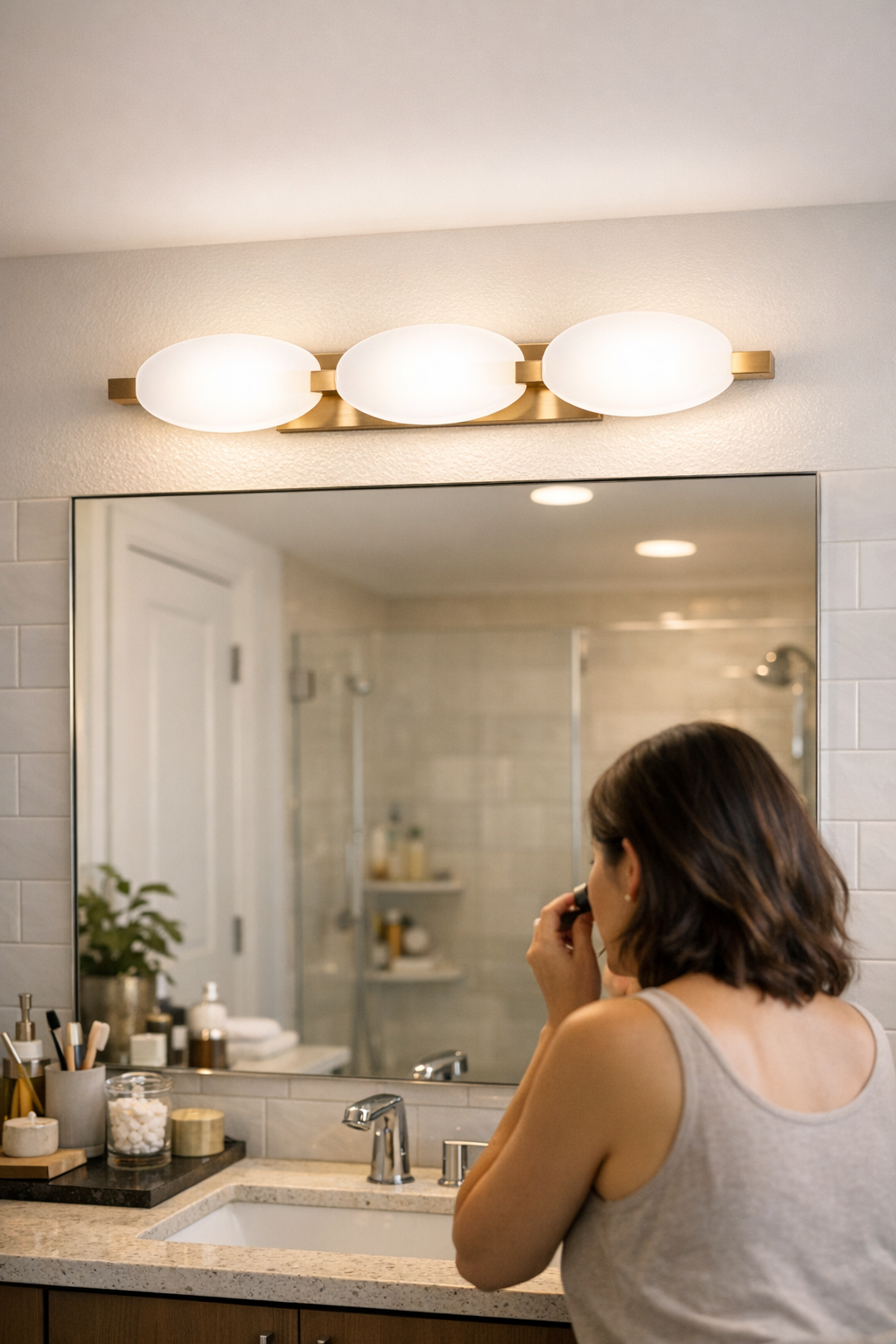
“Damp rated” on a bathroom light sounds like protection. It ticks the moisture resistance box, satisfies code, and lets you install above a shower without worry. But if you spend a week actually using the space—shaving, cleaning, scanning the mirror—you notice something compliance doesn’t fix: the light pulses, flickers, or keeps your eyes working harder than necessary, even with a fresh install. That reassuring label does nothing for the slow headache or the jitter you spot at the tile edge after three early mornings under those LEDs.
Moisture-Resistant Lighting Isn’t the End of the Story
Most buyers assume a humidity-proof fixture checks every bathroom lighting box. In practice, moisture defense solves only half the problem. What hardly rates a mention until you notice it yourself is the subtle, repeated flicker that many LED setups introduce.
This is rarely glaring at first. A soft pulsing hovers at the edge of a mirror or runs along the grout—barely there until you catch yourself squinting by Thursday, or realize you’ve started tilting your head trying to spot details that should be obvious. The headache is never sharp, just steady, and it drags into each routine.
The Everyday Effects of Subtle Flicker
Imagine a shared bathroom on a tight morning: one person leans close for beard trim detail, while another slides bottles or wipes toothpaste and surveys quick results. The overhead is technically bright—lumens look fine on paper—but something is off. Each glance into the mirror scatters with a shimmer at the reflection’s edge or a twitch down the backsplash.
That first week, you catch yourself missing spots, struggling to see flecks on counters, or feeling your eyes scramble as you move past the sink. The pace slows for no clear reason—small tasks now take attention, and a supposedly minimal setup leaves the space quietly irritating.
Why “Rated” Lighting Leaves Gaps in Daily Comfort
The disconnect is structural. Damp ratings mean the hardware won’t fail from steam, but they do nothing for the driver inside—a silent player. If the driver is poor or the dimmer is mismatched, you get microscopic current fluctuations. The result: double reflections and micro-shadows that build, day after day, into visible strain.
Glossy tile and mirrors make it worse. What seemed minimal and crisp on install day—flush mounts, hidden screws, cords tucked above the plane—now leaves vision scattered and details slippery. Every clean line is undermined by visual instability during the routines that fill a bathroom’s real schedule.
Symptoms During Real-World Use
- Flicker in mirror edges: Trouble focusing while shaving or doing fine grooming, with moving reflections that seem off but are hard to catch in stillness.
- Pulsing, unstable shadows across counters: Surfaces look clean one way, then shift with each pass of the sponge or scan for small dropped items.
- Visual fatigue: Low-level discomfort builds quietly; routine minutes near the sink accumulate into tired eyes or a tense brow by midday.
This isn’t catastrophic failure—just steady, quiet resistance that saps comfort and makes daily activities slightly more taxing.
Replacing Flicker: Small Change, Big Relief
Switching to flicker-free, integrated LED drivers delivers something lost in most “rated” installs: visual calm that doesn’t break with every movement. Suddenly, edges are stable in the mirror, the countertop reads clearly under any angle, and you aren’t forced to keep readjusting your gaze to make things out.
The space doesn’t look fancier, but staying tidy gets easier—spots and streaks stand out at once, tasks compress into fewer motions, and you don’t think about the light after two days of use. A neat install goes from decorative to functional, improving life with less daily drag.
Common Pitfalls: Rating Without Stability
Buying by label alone means trading one friction for another. Maybe you’re safe from moisture—but stuck with a flicker you can’t solve by moving toothbrushes, swapping bulbs, or nudging the vanity. Some try dimmer swaps, layering in diffusers, chasing “compatible” bulbs—most land right back at the same lingering problem: agitation that builds under regular routines.
Don’t Stop at Damp Rated—Look for Flicker-Free
If you want to avoid a repeat problem, filtering only for “bathroom rated” is a trap. Look for fixtures or hardware that claim “flicker-free” operation—and check for real mentions of LED driver quality, not just an all-clear for steam. Best-in-class options confirm stability at all dimness levels and after months, not just on day one. Reviews matter most when they come from users a few weeks in, not just right after installation.
If you install yourself, avoid mixing random dimmers with flicker-free LEDs—those combos almost always degrade over time, even when they first look correct.
It’s Not Just the Bathroom—Why This Applies Everywhere
Flicker is not limited to bathrooms. The same issue repeats under kitchen cabinets, along shelf runs in a workroom, or above a home office desk. A rated fixture might seem sleek and bright at setup, but after a few late nights at a cluttered desk or elbow-deep baking at the kitchen counter, you’ll find the same jitter—especially wherever surfaces reflect or tasks demand clear, edge-to-edge visibility for small or fiddly work.
Practical Moves for a Calmer Setup
- Target flicker-free fixtures for any place you’ll use repeatedly—not just main bathrooms, but kitchen prep surfaces, workbenches, or reading nooks.
- Aim for light that covers mirror and counter edges evenly—not just centered brightness. Clarity at task edges saves time.
- Test your setup after real routines, not just five minutes after install. Spend a week, and watch for subtle shimmer or eye fatigue.
- If something still nags, revisit connections, dimmer pairings, and cable runs to spot points where instability creeps in despite good hardware.
Everyday Lighting: The Hidden Impact of Calmer Fixtures
The best lighting setups rarely shout—and yet, their absence is felt in everyday friction: missed spots, jittery reflections, edge discomfort. No “damp rating” sticker fixes a fixture that wears you down by Thursday. Make structure and stability work for you, not just for compliance. The difference is a bathroom (or kitchen, or desk) that doesn’t just appear finished but actually feels easy to live with, no matter how many times you flip the switch.
Find real, flicker-free lighting and practical support solutions at LightSupport.