
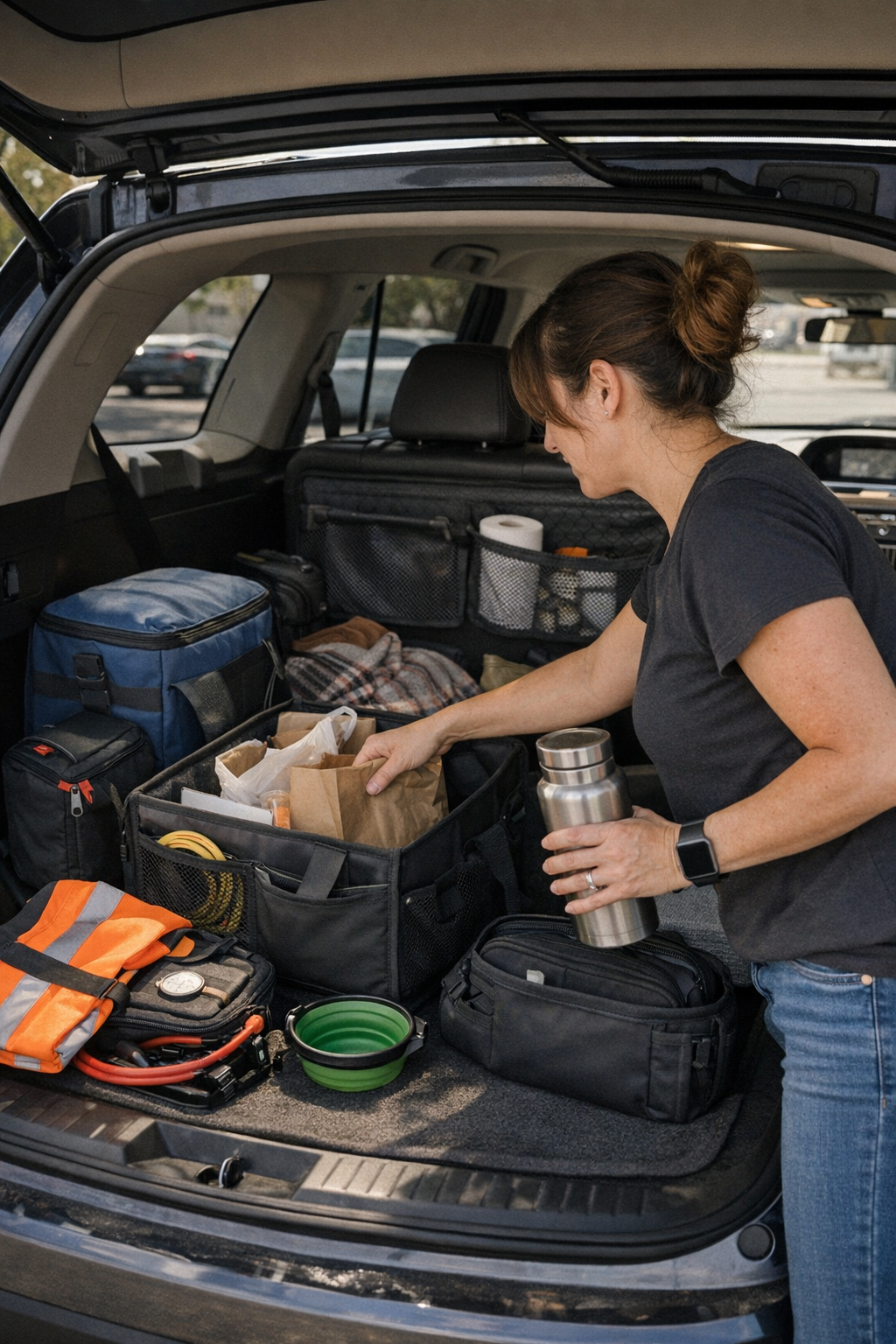
Step into your car after a long errand run, and the flaw in “perfect organization” appears instantly: your hands full, your phone buzzing, and every tray, slot, and cupholder already crammed with last trip’s leftovers. Re-entry becomes a quick calculation: where does this new coffee go? Where do you drop your keys when the usual pocket is stuffed with receipts and sanitizer? The system that’s supposed to keep things controlled now blocks you at the exact moment you need flexibility. On the surface, everything looks tidy. But in real, day-to-day car use, a packed setup turns small tasks into small struggles, every single time.
When “Fully Organized” Turns Into Everyday Friction
Stocking every compartment, filling every pocket, and maximizing storage seems logical—until it’s time to use your car in motion. Mid-commute, you slide into the seat, reach for the charging cable, and notice it’s tangled beneath sunglasses, spare change, and an envelope wedged tight. That slip of a gap you counted on is already gone, and there’s no room left for an unplanned item. Instead of feeling streamlined, the routine triggers a scramble: shuffling coins, clearing cords, and risking a quick drop somewhere awkward just to claim a spot.
This is not an occasional hiccup. Real car use turns even the best-organized setups into friction zones. Trays overloaded as default, floor mats collecting what rolls off the seats, receipts and sanitizers escaping their “assigned” spots after a single sharp turn. The effect: an illusion of control with a hidden side of constant micro-annoyance, especially during rapid errands, shared driving, or quick re-entries where speed matters more than looks.
No Empty Slot = More Work Later
Every time there’s no open slot left, each new or odd-sized item becomes a problem. With every compartment filled, the simple act of adding a phone, a snack, or a parking ticket demands rearrangement—on the fly. You find yourself stacking items by the shifter, dropping essentials in the passenger seat, or leaving loose objects to rattle until you have time (and patience) to clear the pile.
Shortcuts don’t really save time. You end up cramming, misplacing, or letting small clutter slide under seats—knowing it’ll resurface the next time you slam on the brakes or hunt for something mid-drive. A setup that promised “less mess” suddenly creates a cycle of forced clearing, more frequent cleanup, and slower access to whatever you actually need most.
Overlapping Routines: Why a Buffer Slot Changes Everything
No driving routine stays on script. You’ve got your phone charging—but now a passenger needs a port. You plan for coffee, but your only cupholder still holds yesterday’s bottle. Fully packed organizers don’t flex: every overlap creates new interference. Each time two needs collide, either your flow jams or you rig a quick fix—dangling cables across the console, stacking keys and cards beside shifting snacks, or just risking a slide into the footwell. That’s wasted time, hidden distraction, and more wear at the seams.
The “after” photo of a maxed-out organizer hides the real test—how it survives round two and three. By the third errand, gum packets and wipes are fighting for space. A backup phone gets forced into a sun-blasted dash or pinched between seat rails, cable stretched and ready for another snag. “Temporary” drop points become permanent clutter, and the result is always more awkward workaround than flexible system.
Real Scene: After-Work Fumble
Picture the late evening after two stops: my normal phone tray swallowed under spare coins and store receipts, needing a quick recharge before the next leg. No open spot left—so my phone landed crooked beside the seat, precarious and half-charging, cable yanked tight. Another floor hunt, another ounce of frustration, and one more example of the same tiny setup flaw repeating. Most drivers invent similar short-term “fixes”—and pay for them later in extra cleanup, slower stops, or sudden mid-drive distractions.
Building a Buffer: The Power of Leaving One Spot Open
The real fix is not more “organization.” It’s leaving one compartment purposely empty—especially near your main action zone, like the driver’s console or charging tray. Think of this as a structural buffer, not wasted space: the margin for last-second handoffs, unexpected guests’ devices, drive-thru change, or receipts that can’t be crammed elsewhere. A deliberate landing pad cuts the scramble to zero, letting you shift, charge, swap, or stash without a bottleneck forming every time routines overlap.
Test it out: clear the main tray near your seat and keep it reserved for overflow. That one open zone absorbs unpredictable needs—morning wipes, a friend’s forgotten phone, random snack wrappers—without forcing a mess elsewhere. Over the course of a week, you’ll notice: less last-minute stacking, fewer items drifting to the floor, and a measurable drop in frantic, end-of-day tidying. Even quick exits and rushed re-entries become smoother, because your setup can flex as real life demands.
Choosing Your Buffer Zone: Location Matters
The buffer only works if it’s where your hands naturally move most. For most compact and midsize vehicles, that means the forward center tray or deepest console, close to chargers and regular drop points. In larger cars, it could be the key side pocket or organizer zone nearest the main seat edge. The goal: make the buffer visible, within easy reach, and at the heart of your live-use routine—not buried in a back-seat cubby where overflow just becomes forgotten junk.
Leave just one spot open. Any more and you risk building a new clutter nest. The standout benefit is speed: drop, swap, or grab without blocking yourself or slowing everyone down. In any real stretch of errands, that small gap becomes the critical “give” your setup never had when every inch was filled on day one.
Does Leaving a Slot “Empty” Actually Create More Mess?
The common worry—“won’t an empty tray just attract extra junk?”—doesn’t pan out if the buffer zone gets used as intended. Think of it as a temporary transfer hub: a high-turnover surface for items in motion, not a final graveyard for forgotten clutter. Quick use and end-of-day sweeps keep it clear. Meanwhile, cables, phones, sanitizer, receipts, and random extras stop piling up in less controlled zones (like the floor or side doors), making cleanup easier and consistent. The real win is preventing those migration routes to hidden pockets and under-seat gaps where real mess hides and grows unseen.
Looking Neat vs. Working Smoothly: What Real-World Organization Means
Maximizing every inch looks good in photos—but if using your car means more shifting, slower reach, and constant rearrangement, “organization” has become functionally messy. An open buffer slot sacrifices showroom polish in favor of live convenience: less stalling, fewer micro-dilemmas, and less repeated strain at every stop. For anyone facing commuter pressure, fast-lane errands, shared cars, or even just the recurring loop of loading, driving, returning, and reloading, this is not an optional trick. It’s the difference between a setup that just sits still and one that actually moves with you—errand after errand, week after week.
For more practical setup tools and strategies to make your car work better—day after day—explore DriveWellSupply.