
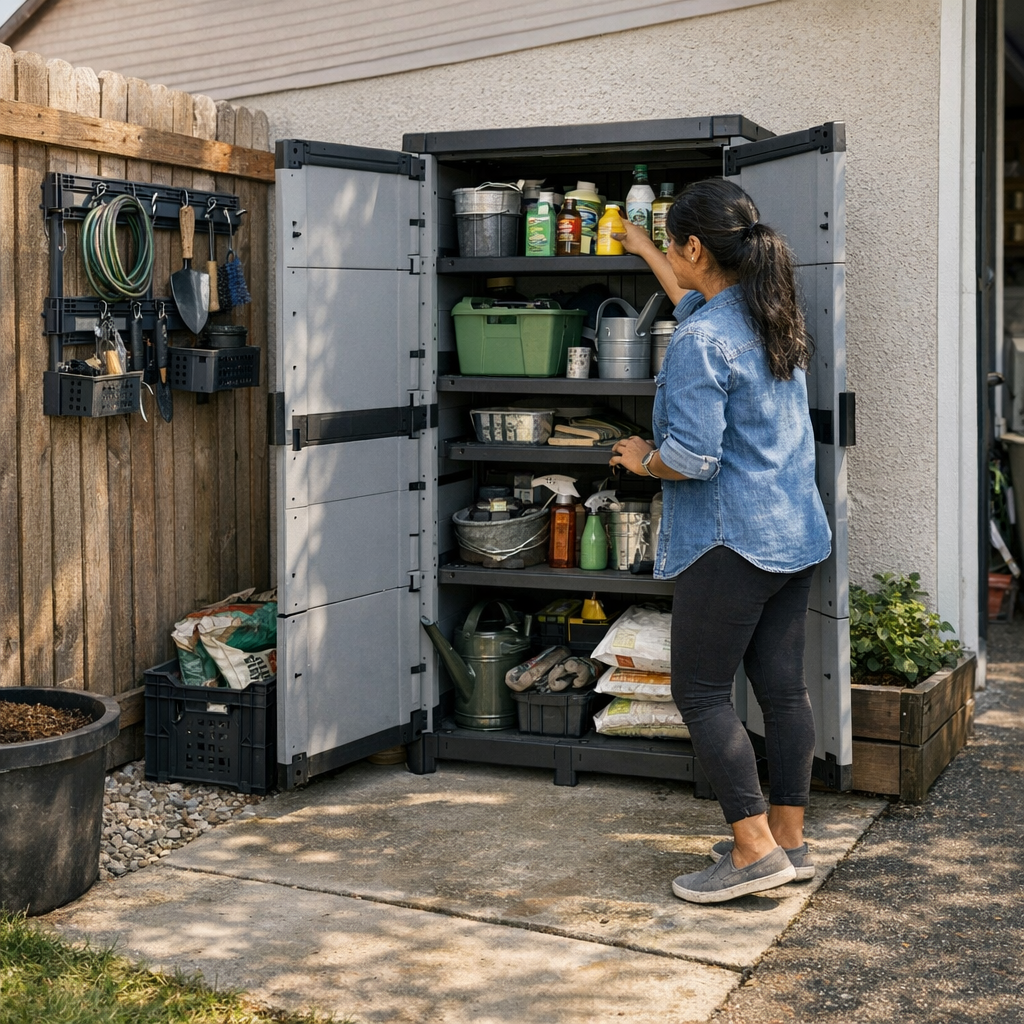
Order in outdoor setups is easy to fake—but hard to keep. That first afternoon, a sleek storage cabinet or those fresh bins along the fence trick you into thinking you’ve finally conquered the clutter. By week two, reality resurfaces. That narrow side yard that once let you glide past is now a tripping hazard. The cabinet meant to hide tools quietly becomes a landing pad for overflow, while the footpath shrinks under the weight of one more “temporary” rake or bag. The promise of order fades fast when every reset demands more maneuvering—and the system that looked so organized on day one begins to undermine your actual routine.
When Organization Breaks Down: The Realities of Outdoor Storage
Outdoor friction doesn’t shout—it creeps until you can’t ignore it. It’s rarely about “too much stuff” all at once. It starts with the shovel sticking out at ankle level, or the watering can that never actually makes it back inside because the fit is just off. If a cabinet or wall system requires constant reshuffling, or pushes into your walking line, every “quick put away” becomes a hassle. Soon, the area that was supposed to tame the mess just creates new bottlenecks—and familiar shortcuts spawn clutter faster than you can reset it.
The difference between functional and frustrating isn’t measured in cubic feet, but in daily movement. If a storage solution claims to “maximize space” but quietly traps a corner or forces you to double-handle gear, the overflow returns—and so does the friction. The real cost isn’t visible at first; it builds with every awkward reach or blocked door until you start leaving tools wherever you last used them.
The Subtle Power of Cabinet Depth and Door Swing
Tiny mismatches can sabotage an otherwise good setup. Door swing is a repeat offender. Picture a side-yard cabinet: shelves are deep, the doors jam after a partial swing, and what should be an easy stash becomes a hips-and-elbows shuffle. Pruning shears in hand, you need to wedge yourself sideways just to get the door halfway open—so you drop the tool on top and tell yourself you’ll fix it later. One missed return leads to another, and soon gear is scattered across tables, fence posts, and anywhere else the routine breaks down. But remounting the cabinet for a few more inches of clearance—true, full door swing—can snap the whole routine back into place. Now, returns happen in one motion; nothing lingers outside “for now.” The impact is instant and obvious: less sidestepping, less gear piling up, and the reset starts to feel nearly automatic.
I’ve seen a single change—like moving my garage-edge cabinet forward by a hand’s width at the hinge—erase months of irritation. Suddenly there’s no need to angle my body, slide the cabinet, or hold the door while juggling muddy gloves. The hand-in, hand-out flow is possible, no detours, no mental drag. That’s real outdoor performance you notice every day.
Exposed Racks and Open Shelving: Easy on the Eyes, Tricky in Practice
Wire racks and open shelves sharpen a backyard’s look for about a week. After that, they reveal their real bias: vertical stacks that demand reaching over, shifting bins, and constant mid-task rearranging. In a tight corner or along a narrow patio edge, this setup means every retrieval is a balancing act. Gloves behind a watering can? Prepare to unstack two pots and slide a hose to the side before you can even start. Even empty, the racks eat up wall and step space—every inch of “openness” comes straight out of your path. What once felt organized now clutters the very line you need to move through.
The real question: does anything come and go without hassle? If the answer’s no, order breaks down with every shortcut you take. Storage isn’t working when you hesitate to stow gear or leave tools out—no matter how neat the surface looks. Return flow matters more than any first impression.
Cabinet Width, Height, and the Trap of the “Corner Fix”
“Use every inch” is a common trap. Tall cabinets jammed in corners keep the floor clear, but put real strain on resetting: you need a ladder to reach the top or end up piling rakes and shovels up front. Wide units along the fence give you more surface, sure—but every foot they claim squeezes the path tighter, until you’re shifting one pail just to reach another. Awkward heights and squeezed walkways mean heavy stuff migrates to wherever it’s easiest to drop—which is never back in the cabinet.
Picture this: pruning’s done, you walk over with the garden hoe, and the door won’t swing open. A bucket is blocking the floor. So you move the bucket, open the door, and now you can’t fit the hoe until you restack two other tools. It’s a slow-motion clog that builds every session. Days later, gear is scattered—less because of messiness, more because the setup fights your routine.
Overflow and Dead Corners: When the Setup Loses to Habit
Overflow zones don’t announce themselves, but you feel their drain. If a wall system is tucked just out of reach, or a cabinet demands bending, backing out, or stepping awkwardly, you’ll “temporarily” stash things at the closest open spot. Dead corners—those odd gaps between the cabinet and the fence, or next to the shed—quietly become magnets for random pots, abandoned hand trowels, or whatever’s left after the main space clogs. The path narrows a little more every week until a clear zone turns into a balancing act.
One practical test: Stand where you normally walk. Open the cabinet with one hand. Does any part of you twist, step sideways, or reach blind to put something away? If yes, the setup will keep tripping up your routine. Orientation matters as much as capacity—the best location is one that fits your body’s flow, not just the area on paper.
The Real Test: What Happens After a Normal Week?
The truth shows up on a Saturday morning. After a few evenings of planting, watering, and hurried cleanups, take a look: gloves droop over a fence rail, half-filled soil bags sag in the walkway, pruners take up permanent residence on the side table. It’s rarely the amount of storage that’s wrong—it’s the fit with your real habits. When the layout works with you, putting things away doesn’t feel like a separate job. Return flow is smooth and automatic. The dogleg path around the cabinet disappears, and “I’ll just leave it here for now” stops being the most common routine.
Minor Adjustments, Major Impact
Most fixes don’t require rebuilding—just rethinking the match between footprint and movement. Move a cabinet forward for better hinge clearance. Replace a deep bin with a shallower shelf to open the walkway. Real value comes from setups that reduce daily resistance—tiny corrections that add up to less effort, easier resets, and less spillover in your space.
Perfect order isn’t the goal—reliable, friction-free resets are. Tweaks that respect your routine will pay you back with clearer zones, quicker cleanups, and more usable outdoor space—no heroic tidying required.
For more ways to make your setup actually work for your yard, visit TidyYard.