
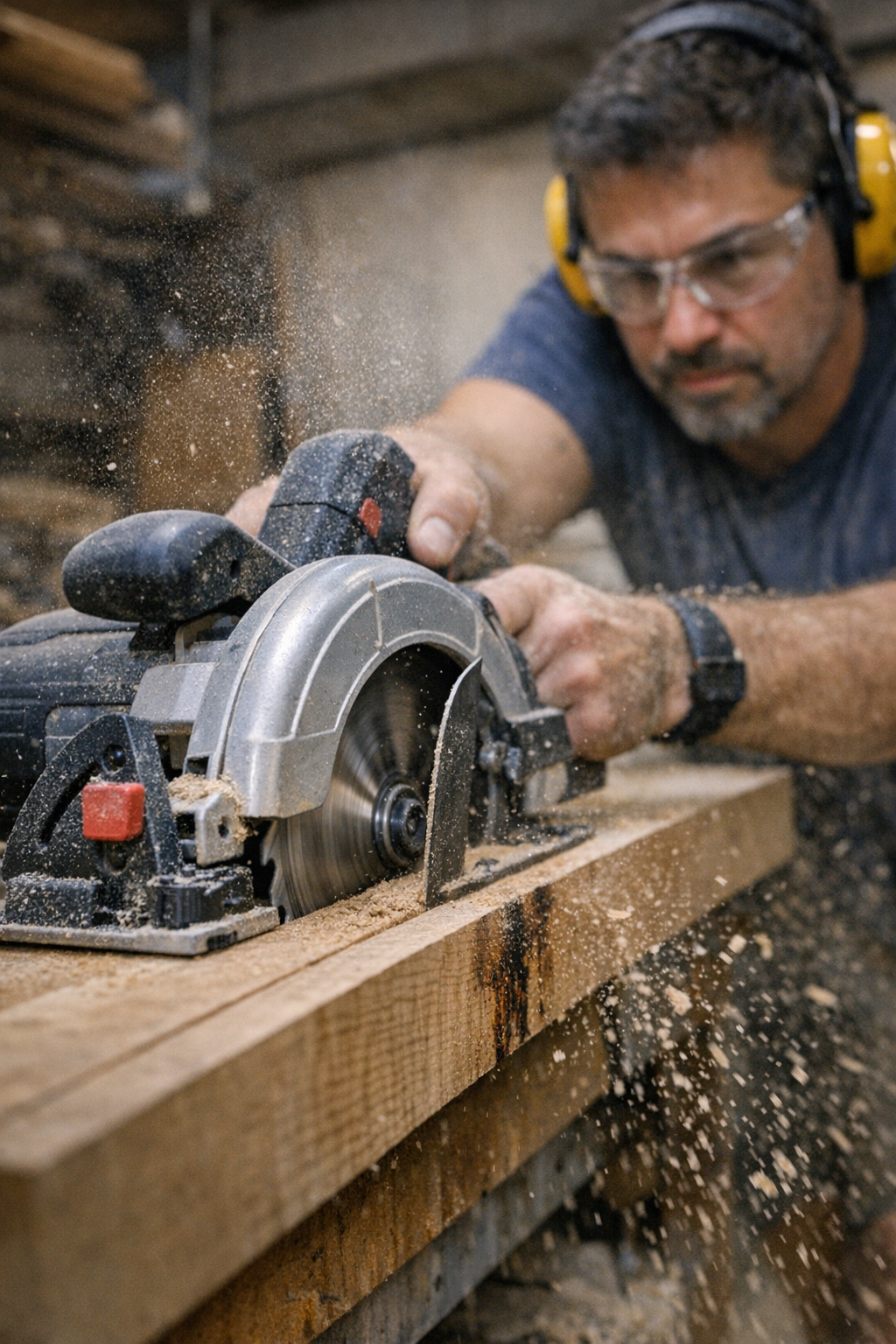
You’re pushing through a stubborn maple board, halfway into a long rip, when the saw suddenly lurches. The cut starts to drift, the motor strains, and what should have been a crisp, straight edge now threatens to burn or splinter. There’s no question: in the pressure of real-world cutting—garage projects, jobsite runs, tight workshops—the difference between smooth workflow and lost time is rarely about horsepower or blade size. It comes down to the details others miss—like the fit between riving knife and blade kerf.
Why Saws That “Seem Equal” Leave You Stuck Mid-Cut
On a display rack, two saws might look nearly identical—same blade diameter, familiar handles, matching weights. Judged by spec sheets alone, you’d expect them to perform side-by-side in the shop. The reality? Small engineering gaps, invisible until you’re deep into real stock, can make the workday unravel fast. The split-second between control and chaos often comes down to what’s happening behind the blade, out of sight but not out of mind once things bind or kick.
Test cuts on cheap pine or ply rarely show the truth. The real issues surface only when you get serious—ripping through tough oak, framing fir, dense sheet goods. Suddenly, every pass feels heavier, the cut line wants to wander, and the saw starts grabbing or biting. Kickback risk jumps. You go from thinking about the project to wrestling the tool, burning minutes correcting what shouldn’t need fixing.
How Subtle Setup Gaps Compound in Real Use
It all adds up, usually in fractions. If your riving knife runs even a touch too wide compared to the blade’s kerf, it forces extra friction into every cut. Sawdust doesn’t clear; it compacts. The feed stalls. The saw might stall or stutter, then burst free, threatening your line and control.
This isn’t a woodworking myth or some “perfect shop” detail. It shows up every time you try to run a series of rips for a glue-up, or dive into a heavy batch of shelving stock. Every board after your first feels tougher. Your shoulder starts to complain. Instead of steady progress, you’re slowing down to compensate for drifting lines and ragged, splintered edges—a tiny design mismatch compounding your effort with every pass.
Kickback: When the Small Flaw Turns Dangerous
You’re on your third or fourth rip through thick hardwood, the shop dust hanging heavy, and suddenly the saw yanks back. There’s a flash of heat at the cut, a burnt smell—what used to feel like an easy, controlled draw now turns hostile. Most pros will check their grip or stance, but the real problem often hides in the jam: the riving knife squeezing just enough to bind, thanks to a kerf mismatch or sawdust build-up. What looked fine at setup becomes the afternoon’s main headache—or worse, a real safety hazard.
When a Fraction of a Millimeter Changes Everything
Late in the day, with a stack of boards to go, the problem sharpens. First pass: not bad. By the fifth, you’re fighting for control, each push slower and shakier, the motor less willing. The blade’s still plenty sharp. But the riving knife—barely wider than ideal—turns every chip into a potential wedge. Heat builds up, the grain resists, and suddenly even smooth feeding stock wants to burn or tear out.
Change out to a saw with a better-matched, slightly slimmer riving knife and it’s an immediate relief. Dust clears, the blade glides, and you get to focus on guiding the line instead of forcing it. You won’t find that on most feature lists, but in practice it’s the deciding variable between “almost right” and cuts that land clean every time, even when the wood itself is unpredictable.
Shop Reality: The Fatigue and Friction Are Real
Anyone running glue-up panels in a packed shop knows the cycle: you start off confident, then end up pausing between boards, weighing whether to keep muscling through, risk more tear-out, or accept another round of block sanding. The difference that half-millimeter slimmer riving knife makes? You’re staying on line, letting the motor do the work, and keeping your focus on the job instead of second-guessing the next cut. No showy features, just hours of fatigue you never got stuck with.
Small Setup Details, Big Daily Impact
It’s tempting to let yourself get distracted by battery ratings, brushless motors, or the latest claims on cut count. But after you crank out more than a few boards, the only numbers that matter are how riving knife and blade kerf fit together. Even a minor mismatch—barely noticeable during a quick test—becomes relentless when you’re grinding through hardwoods board after board. Get it wrong: every pass binds, scorches, or strays. Get it right: work stays fluid, cleanup drops, and you avoid that end-of-day shoulder ache that signals the tool’s been fighting you instead of helping.
Watch for These Warning Signs
If things get worse as you push on, look for:
- The saw suddenly bogging or kicking midway through a cut
- Heat burn marks or roughness appearing along the waste edge
- Feed force noticeably increasing; each pass harder than the last
- Sawdust refusing to clear, clogging at the riving knife’s heel
- Excess time sanding out splinters and ragged tears
Don’t just blame blade life or “tough wood.” Double-check whether the riving knife is crowding your cut. The real-world feedback is in how the saw feels and sounds under load, not in how the parts looked during setup.
Smart Shop Habits That Prevent Headaches
Let the saw’s feel—not just the cut quality—guide you to questions. Even a trusted tool will develop quirks: a base that’s just a little out of square, a kerf filled with chip buildup, or an ejection chute half-blocked by pitch. Ignore this, and you’ll be fighting the tool by lunch.
Fast reality check: after a gnarly deep rip, take a beat and check the riving knife for heat darkening or sawdust buildup. It doesn’t take much—a hair’s thickness of pitch or dust—to gum up the gap, creating drag where there should be none. Every fresh blade, every switch for a specialty cut, double-check fit: riving knife and blade kerf, side by side. It’s five seconds that’ll spare an hour of aggravation if things start to bind. And if you’re powering through multiple rips, keep a narrow brush or quick air blast handy—cleaning out that space between passes helps you avoid the cascade of problems that build up when you skip it.
Saws That Survive Real Repetition
Most circular saw breakdowns don’t start with the motor—they start right behind the blade. Ignore flashy specs; the saws that hold up, board after board, are those that stay just clear enough at the riving knife to keep dust moving and the feed natural long after the battery buzz or corded whine is old news. The goal isn’t flawlessness—it’s building a work rhythm you can trust, with the kind of smooth, predictable cuts that reduce rework and wear, even on your longest days.
Find circular saws and accessories tuned for real work at Gumboll.