
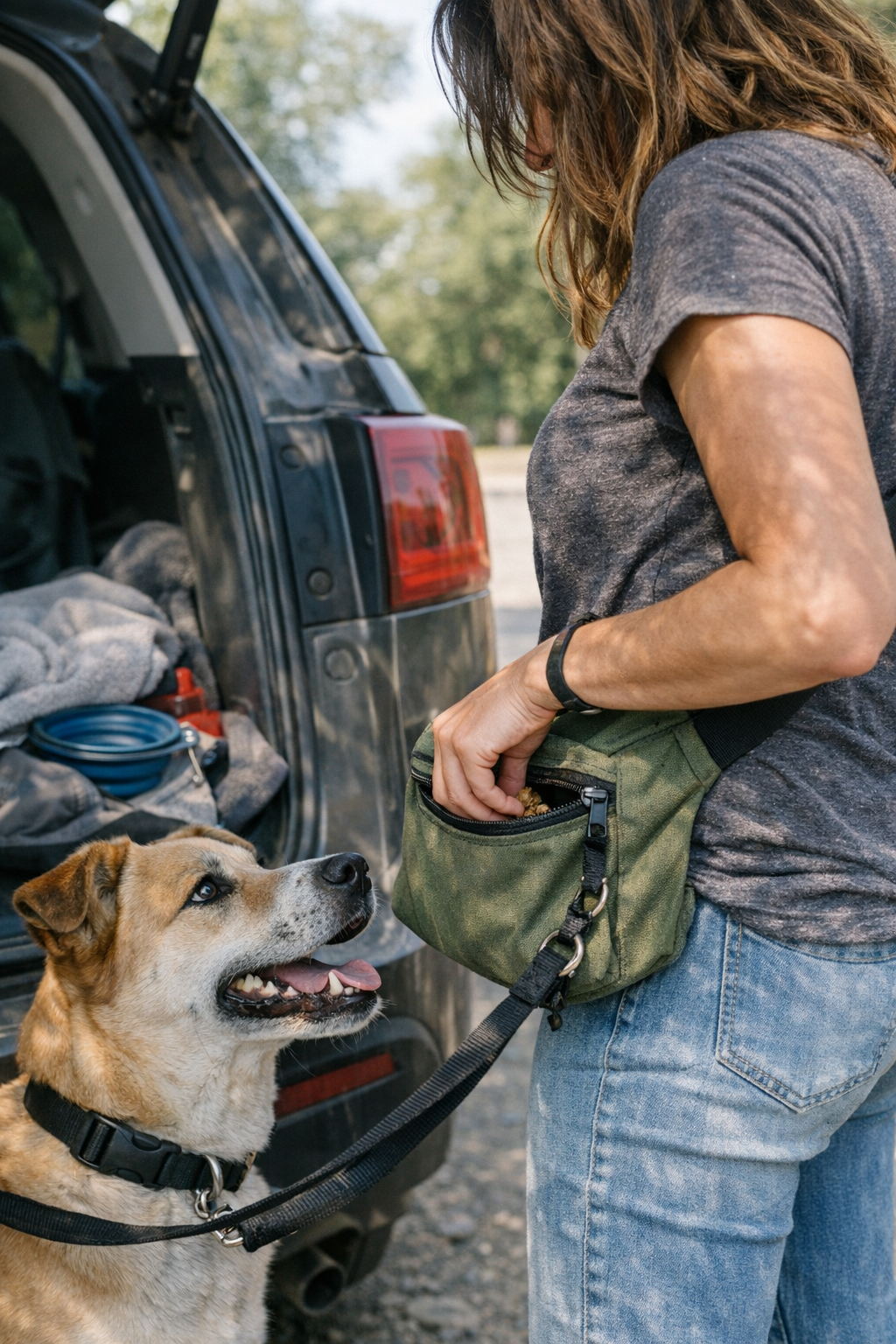
Your pet’s travel setup looks perfect at home—treats stowed, comfort items packed, everything in its place. But real travel isn’t one smooth launch; it’s a hundred minor starts, stops, and interruptions. By the third time your dog lunges for the grass and you’re one-handedly unzipping the wrong pouch to grab a treat, the carefully packed “system” is now a live source of friction. What began as organized turns into a real-time struggle: blocked access, tangled items, repeated reshuffling—with every stop, the illusion of ease slips a little further from reach. PawGoTravel knows the difference between packed and actually usable, especially after your first few stops squeeze every flaw to the surface.
When “Organized” Fails During Repeated Stops
The true test of any pet-travel setup hits during the ordinary grind: crossing lots, re-entering cars, pausing for surprise sniff breaks. That treat pouch clipped on the bag? It seemed accessible at the start. But now, leash in one hand and phone in the other, you keep bumping keys or digging under wipes to find it. The neat organization you trusted at departure starts tripping you up—grabbing the treat takes one shuffle too many, and your dog’s patience wears thin.
These slowdowns are quiet but stubborn. The first missed pocket, the second awkward fumble, the third buildup of impatience at your side—they repeat, and your pet senses the lag. Hectic leash pulls creep in. The setup that made sense on your kitchen counter now blocks you in the field, clutter turning calm cues into minor battles.
The Real Cost of Slow Access on the Move
Every stop is another test of your gear’s actual flow. You’re squeezing between car seats, unlocking doors, crossing paths with other owners. If the treats are buried, you break step to hunt. If the comfort mat blocks a needed pocket, you churn everything on your lap just to reward a sit. What looked “ready” in a photo now means shifting your grip, putting the leash momentarily on the ground, or bracing with an elbow just to dig for wipes or a foldable bowl.
Each mishandled pause means your commands drift. Your pet, feeling the lag, might pull harder, circle, or bark—making you fumble more. Calm, planned cues turn choppy because your bag resists the rhythm of live movement. When access slows, tension and chaos leak into your travel routine, giving you a plan that actively interrupts itself.
Clutter Creep: When Good Packing Turns Against You
Packing for “everything” sounds smart: extra treats, collapsible bowls, wipes, comfort blankets. But as the trip wears on, too many well-organized layers become a maze. Treats hide behind a soft bowl; wipes slide just out of fingertip reach; a blanket meant for comfort now blocks your fastest access point. You stop to help your dog, but one item always nudges another out of place. The bag’s clean look becomes a practical roadblock instead of help.
This isn’t just untidiness—it’s a flow problem. If every restart means moving the same bowl, unzipping that flap one more time, or shifting owner gear off a treat pouch, small waits stack up. Your dog expects a crisp reward; instead, you stall and reshuffle. On real trips, the split between “looks neat” and “works fast” gets painfully obvious. Calm travel isn’t achieved by packing more—it’s lost in those seconds of jammed handling that repeat at every stop.
Spotting the Real Weak Points in Your Setup
The real flaws of a travel kit never shout on day one—they creep in after those quick gas-station runs or sidewalk breaks. You start recognizing patterns: always pulling the zipper that leads to the wrong compartment, always having wipes you can’t grab fast enough when needed, always draping a blanket that gets in the way as you reload for the next move.
These aren’t dramatic failures—they’re friction points that nag and return. Often, your essentials (keys, wallet, phone) magnetically find their way into pet sections, or vice versa, making every reach a gamble. No matter how well you think you’ve packed, some overlap or slide repeats: the treat pouch blocks the leash clip, the bowl wedges beside the carrier seat-strap, or wipes jam up the closure. Each repeat exposes a new twist on the same flaw.
Access Under Pressure: How One Change Shifted Everything
After too many stops ruined by scavenger hunts for treats, I tried a shift: Give one dedicated, always-open side pocket to a single treat pouch, no wipes, no toys, no overlap. Lined up with my usual leash hand. Instantly, the repeated search and shuffle became a one-move motion—hand in, treat out, reward given—while the rest of my kit could slide around as needed. Even chaos in the main section didn’t block that route.
This change reset my handling rhythm. No relocking zippers, no spilling items to get to the bottom. My dog’s reward matched my command, not my cleanup routine. Each restart after a stop felt smoother, not interrupted by another mini-juggle. Over time, the old leash-fumble and bag-shuffle rhythm faded away, replaced by a more predictable, calmer routine.
Consistency Wins: The Unseen Value of Small Routine Fixes
No setup is flawless, but the setups that survive repeated real use are the ones that fix their own slowest step. When quick access stays quick—after miles, restarts, and actual field use—handling flows, signals stay clear, and owner and pet both stay calmer. What matters isn’t the first impression but the fourth or fifth restart, when you aren’t stuck re-learning your own bag’s contents after each stop.
The difference isn’t photogenic; it shows up quietly, when the slowest reach disappears and the pet’s focus doesn’t leak away. The setup you almost notice least becomes the one you count on most, holding together at seat-side, on curb, and in every quick return-to-movement reset.
For pet-travel setups, organization is the starting line. It’s flow—real, repeatable, friction-reducing access—that keeps the journey steady. If your own routine keeps stumbling at the same spot, one direct change like re-routing your treat pocket or separating wipes from rewards can take a nagging problem off your plate—turning what slowed you down into an invisible, repeat-win advantage.
See practical, field-tested gear for real travel routines at PawGoTravel.