
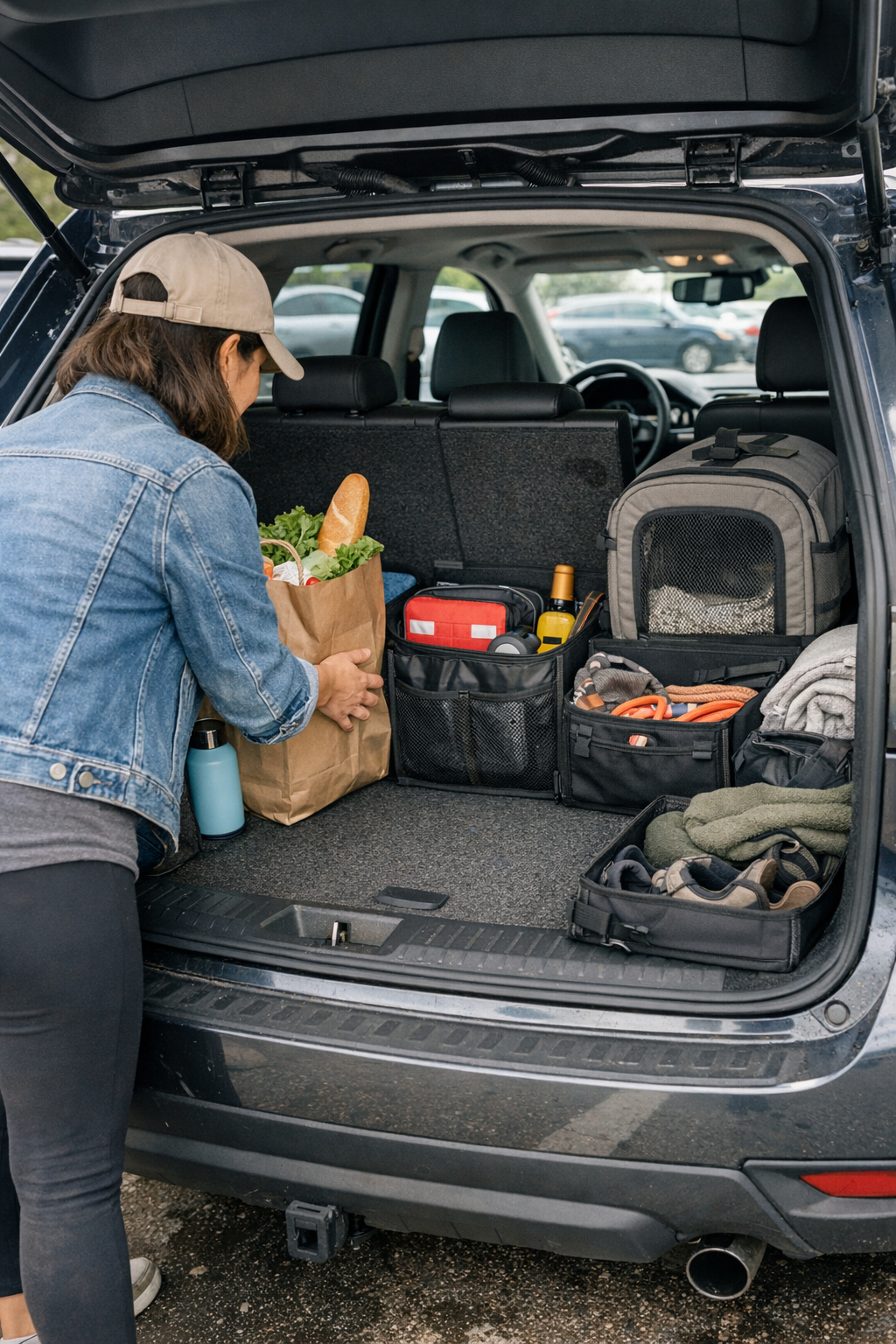
Pop your trunk after a normal workday, and it looks under control—bins square, dividers standing, everything boxed in tight. But the first small surprise wrecks that illusion. One extra grocery stop, your kid’s sports bag tossed in out of sequence, and suddenly your so-called “system” is in the way: you’re shifting bins, unstacking organizers, negotiating every move. That quick loading, one-handed drop you expected? Gone. This is where driveway organization collides with real use. The promise of order flips—immediately—into friction.
When Order Creates Obstacles: The Hidden Friction of a Boxed-In Trunk
An organized trunk isn’t always a usable trunk. Bins stop bags from tipping and keep loose objects from rolling, but these fixed compartments soon behave like obstacles when your errands don’t follow the script. Every partition claims space not just from clutter, but from your own fast access—and as soon as the day’s plans shift, those rigid structures demand, “move me first.”
If you’ve ever tried to cram a cold pizza or a last-minute grocery bag, you know the pattern: before you can load anything new, you’re pulling a bin out, rearranging your trunk on the curb, or cursing at a divider that’s positioned just wrong. To dodge the hassle, you might start flinging overflow onto back seats or footwells—letting mess migrate into the car you thought you’d just tamed. What started as an effort to save time now costs you minutes and patience, especially when errands pile up or appointments shuffle around.
Real-World Use: Why Looks Can Deceive
Most drivers discover quickly that trunk organization is not a set-and-forget game. Schedules flex: drop-offs shift, groceries jump to the top of the list, team gear collects unexpectedly, plans collide. Each time real life delivers an unscheduled task, your trunk has to bend, and most “tight” layouts resist that stretch. The more you optimize for a single workflow, the less tolerant your setup becomes under pressure.
Picture an ordinary start to the week: The trunk appears spotless after the weekend—until a quick supermarket run reveals there’s no bare patch left. Grocery bags now share the passenger seat with yesterday’s laptop. Fast-forward an hour, and a kid’s backpack slides half-crushed into a side bin because that’s all the space you’ve got. By the next morning, stray lunch boxes and snack wrappers are back in the front of your car. Under the tidy surface, disorganization leaks in sideways.
Trapped at the Edges: How Bins Can Make Small Frustrations Worse
The issues are subtle but stubborn. Grab your phone charger after a drive, and you may see it wedged under a hard bin, just out of reach. Muddy shoes end up balanced awkwardly on a plastic divider because nothing else will fit. By midweek, you’re stacking takeout or sliding coffee down onto makeshift platforms atop containers—anything to avoid the “organizer shuffle.” The more the trunk stays boxed in, the more stray items abandon it entirely, crowding seats and floor mats you didn’t mean to use for storage.
The Cost of Over-Organizing: When Structure Becomes Its Own Issue
There’s a false logic that adding more compartments brings better control. What actually matters is how an organizer handles repeated, real-world abuse—random pit stops, unplanned hauls, dirty gear, and “just for now” items. When your setup gets too rigid, the trunk transforms into an annoying puzzle and every new errand becomes a negotiation. Heavy containers at the back block easy motion. Dividers conspire to bottleneck access. Suddenly, your tidy system is a barrier, not a tool—one more thing to work against on a rushed afternoon.
Making Space for Change: The Simple Power of an Open Strip
The actual fix comes from subtraction, not addition. After weeks of frustrating trunk reshuffles, pulling out one organizer to create a bare strip (even less than two feet) reshapes your entire loading pattern. That stretch absorbs heavy bags, wet shoes, or returns in seconds—no shuffling, no double-handling. With a flex zone, a jacket, gym bag, or takeout can drop straight in, and the rest stays untouched.
This uncluttered section isn’t wasted space—it’s your friction buffer. Fast stops stay fast. You no longer wedge extra cargo into the front seat, or balance dinner on top of bins. Over a week, the pattern flips: less time spent clearing the way, less chaos trickling forward into the cabin. The trunk finally starts matching the messy flexibility of your actual week, not just the fantasy of weekend tidying. You feel the payoff in every “in-and-out” motion, with less grumbling and way fewer repeat cleanups.
Finding the Right Balance: Adaptable Structure for Everyday Life
It’s not about letting chaos win—but a trunk optimized for visual perfection is usually sabotaging itself by Wednesday. Organized, yes, but not airtight: save space for the unknown. For most cars, a bare side strip or rear margin (about two feet wide) keeps daily surprises manageable without letting loose cargo bounce around. If you find yourself dragging bins out for nearly every errand or loading lunch onto the front seat twice a week, your layout is putting form over function.
Organization That Supports Your Routine
The real measure of a good trunk setup isn’t how orderly it looks with no cargo, but whether it still lets you load and unload, improvise, and adapt smoothly all week. Leaving a functional gap—space you resist filling—makes the whole system less of a headache, more of a help. The right balance feels obvious: no more wrestling organizers before coffee, no more rethinking storage while traffic waits, and a trunk that absorbs life’s curveballs instead of amplifying them.
Visit DriveWellSupply for real-world car organization solutions.