
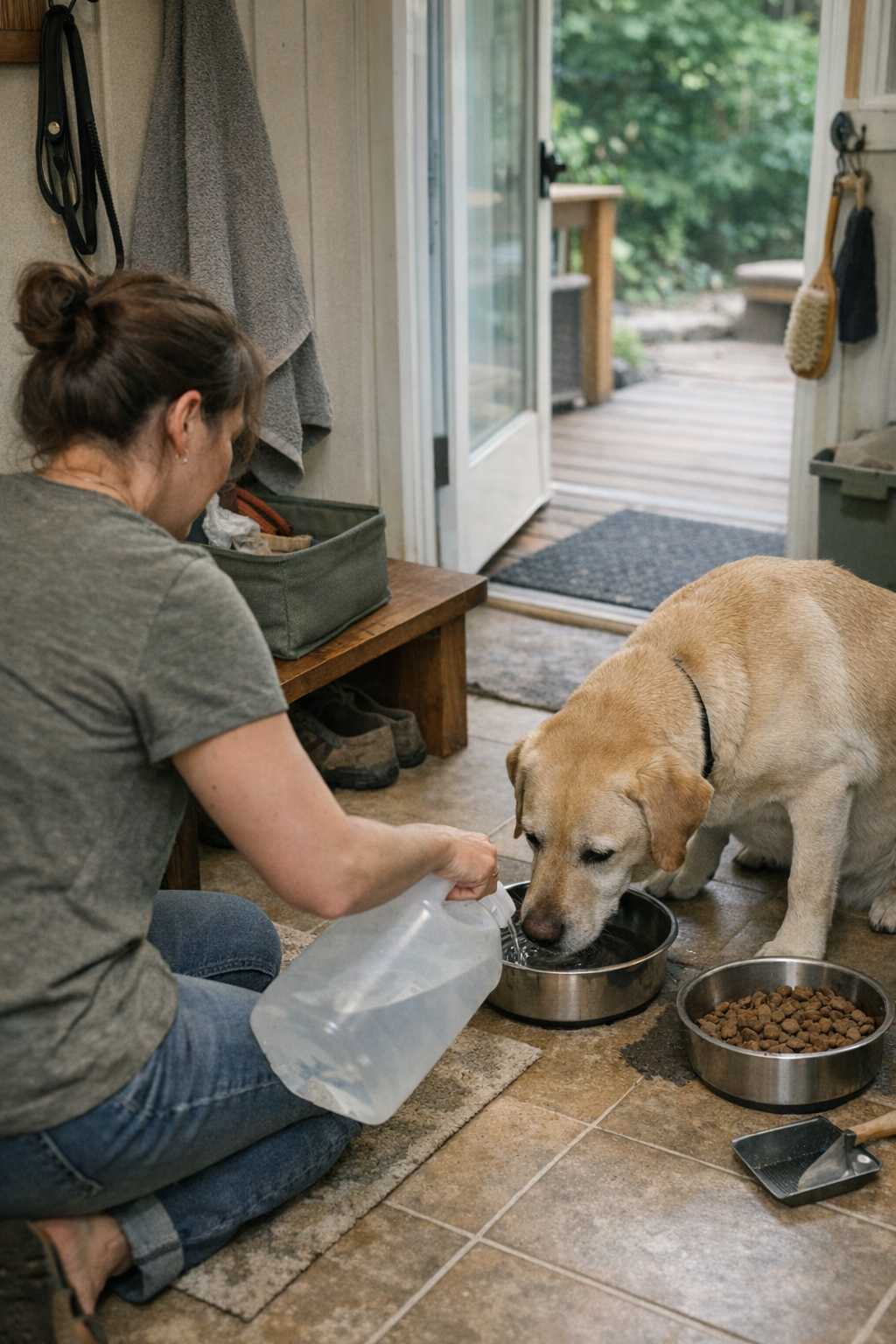
A pet-care setup rarely fails the day it’s arranged. It breaks down the first night you try to clean up after dinner and realize the water bowl’s still under the mail, the towel you wiped paws with is missing, and you’re stuck rinsing muddy feet over the kitchen mat just to get everyone settled. The difference between a setup that feels “organized” and one that works is simple: a working system won’t let you get blocked by one lost bowl, a misplaced brush, or a towel that’s never where it needs to be. CalmPetSupply isn’t about how a corner looks at 7am; it’s about not losing five minutes—and your patience—just trying to reset after a normal, hectic day.
The True Test: Daily Pet Care Under Pressure
A setup only matters when you’re short on time, tired, or just want normal routines to finish without friction. Picture rushing to refill a water bowl during the dinner rush—except it’s shoved behind groceries, the bottle is buried beneath recycling, and the only towel is somewhere in the wash. Instead of a quick five-minute reset, you’re retracing steps, moving clutter, and leaving half the mess for “later.” Real pet care is about whether the feeding, cleaning, and resets can survive the busiest, most distracted day—because that’s when weak setups start to fall apart.
Why the “Tidy” Setup Fails Real Life
Most routines break not from chaos, but from a setup built for appearances, not use. Brushes stashed in high cabinets don’t help when loose hair’s on the sofa. Towels hidden in drawers can’t dry paws at the door. By Friday, you’re stretching to grab a towel from the wrong room, scraping by with cleaning wipes you can’t reach, and opening every drawer for a scoop you thought would be easy to find. Those “tidy” systems require more steps, making daily care just clunkier under pressure—not smoother.
Small Delays Become Big Frictions
Start with one rainy walk: your dog’s paws are muddy, but the towel you meant to have by the door is still spinning in the dryer. Now you’re tracking prints through the kitchen, opening cabinets, and wiping floors long after the walk should be over. Every time a needed tool is missing or out of reach, small delays mutate into real interruptions—and background stress grows faster than any visible mess.
Essential Items Go Missing at the Worst Times
Even with “almost organized” routines, the cracks show fast. Bowls slide into the hallway, wipes wander to a room you hardly use, and the brush you thought was next to the door is now under the newspaper pile. When you’re forced to hunt for basics or skip steps because one item is slightly out of place, routines drag: water doesn’t get refilled, surfaces stay sticky past feeding time, quick resets become hour-late chores. It doesn’t take much for daily pet care to start feeling like a string of small failures.
The Reach Factor: Keep Supplies Where You Use Them
What actually saves time isn’t hidden storage, but smart positioning. A towel hook inside the entry means muddy paws get wiped before chaos starts—no retracing steps to the laundry. Keep the food scoop next to the food bin, not buried behind snacks. Place water bowls in a spot you walk past often, not a tucked-away corner that only attracts mess. When every supply stays where you use it, the task shrinks—the friction fades. The less you fetch, the faster you finish.
Pet Supplies That Get in Your Way
Pet supplies tend to migrate into space you need for real life. Toys end up underfoot, feeding mats creep into the busiest stretch of the kitchen, and storage bins crowd out counters. An “organized” setup can morph into a routine speed bump by midweek. You spend more time moving bins, shifting mats, and sidestepping piles just to use the space for anything else—pet gear that looks good on day one but makes daily routines clumsy everywhere else.
The False Promise of “Clutter-Free” Organization
It’s tempting to hide every supply for a cleaner look, but a routine only works if the basics are always at hand. If you’re constantly digging for wipes, opening the wrong cabinet for a towel, or shifting three things to reach the bowl, the order is only surface deep. Genuine routine support means the right item is always in its spot, with no extra searching. A “clutter-free” system that hinders care just creates a cycle of friction—and more mess over time.
Realistic Streamlined Care in Action
A functional setup feels different in real life: After a muddy walk, a dry towel hangs on a hook by the door—grab, wipe, done. Food scoops and treats live directly above the bowl, never behind a stack of groceries. Water bowls rest near daily foot traffic, making every pass a reminder to refill. Wipes and a cleaning cloth are within arm’s reach of the litter box, cutting response time from “I’ll get to it” to handled immediately. When tools are only ever an arm’s reach away, care doesn’t pile up—it stays manageable, no matter the day.
Practical Shifts: Function Over Form
Real improvement means choosing location and accessibility over tidy appearances. Add a ground-level bin where supplies pile up, not where they “should” look nice. Hang a brush visibly by the door instead of storing it in the hall. Every move that brings supplies closer to use cuts steps—and cuts excuses to delay. Once ease of use becomes habit, the urge to hide everything fades, replaced by routines that actually last.
Finishing Thoughts: Build for Real-World Flow
The only pet-care setups that last are the ones built for real life: missing tools, sudden messes, tired evenings, rushed mornings. If you still lose time searching for basics or cleaning up interruptions, it’s a sign the system only looks calm—it doesn’t work calm. Test every tool’s placement not by how it looks, but by how quickly you can grab it when the routine is at its worst. A small move—a hook, a visible shelf, a closer bin—often makes care predictable, calm, and genuinely easy to keep up, even when the day falls apart.