
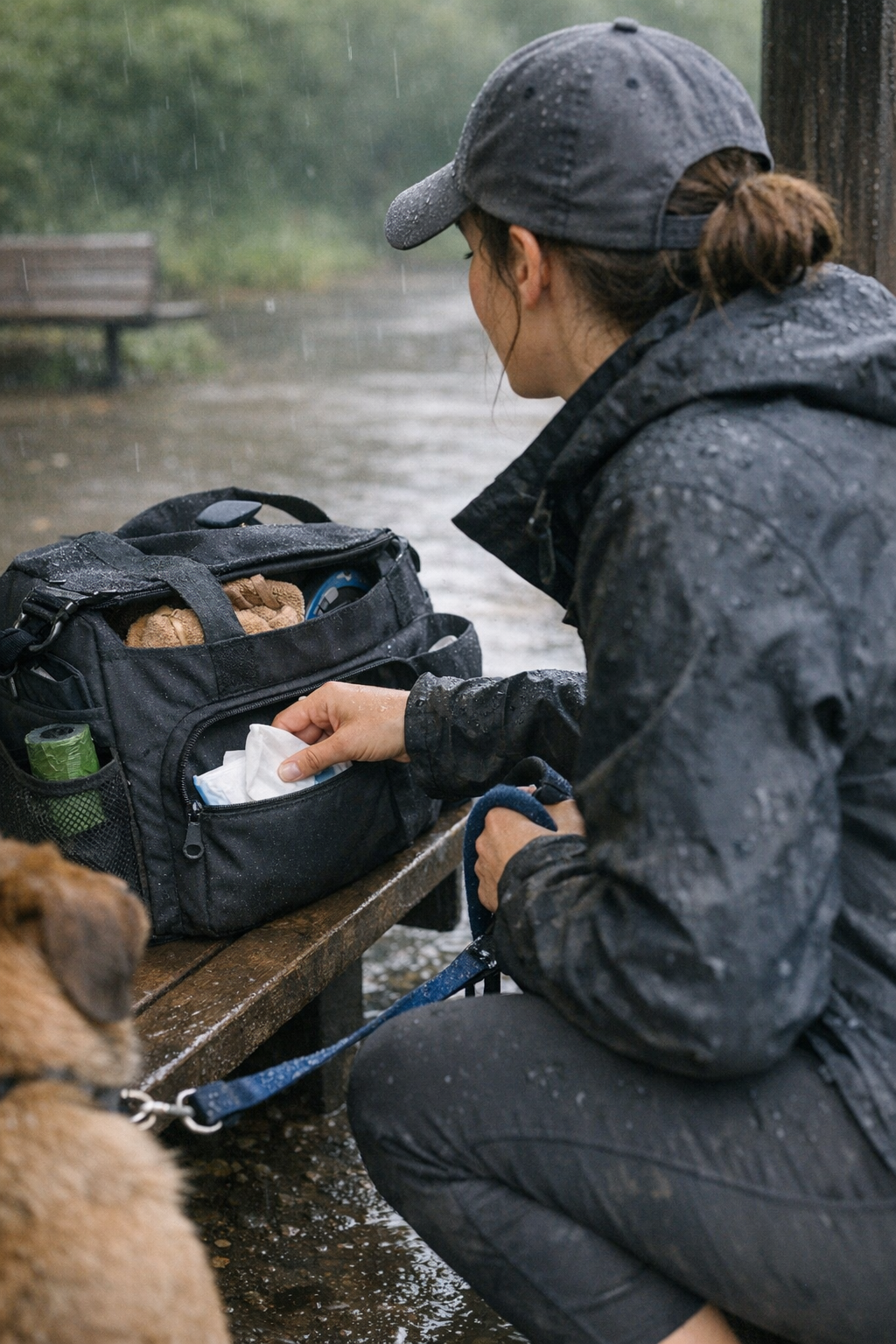
The real stress test for any pet travel bag isn’t how clean it looks in your living room—it’s what happens when you step outside and the weather changes. On a wet morning, even a neatly prepped carrier starts to fall apart: the leash in one hand, the bag slipping off your shoulder, wipes buried under a water bowl that’s slick with rain. Every pause on a walk becomes a scramble for the right pocket, your dog pulling ahead while you dig past tangled treats and soaked towels. At that point, it’s not about how organized things looked at home, but how fast you can actually reach critical supplies once chaos hits. That’s the difference most pet owners only notice after a few messy stops—real access vanishes, and your “order” gets drowned out by small, repeated friction. This is the moment PawGoTravel setups draw their lines: what survives the field, and what just looks tidy indoors.
When “Order” Fades Fast: The Hidden Gaps of Wet Walks
The confidence in a sorted setup—wipes, treats, leash, towel all nested in separate sections—rarely survives the first rainy stroll. Step outside and the familiar bag turns unpredictable. Need a wipe mid-walk? Suddenly, that pocket is blocked by a bowl that slid loose during the last stop. The towel you folded? It’s no longer flat, and now sprawls across cleanup gear. With the leash jerking one arm and rain blurring your vision, your “organized” bag becomes a jumble of wet surfaces and unreachable essentials. Every attempt to clean muddy paws or grab a towel risks dropping other gear, turning a supposed quick-fix into a stop that only drags out the mess.
Access gets muffled fast. Travel bags that hide key items under another layer create urgent stop-and-search routines instead of smooth movement. Instead of one quick motion, you’re forced to hold up progress—dog waiting, hands full, gear shifting further out of order after every reach. By the second pause, the structure that felt disciplined indoors now works against you outside.
Repeated Use Reveals the Weak Spots
Rain doesn’t just dampen your route—it exposes every design flaw you’d barely notice in clear weather. Early in the walk, you’re patient; after the second wet stop, you’re making tradeoffs just to move forward. A pouch that started out holding wipes now pinches them behind a looped leash, while refilling a treat stash ends with those pouches forcing wipes or towels down into harder-to-reach corners. Each pause means more reshuffling. It’s not the number of slots that matters, but whether you can find—without stopping everything—the one thing you actually need.
Concrete mess points:
- Muddy paws appear, but the wipes pocket sits under a treat pouch and can’t be fished out with one hand.
- You unzip the section labeled for leash access and discover bowls and bags now tangled together.
- Wet wipes settle to the bag’s core, forcing you to dig through by feel while your pet tugs and the bag slips.
- After the third stop, towels are heavier, gear reshuffles take longer, and the routine resets stall your walk.
The Slippery Line Between “Looks Prepared” and “Works Fast”
Each time you stop mid-walk, the hidden conflicts inside your gear show up: a slick towel blocking the waste bag slot, treat zones colliding with messy cleanup spots, and the frustrating question—how did a color-coded setup get so hard to use? Repeated repacks force zipper-after-zipper open, while your pet’s patience fades. Every layer stacked “just right” at home becomes a roadblock in wet, real-world motion. That’s when the actual test starts: do you reach and reset quickly, or waste your walk anxiously hunting for a wipe or leash? At this point, the supply you buried for tidiness now costs you time, speed, and a calmer trip.
One Adjustment That Actually Helps: Predictable, One-Handed Access
You don’t need a carrier that stays flawless through chaos—few will. But a single, deliberate choice transforms how your routine feels: dedicate one outer pocket, every walk, to the one thing you reach for most often (usually cleanup wipes or a towel), and refuse to bury it, even if that makes the bag asymmetrical. It doesn’t matter if your carrier’s front looks less tidy, or if one corner stays a bit crammed. Predictable, one-handed access to that pocket means you never have to pause, drop gear, or repack just to clean a paw or wipe off damp hands. When rain or movement rearranges everything else, that “lookup slot” for essentials is what keeps the rest of your setup usable in real time—not just photo-ready before you leave.
Overlapping Needs: When Pet and Owner Items Keep Interrupting Each Other
This overlap—the collision of pet gear and your own travel needs—is where most routines actually fall apart. One morning, your water bottle shoves a towel deeper than planned; another, a bag of treats jams the leash clip slot. Every shared carrier is subject to this problem: the more pockets in play, the more likely something you need gets swallowed by something else. Organizers with perfect-looking patches become fumble-zones if a comfort toy or human snack spills into the emergency access area. Even a thoughtful division, like separating treat space from cleanup gear, breaks down if movement and weather keep redistributing what’s inside.
The reality: a “settle-down” comfort accessory sometimes makes it easier for your pet to wait, but also turns a pit-stop into a low-key hunt for wipes or leads. The friction isn’t solved by more pockets—it’s solved by structuring the bag so you know exactly what never moves, even mid-walk. Prioritizing routine access over surface-level order cuts down the constant resets that drag every outing into another gear-shuffling chore.
After the Third Stop: Where the Setup Really Gets Tested
The first walk with a new setup? You might breeze through. By the third repetition—wet gear, overlapped items, essentials sliding deeper, your dog ready to bolt—the structure collapses. “Prepared” dissolves into stops filled with pocket-rummaging and out-of-sequence handoffs. The failure isn’t dramatic, just costly each time: you lose tempo, increase stray mess, and feel momentum slip as basic access gets harder. This moment exposes setups created for looks, not real stop-and-go pressure. Owners who return with muddy hands and soaked towels after a simple loop know it: the gap between looking ready and working smoothly yawns wider with each reuse.
That’s why durable access always beats perfect appearance. Give up the fantasy of pristine symmetry for a bag where you always know: “cleanup gear is here.” A carrier that trades a matching color block for a predictable, weather-proof pocket isn’t more stylish—it’s just not hiding the real problem when conditions turn rough. What works isn’t the look, but the map you build by using it over and over in the field.
Smoother Restarts, Less Friction, Better Walks
Wet walks don’t just test your nerves—they tell you whether your travel gear helps speed up the loop. Integrated, reachable essentials transform stop-start routines, while systems built for home-order trap you in slow restarts and blocked motion. Every time a wipe is too deep, or a leash jammed beneath gear meant for comfort, the walk itself drags, frustration builds, and cleanup gets skipped or delayed. There’s no “perfect” organizer for every trip, but a reality-checked setup lets you reset, reach, and get moving again, no matter how many times you stop—or which hand is free. Ultimately, being able to keep pace under repeated friction is the real advantage, not the pristine look you started with.
Your travel setup doesn’t have to be flawless. A single, reachable pocket, a stubbornly separated wipe pouch, or a soft-sided carrier with predictable seat-side access—these tweaks earn their keep every wet morning when you’re tested again. Next time you pack, focus on what you can reliably grab in the mess, not how neat things look at the start. That’s what survives the rain, the extra stops, and the slow creep of disorganization. Explore smarter pet travel setups at PawGoTravel