
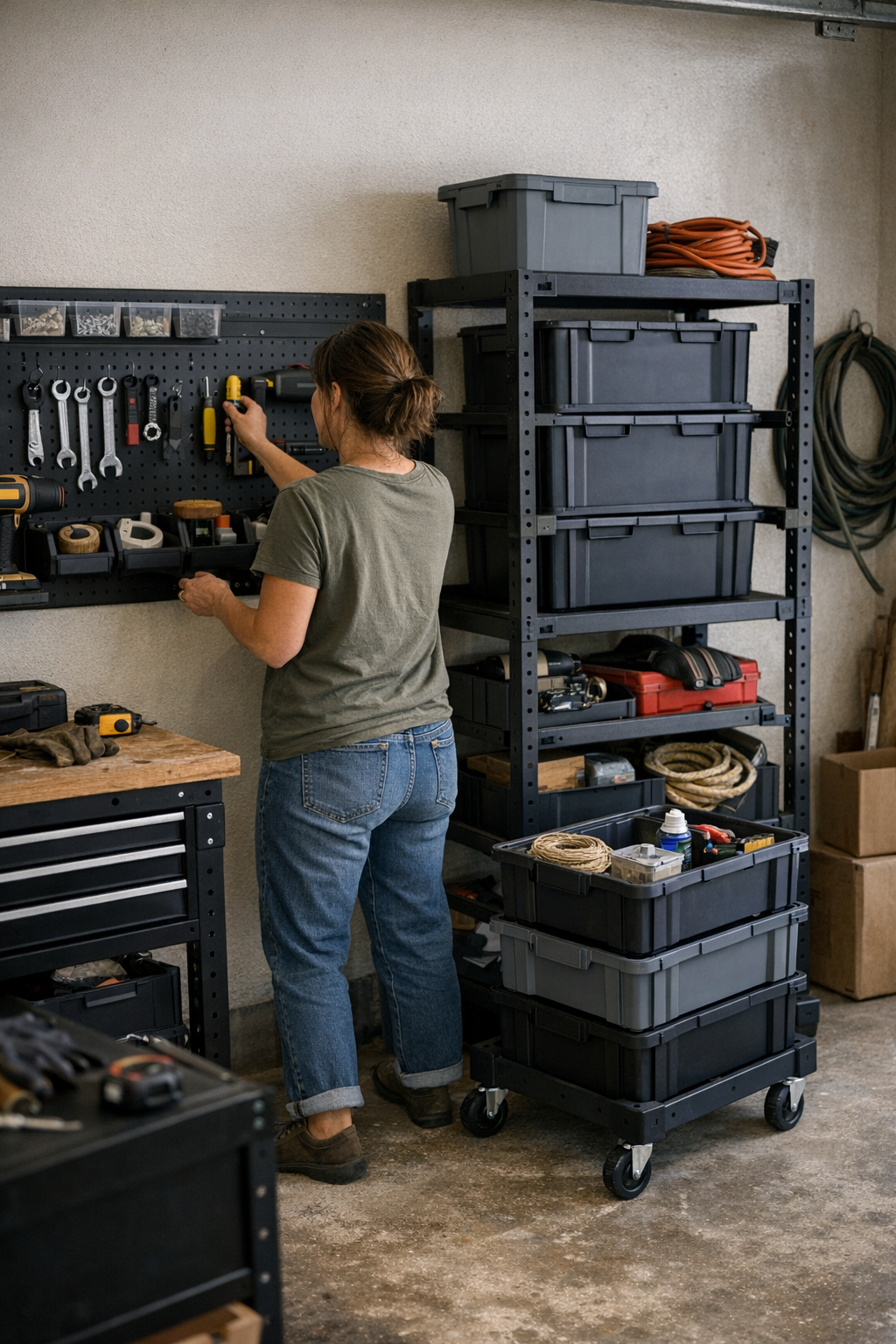
It’s easy to love a fresh storage setup—until the honeymoon ends. On day one, everything in your garage or workshop slots neatly into carts, racks, or those crisp-labeled bins. But within a week, that perfect order feels less like a solution and more like a series of small obstacles. Setting gear aside “just for now” becomes routine, and suddenly your prized layout means sliding carts to access the bench, stepping over stray tools, and debating where the garden shears should live. The promise of order gets quietly buried under the reality of use.
Where “Organized” Starts to Slow You Down
The real wear isn’t obvious at first. Maybe you added wall racks across the long side of your garage, or stacked a mobile cabinet where the sunlight hits. It all looks efficient—until you notice your movement changing. You detour around the chest blocking the best path, or pause to fit a rake into an already-maxed hook. The system that’s supposed to help you ends up demanding work before you’ve even started a project.
This friction isn’t dramatic, but it’s everywhere in daily routines:
- Having to shift a cart or roll away a chest just to open a cabinet or walk to your main work surface.
- Watching a well-planned rack fill ahead of schedule, forcing leftover gear onto windowsills or any free surface.
- Tools lingering out on the bench—not from laziness, but because their drawer now needs you to clear space first.
Looks Tidy—Moves Clumsy? The Pattern Shows Quickly
Resets should be a non-event: drop the driver, toss out cutoffs, return the trimmer. But if your setup interrupts that flow—forcing you to dodge a cabinet edge or snake through parked carts—resets slow to a crawl or quietly stop happening altogether.
Picture the daily sequence: a rolling toolbox slowly migrates into the aisles, blocking what used to be walkable space. Pretty soon, the fastest route from street to garden looks like an obstacle course of “just for now” storage. Or that well-measured pegboard, a foot too far from your bench, means your most-used pliers have a new semi-permanent home on any flat surface within reach. The system looks neat, but it never feels truly matched to how you move.
It’s never about effort—it’s about a setup that forces tiny reroutes and micro-decisions, silently slowing you down.
Overflow Piles and Awkward Corners: Hidden Clutter Zones
Even the most disciplined setups reveal weak spots after a few active weekends. Floor racks pull in miscellaneous items at first, but deep bins become black holes by midseason. Overflow gear piles up on any available ledge, and bins get stacked, shuffled, and forgotten as soon as you have to fight past a blocked corner. Walkways shrink. Pulling one hose nozzle now means moving an entire tower of odds and ends first.
Give it a month, and “organized” morphs into a series of small, nagging interruptions: moving mulch to reach the socket set, rolling aside a garden cart that never gets back to its proper spot, skirting around a folding ladder propped in the only open gap. Day after day, the system’s flaws encourage shortcuts—leaving tools out, skipping the reset, letting clutter creep back in.
The Real Upgrade: Storage That Follows Your Routine
No number of new labels or upgraded bins fixes this. The real turning point comes when you stop organizing for looks and start building for movement—for the way you actually use and return gear when things get busy. Sometimes it’s as simple as pushing a rolling rack directly against the wall, because that keeps the path clear. Once you make movement the anchor, you stop choosing between “put it away right” and “get out of the garage already”—resets just happen, without detours or excuses.
This is the shift that sticks: always defend at least one clear, direct path. Keep your top-used modules fixed in the area where your hand naturally goes after every project. When your flow is protected, resets become automatic, and the system stays in sync with real, routine use—not showroom neatness.
Field-Tested Tactics for Less Mess, Less Stress
If your space keeps pulling you into the same annoying fixes—new pile zones, slow resets, or misplaced favorites—try these in-the-trenches adjustments:
- Audit your reset for snags. Which spot do you avoid because it’s blocked, cramped, or simply never quite within arm’s reach?
- Leave lanes open—never fill every inch. Park carts and bins so you don’t have to move them to pass or return gear. The clear space is what keeps everything moving.
- Cluster essentials near the point of use, not just on the nearest empty wall. Keep hooks and drop zones by doors or benches, right where movement naturally slows down.
- Assign dead corners for true overflow only, not for returning daily tools. If needed, add a lightweight tub on wheels for oddball items—never for routine resets.
Storage That Gets Out of the Way
Spend a few weeks with any system and the difference becomes obvious: setups that demand thought feel heavier with each reset, while well-zoned layouts almost disappear—they’re so tuned to your routine that you don’t think about them. The prize isn’t a picture-perfect garage. It’s a space that runs silent, where every tool returns with no friction, even when a project leaves a mess or several people are passing through.
The goal is storage that fades out of your workflow, not a system that needs babysitting. Anchor your core modules. Shape the layout around the real paths you take. When it just works without a second thought, that’s when your garage or workshop is finally set up for you—not just for show.
If you’re ready for storage that moves with you, not against you, explore focused modular layouts at StackNest.