
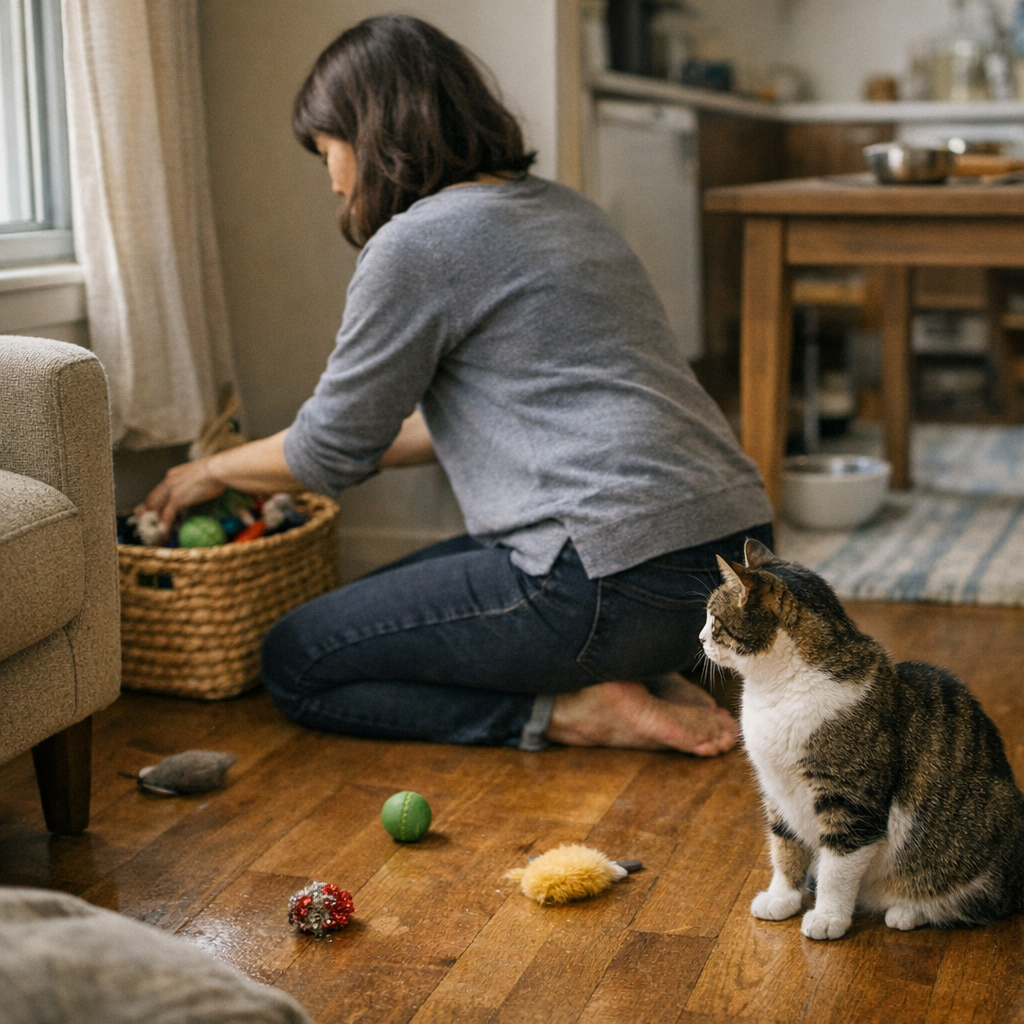
If your cat’s toys keep slipping back underfoot—even after every “final” cleanup—it’s not a storage problem. The real wear comes in the gap between when cat playtime should end and when it actually drags on. Most indoor cat owners know the friction: you clear the living room, every toy boxed or binned, and still, right as you refill a water bowl or carry laundry through, a crinkle ball surfaces in your path. One stray sprint resets your tidy setup—and the loop begins again. In a StillWhisker world, surface order isn’t enough if the cleanup can’t keep up with where your cat’s nerve-ending energy actually escapes. The scattered aftermath isn’t random. It’s usually triggered by letting play fizzle past its real stopping point instead of wrapping up when your cat first starts to drift. And what feels like a minor annoyance—one missed reset—quickly compounds into repeat toy scatter, sidestep routines, and a cycle of invisible, persistent disruption that makes your “clean” space feel one step behind.
How Play Sessions Leak into the Rest of the Day
Letting play wind down on its own—waving the feather wand until your cat wanders off—sounds simple, but in the rhythm of an indoor routine, slow endings backfire. As your cat’s attention cools but doesn’t fully shut off, that leftover spark flares up again: a late sprint into the kitchen as you set the kettle, a rogue ball pinging off the wall, or a half-forgotten mouse showing up next to the main walkway. Without a decisive wrap and sweep, the toys migrate as soon as you turn away.
Surface resets vs. hidden mess: You can design a stylish toy basket, space out the play area, or keep all accessories tight to a corner—but when play fizzles rather than finishes, toys still snake under couches or appear right where you’re carrying groceries. The living room looks maintained until a surprise burst sends a kicker under your heel mid-task. Trouble isn’t dramatic: it’s the quiet mismatch between how the setup looks and how it sidetracks your routines.
Why Toy Scatter Keeps Returning—Even in a Tidy Home
It’s logical to expect order from baskets, boxes, and labeled cat zones—until you notice clutter creeping back into walkways hours after cleaning. The true breakdown is timing. If you only tidy up when play is just “over,” that residual energy finds its own path, scattered across the room whenever you’re busy elsewhere. That’s why you pick up, breathe out, and still get interrupted later: toys marooned in high-traffic areas and another “quick” sweep before sitting down to eat.
It becomes more than a minor mess. When late-stage play spillover keeps colliding with your normal flow, the sense of order wears thin. Every pass through a supposedly reset area risks new dodging, new pickup—a home that stays “almost” clean, never steady for long.
Spotting the Real Stopping Point: Reading Cat Cues
The missed moment: Your cat slows to a dawdling prowl, chases but doesn’t commit, or flicks an ear toward a ball but won’t pounce. Hit stop here—don’t push for that last lap around the rug. If you let play unravel past this dip, your evening likely means crawling under the couch for toys, nudging objects aside during a refill, or managing a small collision when a quick streak meets a water bowl edge.
With practice, these cues stand out: the slow wander away, idle sitting with a toy, or half-hearted chase followed by a pause. Ending play right then—plus a swift visual sweep—interrupts the feedback loop. The aim isn’t abrupt cut-off, but a timely close so you contain the cascade, not just the clutter.
Preemptive Gathering: Closing the Loop on Mess
What actually makes a difference? Stopping while attention dips, then picking up every toy (yes, especially the sly ones behind chair legs or in the walkway) shifts your cleanup from reaction to prevention. Toy migration tapers off. The unplanned dash across shared zones fades. You’re suddenly resetting spaces that stay usable instead of just looking neat for a brief window.
When the Cat Setup Looks Tidy But Feels Off
Scan the room: basket in order, toys corralled, dish areas clean. But the “just finished” feeling doesn’t last if toys keep leaking back into daily movement paths. The gap is structural—your setup hides mess for a moment, but can’t contain the routine breakdown when toys resurface in the same traffic zone or under the same table, especially when you’re moving quickly or distracted.
Day after day, the cat zone and human zone blur. A tidy basket by the armchair proves useless when it’s raided before bedtime, or a wand stick ignored after play triggers a whole new unscheduled chase. The breakdown isn’t explosive—it’s friction that accumulates. You spend more time re-clearing the same spots than actually using your space as intended.
Everyday Interruptions: Where Routine Breaks Down
The pain points persist because cat play migration doesn’t stay in the “cat area.” Reach for the water bowl; find a ball jammed near the base. Take laundry across the hall and bump a kicker in your path. Over a week, these micro-interruptions stack: unplanned pickups after work, sidesteps before bed, repeat touches on the same objects you counted as “handled.” When resetting gets delayed, comfort and shared access slip—and a setup that “should” work takes more effort than expected.
This isn’t just about neatness: it’s the slow, real cost of handling the same intrusion multiple times, stealing time from meal prep, bedtime, or just sitting down undisturbed.
Reset Habits that Actually Change the Friction
It’s not about more bins or baskets. It’s about when you reset—catching the lapse before it grows. End play intentionally at the first slowdown and sweep up every loose piece, especially in key trouble spots: under the dining chairs, next to water and feeding areas, along shared walkways. Preemptive pickup stops tomorrow’s chaos from leaking into today’s setup.
It pays to double-check usual trap zones: corners collecting balls, sofa undersides, paths from play to kitchen. Take care of the lone straggler now; waiting means it’ll become the trigger for the next round of mess during a rush or when your focus is lower, not higher.
Example: The Ball by the Water Bowl
Classic sign: later in the day, a plastic ball blocks your access to the water bowl. You think, “I’ll get it after,” but forget—until your cat sends water across the floor and you’re mopping up at midnight. The real slip wasn’t ignoring a ball, it was missing the moment for a tight reset after play. That’s the difference between calm and a spiral of late-night interruptions.
More Predictable Routine, Less Unscheduled Cleanup
Dialing in this stop-and-reset approach, your whole home shifts. Cat zoomies stay local to play sessions rather than bleeding into dinner or cleanup. The same periodic scan for outliers is quicker, less draining—you’re spending less time catching up and more simply living in a space that holds together between resets. There’s less backtracking; the room you set up tends to stay set.
The goal isn’t perfection. It’s trimming the invisible labor—the repeat pickups, the lost minutes to small sprints, the home that looks more stable but finally feels easier to use again.
When a Setup Starts Working for You—And Not the Other Way Around
This isn’t about a showroom setup. A real StillWhisker setup holds its shape longer, demands less from you to reclaim space, and fits movements you repeat all week. You start noticing: meal prep flows without a plush fish at your feet, main paths stay open, and you don’t have to hover over every play session for the room to feel under control. By ending on the first loss of focus and carrying out the total reset—no toy left for later—your spaces back each other up: comfort for your cat, less chaos for you, and actual relief from endless reshuffling.
The payoff is simple—a daily setup that’s easier to live with, not just cleaner on the surface, and a living space that finally works the way you wanted from the start.