
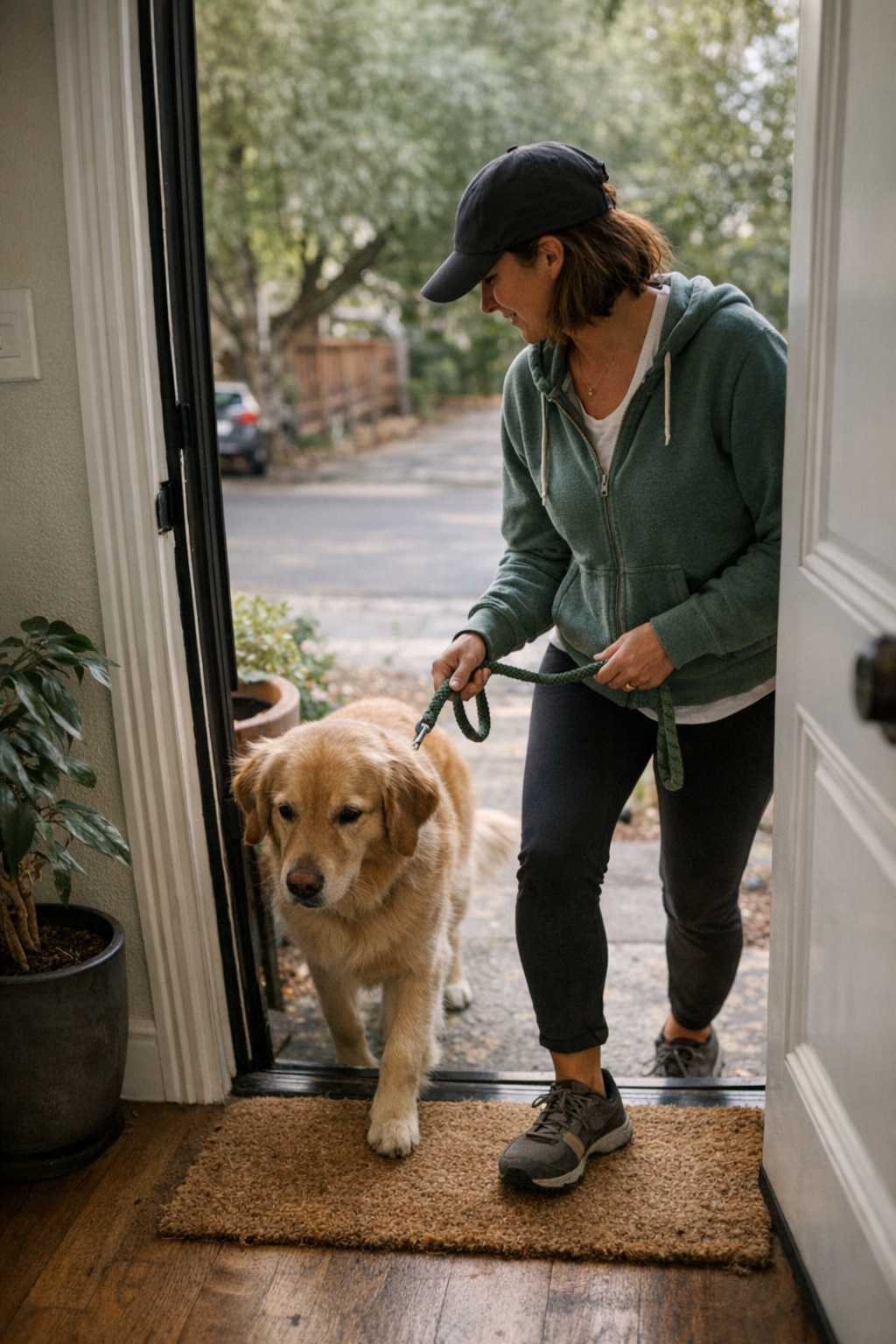
Front doors are supposed to be quick—clip the leash, grab your keys, head out. But the real routine goes sideways: you reach for the leash, knock over the water bowl, dig past an overflowing hook, keys wedged under a chew toy, your dog doing circles or locking up between the mat and the open door. Instead of a smooth exit, every walk starts with a repeat bottleneck that drags down both you and your dog. If you’ve ever found yourself blocking the doorway, fumbling for wipes, or bracing while your dog stalls or bolts, you’ve seen how a setup that “looks ready” breaks down the moment real-life movement piles up. The first step outside is never just a step. It’s the daily test where small setup flaws turn into messy starts—over and over again—resetting the whole tone before you even clear the doorstep. In the DogPile world, that’s the front line where what’s tidy on paper rarely matches how things actually run.
When the Start Keeps Catching: How the Front Door Becomes the Main Roadblock
Missed leash hooks, corner-stacked baskets, water bowls wedged next to the path—these details only seem minor until they repeat. A dog side-stepping today but flat-out refusing tomorrow, pausing in the exact same spot before every outing. After weeks, you expect friction at this one threshold. Even reaching for the handle triggers the routine bracing—your hands already too full, the rhythm lost before you step into the world. “Just leaving the house” turns into a daily micro-battle, resetting even a well-organized entryway.
As these hiccups stack up, they bleed into everything else: leash pulls earlier, paces are out of sync, even your dog’s first glance tells you both that something’s off. The porch was supposed to mean go. Instead, it signals scramble and repeat. The walk’s ease drains out of the first sixty seconds, long before route or weather even matter.
Recognizing the Real Weak Point
The catch is never just about willingness. Morning after morning, you fumble for the leash while the bowl blocks your path, or you find yourself dodging the same treat pouch dumped halfway into the walk zone. The setup might look shipshape, but every move—clip, scoop, grab—collides with one friction point that stubbornly stays. By the time your dog is finally harnessed, you both feel scattered. If the reset always means reshuffling towels or stretching past awkwardly placed bins, the “put together” entry is just another daily chore.
That’s how setups start to betray you: visually neat, practically jammed up. The real threshold is never the door—it’s this spot where the same frictions restart, erasing the idea that routine means “simple.”
Why This Handoff Really Matters—More Than the Route or the View
Forget the new trail or varied scenery; none of it matters if the inside-to-outside transition keeps jamming the gears. When the handoff at the front door is a scramble—your dog is stalling, you’re sidestepping supplies, a mat slipping underfoot—no walk can fix that tense beginning. Patterns get carved in these seconds, teaching both sides that the pause and shuffle are just “how it goes.”
The real control point isn’t the neighborhood, it’s the exit flow. Most advice skips over the handoff, but this stretch—how you catch the leash, move through clutter, give your dog a clear signal—decides if the outing feels doable or draining. Over time, a rough start burns in the message: expect tension. The walk becomes a routine disruption, not an escape—unless you fix the setup, not just the route.
Repeated Friction, Lasting Consequence
Hovering on a doormat while your dog hesitates—or zags sideways—builds frustration faster than any long route. The delivery truck idles, someone’s waiting their turn, and your hands are full, nudging gear, urging your dog, hoping not to yank or spill something. Even after you get moving, that sticky transition sets a tempo: unease on both ends of the leash, the rhythm stubbornly off for every block. It’s not just a nuisance; it’s the handoff that shapes how both of you approach “going out”—and whether it feels like progress or another repetition of the same snag.
A Calm Door Routine: Simpler Than It Sounds
Most “fixes” suggest training a super-calm stay, but the real shift happens earlier and simpler: insert a clear, predictable pause—every single time—before crossing the threshold. Not a new gadget, not a rigid routine. Just a practiced, shared moment—leash clipped, both of you still, gear in hand—before you move through the door. This small buffer steadies both of you much sooner than a complicated protocol or a picture-perfect sit.
That pause isn’t dramatic, but you miss it every time things go wrong. A reliable clip-pause-move rhythm means less circling, less tension, fewer sudden bolts. When you and your dog know what happens next, nerves diffuse before they start. Over days, this tiny adjustment trims away the background stress left by a hundred messy exits.
How the Three-Second Pause Changes the Routine
Try this: after you’ve wrangled gear and clipped the leash, stand still with your dog just inside the door. Count a real three seconds—don’t rush—then give your signal to go. No circles, no scolding, just a shared pause and a clean step forward.
That hold signals: the walk starts now, not in the scramble. It cuts through the rush, lets anticipation level out, and lines up both your focus and your dog’s. Most people find the freeze-and-zag moments start to fade, replaced by a straightforward, even exit. Dogs settle into the routine. Owners do too. The difference is felt not just in the first step, but in the recovery of the whole outing’s pace.
Daily Frictions: The Small Stuff That Isn’t So Small
Success isn’t just about where things sit—it’s about whether the motion actually works at real speed. Hooks hidden behind the door force awkward stretch-reaches. Baskets for leashes look neat until you need to wrestle one out with your hands full. A mat that bunches up under your dog’s first step sets the whole body off balance. Wipes or treats just out of arm’s reach trigger last-minute backtracks, guaranteeing that both calm and momentum start leaking away.
None of these are emergencies. Under the daily repetition, though, they pile into genuine drag: mood dampened, dog uncertain, owner patience frayed. Visual organization isn’t enough—if routines mean sidestepping, reshuffling, or interrupted starts, you’ll end up strained no matter how good everything looks. The right setup supports real movement, not just a tidy snapshot.
Comfort Versus Cleanup: The Balance Isn’t Always Obvious
Go too far for comfort, and you end up tripping over solutions that slow you down. A plush mat for your dog can jam the door, making every exit a shuffle. Baskets with tight lids corral gear but add seconds to every rushed attempt at “quick walk.” It’s easy to miss how a cozy zone for your dog undermines your own flow. The trade-off hides in plain sight—looks great, but at the cost of smoother handling and cleaner restarts. When setup decisions pile on seconds and interruptions, comfort backfires into repeated hassle.
Reset Moments: Where the Same Weak Point Comes Back
Swap in a new mat, move the basket, angle the crate—still, the same glitch returns: you reach for the harness, but something’s always in the way. The walk is ten seconds late again, small frustration rebooted. Organization only works if the flow through the space actually matches what happens each day. The gap is always between “looks prepped” and “feels easy enough to move.” Storage that hides clutter but keeps essentials out of reach is still sabotaging your reset point.
Reentry after a walk often shows where any system falls apart. Dirty paws and shoes meet towels that slipped behind a bench. Wipes are missing (or buried) just when you need them. Every slow, clumsy reset guarantees tomorrow’s start is thornier. Each beat missed here is another friction built into the next outing’s opening moves.
Turning “Looks Fine” Into “Feels Better”
The most useful routines don’t stop at looking organized; they make movement easier, reduce reshuffling, and shrink the exit hesitation to almost nothing. A practiced pause and a setup that lets you grab, clip, wipe, and move without a hitch rebuild the flow that clutter hides but friction reveals. Your dog lines up in sync. You don’t brace for the jam-up. The space holds up because it’s built for everything to get used, not just stored.
Even one change—a reliable three-second pause before heading out—can replace weeks of stalling with smoother, more reliable walks. The front door shifts from a stress checkpoint to a predictable part of the day’s rhythm. The difference shows up in the quiet: you and your dog step out together, free of the routine drag, in a DogPile kind of entryway that keeps up