
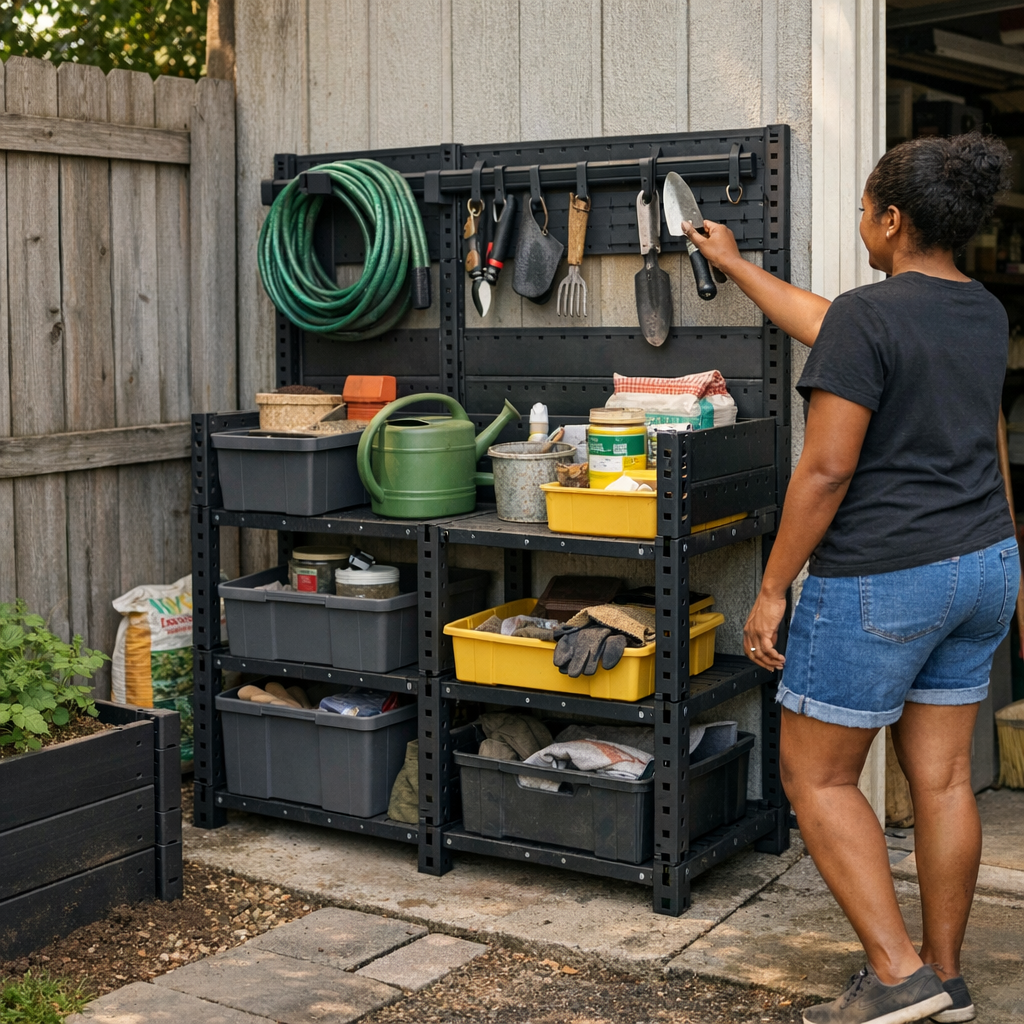
Yard clutter doesn’t crash in—it creeps up the moment putting one thing away feels like a bigger chore than it should. You finish a project on a tight afternoon, ready to be done, but glancing at your storage setup—a cramped deck box blocking your way or a deep bin wedged into a corner—you catch yourself dropping the hose or clippers “just for now.” That’s how a useful space quietly becomes a mess: not because you lack storage, but because the act of use and return never truly fit the way you move through the yard.
The Subtle Ways Outdoor Storage Makes or Breaks Yard Flow
Most people shop storage by size or by looks. But after one week of real use, what matters is whether putting things away is seamless or an obstacle course. The classic scenario: a big deck box sits at the patio’s end, ready for action. For a few days, everything lines up. Then it rains, the lid swells a bit, or a wheelbarrow gets parked in front, and returning just one tool means moving two other things first. Suddenly, you’re threading between half-finished stacks, with a hose zigzagging across the walkway and gloves abandoned on the bench because opening the bin feels like double work.
Blocked Lids, Deep Bins, and the Rise of Hidden Clutter
Oversized bins and deck boxes sell the promise of “one-stop” cleanup. But in real yards, they often become graveyards for gear. The rakes and hoes might go in vertical—once. After a couple of busy days, extra gloves and tangled hoses are buried under heavier tools, and the bin’s footprint—once so promising—starts to swallow more than it gives back. If it’s blocked by a spare bag of soil or half-shifted patio furniture, you cut corners: toss small tools onto steps, balance pots on top, anything to avoid the awkward unpacking. “Later” piles up quickly. Gear once organized now sits right in your way, or worse, goes missing inside a bin you now avoid opening at all.
How Small Barriers Multiply Yard Frustration
Every tiny delay—lifting a heavy lid, reaching past clutter, moving one thing to put away another—adds friction you feel in the routine. Sports balls wedge behind garden forks. Pruning shears drift away and show up next to the grill three days later. Soon, you spend more time dodging stray gear than actually moving through your space. These aren’t dramatic problems, but each one chips away at the urge to reset your yard—bumping shovels, re-sorting gloves, or squeezing around a container that used to fit but now blocks your path.
Wall Racks and Open Storage: Clarity Over “Tidiness”
The antidote to buried bins is out-in-the-open: wall racks, hook panels, or modular shelves along your real paths. These force a feedback loop you can’t ignore. Each tool, glove, or hose lives where you see it—miss one, and the gap is visible. There’s nowhere to hide a mounting pile. This feels risky at first (no more lidded camouflage), but it’s a nudge toward real upkeep. One glance, and you know what’s done and what still needs to return. The path stays open, and movement isn’t dictated by how full a box has grown.
Making Wall Space Actually Useful
But not every wall becomes useful by default. Slapping up hooks in a dead zone, or lining one fence with racks, is easy to do badly. Hooks clustered in a corner away from your cleanup path? Unused. Tight racks jammed behind bikes or bins? Forget it. True daily usefulness = tools right at the point you decide to stop. It’s mundane but powerful: think about where your routine actually ends (garage threshold, side gate, patio edge) and put high-movement storage right in reach, not just anywhere a wall is bare. Otherwise, “organization” turns back into another avoidance problem.
Real Use: How Setups Fall Apart Under Normal Pressure
Watch any yard for two weeks and you’ll see the difference between looking organized and actually working:
- Return one, block the rest: That deep deck box seems roomy until the first time you set a garden fork on top—and now the hose is impossible to pull out without shifting everything. Gloves drop in, disappear under a shovel, and every “quick return” becomes its own grumbling search.
- Shifting pieces, never open space: A freestanding rack near the back step clogs the flow. One more tool added, and soon you’re kicking a tangle of handles aside just to reach the compost bin. The footprint looked right, but the walk path gets narrower every week.
- Overflow zones gathering mess: Every yard has at least one—behind the shed, the strip next to the AC, or that spot just beyond the patio. Missed returns end up here, multiplying quietly until “clean up” becomes a Saturday-long reset instead of a ten-minute finish.
Small Wins: Tweaks That Actually Make Resets Easier
Sometimes all it takes is one lived-in change. One TidyYard customer swapped a buried bin for wall hooks right by the garage exit—their tools became a “grab it, hang it back” habit, not a search-and-stack ordeal. Nothing fancy, but now the bench next to the system is always clear for sitting. You trade the comfort of hidden clutter for quick resets and paths that stay open. You’ll always notice what’s out of place, but that’s the point—it’s fixable in a glance, not buried for weeks.
The Role of Return Flow in Real Outdoor Organization
Real outdoor organization isn’t about tidy appearances—it’s about constant usability. When your setup matches the way you end tasks, putting an item back doesn’t feel like an interruption. Wall panels and open racks suit the tools you touch every few days: trowels, shears, rakes, coiled hoses within reach, not trapped beneath bins. Save the closed containers for long-term hibernation. If you notice one area always gets overflow, it’s a placement issue—not a storage volume issue. Add a hook or shelf along your actual route, instead of relying on one mega-bin two corners away.
Tip: Map Your Actual Cleanup Path
Next time you finish a project, notice the path from garage to side yard to patio. Where do tools naturally pause “just for now”? That’s your real storage need talking. Design your setup around the rhythm of return, and the yard stays workable without slow, repeated resets. Catalogs don’t show this, but the difference shows up every week.
When Setup Fits the Space, the Yard Keeps Up With You
No system is magic. There will always be odd corners that attract winter pots or overflow bins that still fill. But when your storage lines up with movement—not just dimensions—everything from a five-minute clean to a four-hour overhaul gets easier. The side yard remains walkable, wall racks stay in play instead of blocking the route, and resets rarely balloon into all-day jobs. You’ll see less mess, not because you cleaned harder, but because the system itself interrupts the old cycle of clutter gathering in all the wrong places.
Find outdoor storage that fits your real routines at TidyYard.