
When Calm Looks Right, but Care Slows Down
Surface calm in pet care setups fools you fast. Everything looks in order: bowls lined up, toys gathered, floors wiped. But the moment you try to grab the wipe-down towel and find yourself moving a stack of baskets, or need the water refill bottle only to dig for it in the wrong cabinet, the weakness in the routine shows. These aren’t messes, just the kinds of micro-delays—blocking a quick feeding, stretching a basic cleanup, forcing one more retrace through the kitchen—that turn what should be a minute into three. If care stalls at the refill or the brush always goes missing after a walk, it’s not your organization that’s lacking, but your setup’s real readiness. CalmPetSupply isn’t about looking tidy; it’s about setups that hold up after ten resets, not just one.
Invisible Friction Wears Down the Routine
Invisible friction builds up fast in daily use. Refilling the cat’s water? First, wedge aside yesterday’s mail blocking the bowl’s usual spot. Grabbing a towel to dry the bowl? It isn’t hung up, it’s lost somewhere in the linen pile. Returning from a walk, hands full and leash dangling, only to realize the cleaning cloth for muddy paws is packed away on a shelf across the room. None of this looks disastrous. But the seconds lost, the interruptions, the return trips—they sap momentum and stretch simple routines until you resent another “quick” reset. It’s the small blocks in real flow—never the nightly mess, always the daily slowdown.
When Calm Is Only Surface-Deep
A pet area might pass the visual test—food scooped, brushes put away, toys in a bin. But the gaps appear in the repeat: a late-night bowl swap drags out because the refill isn’t where you need it, or the brush is buried in a drawer when muddy paws show up. On paper, you’re organized; in reality, the scramble for missing basics costs time you notice most on days when routines need to fly. Efficiency on day one fades if reach and placement don’t match the actual rhythm of feeding, cleaning, or after-play resets. Each small detour isn’t much alone, but by the week’s end, frustration adds up.
Scenes from Actual Daily Use
Evening reset: you rinse pet bowls, pop them in the dishwasher, set out a clean water bowl—then realize the water filter jug is clear across the house. On your way to fetch it, the cat hears noise and expects dinner, but you’re nowhere near done. Or midday, facing scattered kibble, you use an old napkin to clean up because the proper towel is under folded laundry—leaving residue for next time.
Later, after work, you just want a quick tidy before bed. You gather toys from every corner, but with each reshuffle of the storage basket, the comb you need pushes further from reach. What should be a five-minute check-in blurs into extra searching and even slower winding down. All because the right tool is never at hand, exactly when it should be.
Barriers to Quick Pet-Care Add Up
It’s easy to settle for a setup that looks calm but sets you up for the same old hurdles. The towel marked “always nearby” isn’t really reachable. The refill jug sits just far enough from the bowls to require one more trip every rushed night. Each extra reach, shuffle, or detour slows you down most when you most want to move on, turning routine care into avoidable work.
These sticking points gather fast. The week fills with repeated round-trips; tasks that should be quick stop feeling finished. Clutter returns to shared spaces, resets get delayed, and the supposed calm of a tidy area gives way to the drag of constant minor breakdowns.
The Core Difference: Order vs. Function
“Tidy” is not the same as “truly ready.” A serene surface won’t keep a feeding or cleanup from stalling if key items are out of reach. Stashing pet gear out of sight creates new lag points—every second you search or reshuffle chips away at the illusion of order. Organization that only looks good from a distance is a setup that breaks down under pressure, often in the same spots, for the same reasons.
If pet bowls, tools, and toys drift back into living areas or block each other, you’re forced into repeated resets that look harmless but feel heavy. Each time you reload supplies, shift toys just to fill the water, or notice the grooming kit stuck behind a pile, the cost is just hidden enough to tolerate—until you’re doing two tasks for every one that should be done.
Practical Adjustments That Make a Lasting Difference
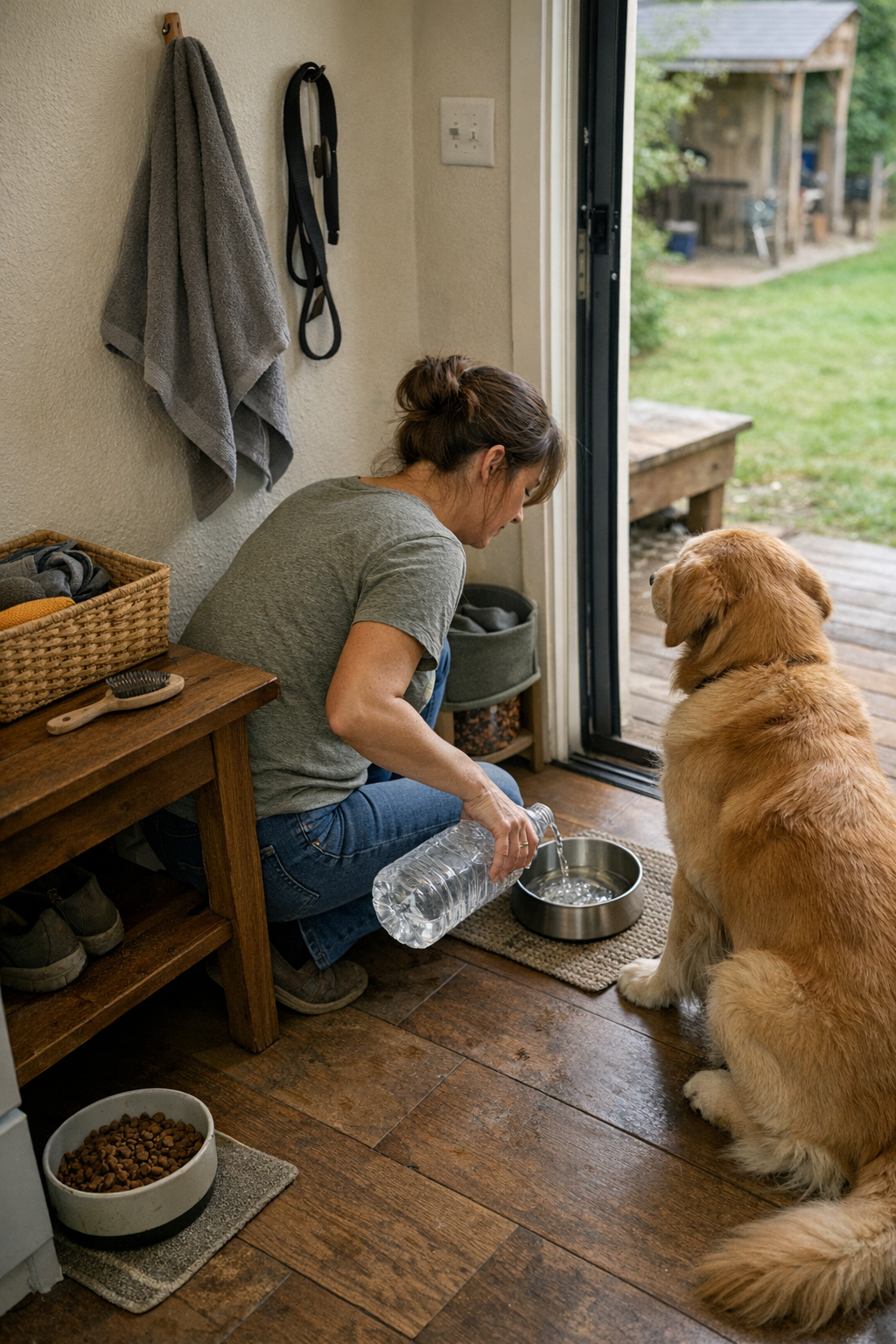
Actual improvements don’t call for perfect organization—just placement that fits the real rhythm. Mounting a towel hook near the kitchen door means there’s always a clean towel within arm’s reach for quick bowl wipe-downs, not just after deep cleans. Keeping the water refill bottle in the feeding zone (not a high shelf) turns an interruption into a two-second step. These aren’t pretty fixes; they’re functional adjustments that cut down on the tiny, invisible round-trips that wear down routines and make you dread another reset.
Making the Routine Reliable—Day After Day
Small setup tweaks create a loop that actually supports real daily care: bowls refilled and wiped without pause, tools always at the point of use, never buried in a bin. Instead of facing the same reset friction every morning or late at night, you get flow—reset after reset, nothing major, just unblocked care that holds up in real life. Calm isn’t the look of your setup; it’s the absence of extra steps every time you feed, clean, or check in.
Over weeks, removing these stumbling blocks moves pet routines from tiring to automatic. If your setup is only visually neat, the drag returns. If it matches your real pace—even imperfectly—routine pet care gets out of your way and stays quietly, usefully calm.
Find simpler daily-care setups at CalmPetSupply